
Apple Releases HomeView 27.2 Software, Revealing Wallpapers and CarPlay Integration
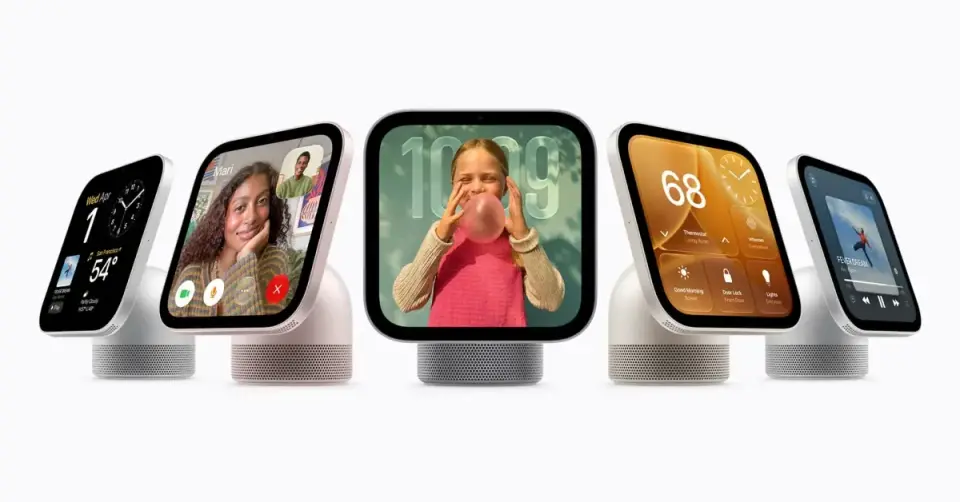
Apple released HomeView Software 27.2 ahead of the device's November 13 launch, revealing 20 default wallpapers, a new face customization interface, and a Control Center. The update confirms the smart hub will rely on CarPlay for third-party apps rather than a dedicated App Store, while Siri AI will provide personalized, context-aware assistance for up to six household members.
Key points
- Apple released HomeView Software 27.2 (build 24V514) on October 30, 2026, ahead of the device's November 13 launch.
- The update includes 20 default wallpapers in light and dark modes, all with a 1:1 aspect ratio suitable for the device's square screen.
- HomeView lacks an App Store; third-party support is limited to audio and video apps compatible with CarPlay, which run via the user's nearby iPhone.
- The software reveals a new 'BreadBoard' launcher and 'CupBoard' process for Control Center, replacing the traditional SpringBoard.
- Siri AI on HomeView can access emails, messages, and calendars to provide personalized answers, recognizing up to six users via facial recognition.
- A hidden graphic for 'HomeView Software 26' suggests Apple originally planned to launch the device last year but delayed it due to Siri AI development.
Background
Apple announced the HomeView smart home hub in October 2026 as a competitor to Amazon Echo Show and Google Nest Hub. The device features a 7-inch Liquid Retina display and is priced at $299. Previous coverage noted that iOS 27 introduced AI-powered wallpaper customization, and CarPlay integration has historically been a method for mirroring iPhone apps to external displays, though it typically drains battery and generates heat on the source device.
How outlets are covering it
9to5Mac and MacRumors focus on the technical details of the software release, highlighting the wallpapers, face customization, and the hidden 'HomeView Software 26' graphic that indicates a delayed launch. Engadget emphasizes the functional limitations of the device, noting that the lack of an App Store means users must rely on CarPlay-compatible apps, which currently excludes major video streaming services like Netflix and YouTube. Livingetc provides a consumer-focused perspective, praising the device's design and Siri AI's ability to retrieve personal information like recipes from old messages, while also raising concerns about privacy and the lack of physical camera/microphone shutters compared to competitors.
Why it matters
The release of HomeView Software 27.2 provides the first concrete look at the user experience for Apple's new smart home hub, confirming its reliance on CarPlay for third-party apps and its integration with Siri AI. This move signals Apple's strategy to leverage its existing ecosystem rather than creating a new app distribution model, potentially limiting the device's utility for non-Apple users or those without compatible CarPlay apps. The early software release also validates rumors of a delayed launch, suggesting that Siri AI development was a critical bottleneck for the product's timeline.
What to watch
The HomeView device is scheduled to launch on November 13, 2026, alongside the fourth-generation Apple TV 4K. Pre-orders are currently available. Future updates may include additional CarPlay-compatible apps as developers adapt their audio and video services to support the new platform. Apple may also release further software updates to refine the Siri AI experience and address privacy concerns regarding the device's always-on camera and microphone.
- Download all 20 Apple HomeView wallpapers in light and dark mode here 9to5Mac
- HomeView Software 27.2: Wallpapers, Control Center, and More MacRumors
- How Do Apps On The HomeView Work, And What Does CarPlay Have To Do With It? Engadget
- Apple's NEW $299 HomeView Smart Display: A Game Changer? Yahoo Tech
- Siri's AI Found My Swedish Aunt’s Marinade Recipe — That’s When I Decided AI May Well Earn Its Spot in the Home Livingetc
Want the full story? Read the original reporting
Read on 9to5Mac