
Meta Unveils 100g VR Glasses: A Tethered, $1,300 Leap for Spring 2027
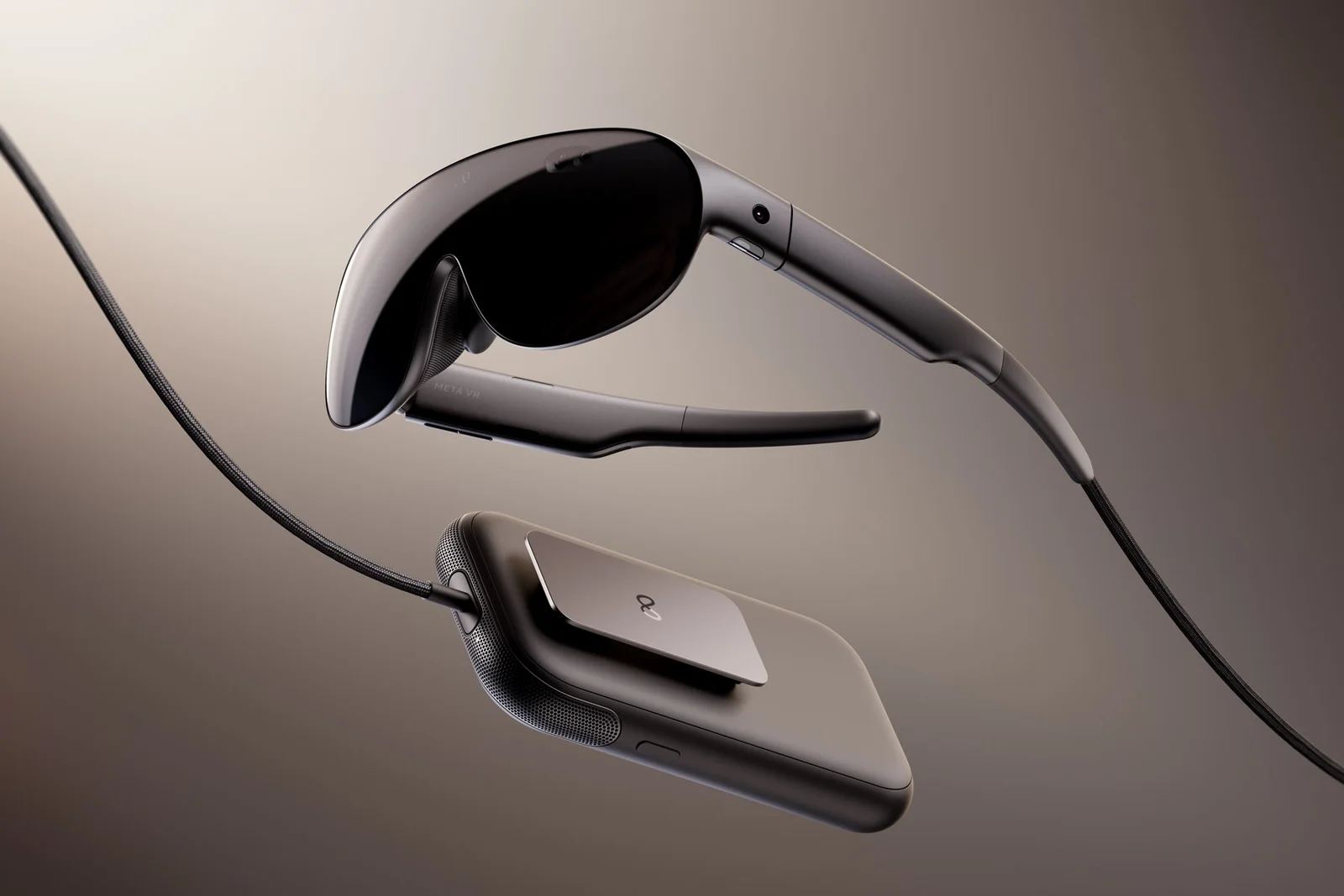
Meta has officially revealed its next-generation mixed reality device, the VR Glasses, a lightweight 100g headset priced at $1,300 for a Spring 2027 launch. Formerly known as Project Phoenix, the device features a 5K micro-OLED display and connects via an optical cable to a 300g external compute puck powered by Qualcomm’s Snapdragon Reality Elite chip. The system supports hand and eye tracking, wireless multi-screen desktop streaming, and full compatibility with the Quest 3 software library. While the hardware is the primary focus, Meta also highlighted its Muse AI assistant, which has become the top app in the US, and new camera-less audio smart glasses.
Key points
- The VR Glasses weigh approximately 100g, with the battery and compute unit housed in a separate 300g puck connected by an optical cable.
- The device features a 5K Infinite Display with 37 pixels per degree (PPD), offering higher pixel density than the Quest 3 but a narrower field of view than the Apple Vision Pro.
- Priced at $1,300, the headset is slated for release in Spring 2027 and will support 128GB of internal storage, expandable to 1TB via microSD.
- Input methods include gaze and hand gestures, with optional support for Quest Touch Plus controllers and a virtual keyboard feature called Surface Keyboard.
- Meta is emphasizing productivity by allowing wireless multi-screen virtual desktop streaming from Mac, PC, or phone, alongside native DisplayPort support.
Background
Meta had previously hinted at the VR Glasses, codenamed Project Phoenix, through leaks in Quest firmware and Horizon OS visuals in September 2026. These earlier reports indicated a shift toward a slim, glasses-like design with a tethered compute model and prescription lens support. The official announcement at Meta Connect 2026 confirms these specifications and positions the device as a bridge between traditional headsets and smart eyewear.
How outlets are covering it
Road to VR provides the most granular technical breakdown, detailing the 37 PPD resolution, 12GB of RAM, and the specific Snapdragon Reality Elite processor. Business Insider emphasizes the broader ecosystem, noting that the VR Glasses are part of a larger 'Muse moment' that includes a new handheld AI charm and camera-less audio glasses. Financial Times frames the launch within Meta’s broader AI strategy, highlighting how the success of the Muse app has boosted the company’s market capitalization to $1.9 trillion, despite ongoing privacy concerns regarding its smart glasses. While all sources agree on the $1,300 price point and Spring 2027 release, Road to VR focuses on hardware specs, while Business Insider and Financial Times highlight the software and AI integration.
Why it matters
The VR Glasses represent a significant shift in Meta’s hardware strategy, moving away from bulky, standalone headsets toward a lighter, tethered design that prioritizes comfort and productivity. By integrating AI features and supporting multi-screen desktop streaming, Meta is positioning the device as a versatile tool for both entertainment and work, potentially challenging Apple’s Vision Pro and other competitors in the mixed reality market.
What to watch
Meta is expected to provide a precise release date for the VR Glasses in the coming months, with the device slated for Spring 2027. The company will also continue to expand its Muse AI assistant, which has already become the top app in the US, and will likely address privacy concerns surrounding its smart glasses as it rolls out new features and hardware.
- Meta Announces ‘VR Glasses’ Next-Gen XR Headset, Priced at $1,300 Road to VR
- Meta unveils $1,299 VR Glasses, camera-less smart glasses at Meta Connect Yahoo Finance
- Zuckerberg to unveil new AI products as Meta’s Muse app tops charts Financial Times
- The 10 biggest announcements from Meta Connect Business Insider
- Every New Game & Game Update Announced For Meta VR Glasses UploadVR
Want the full story? Read the original reporting
Read on Road to VR