
SpaceX Achieves Historic Catch of Starship Upper Stage After Booster Failure
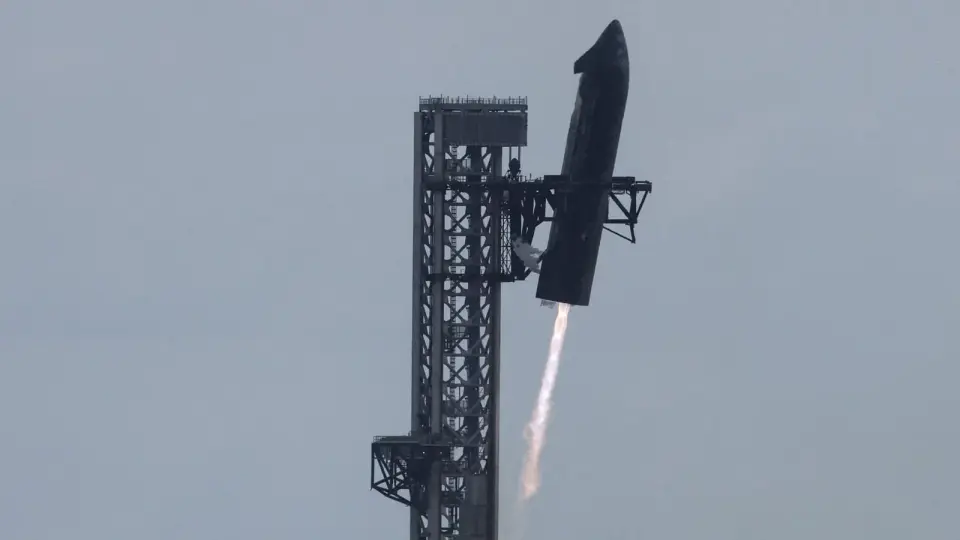
SpaceX successfully captured the upper stage of its Starship rocket using mechanical arms on its launch tower in Starbase, Texas, on November 14, 2026. This marked the first time an orbital rocket upper stage was recovered from space. The achievement occurred during Test Flight 15, which also saw the Super Heavy booster fail to land and explode in the Gulf of Mexico. The upper stage orbited Earth 14 times before landing, while the flight deployed 26 Starlink V3 satellites. This milestone is critical for SpaceX’s goal of full reusability and supports its Starlink internet expansion and future NASA lunar missions.
Key points
- SpaceX used 'chopsticks' mechanical arms on its Mechazilla tower to catch the Starship upper stage on November 14, 2026.
- The Super Heavy booster failed to land and was diverted to splash down in the Gulf of Mexico, exploding before hitting the water.
- The upper stage orbited Earth 14 times over approximately 22 hours before successfully landing at the Starbase facility in Texas.
- Test Flight 15 deployed 26 new Starlink V3 satellites, adding to a constellation of over 11,000 satellites in low Earth orbit.
- The successful catch is a key step toward making Starship fully reusable, which is essential for SpaceX’s Starlink business and NASA’s Artemis III lunar mission.
Background
SpaceX’s previous test flight in September 2026 was the first to attempt orbital insertion, though it faced engine issues. Prior to that, Starship flights were suborbital. The company has been working to achieve full reusability for both the booster and upper stage to reduce costs and support its Starlink satellite internet service, which is its primary profit center. NASA is also relying on Starship for future lunar missions, including Artemis III, which requires in-orbit propellant transfer capabilities.
How outlets are covering it
CNBC and SpaceNews both highlight the historic nature of catching the upper stage, emphasizing its significance for reusability. CNN provides additional context on the previous flight’s engine issues and the risks of orbital reentry, noting that SpaceX had to make critical decisions to proceed. BBC focused on the live coverage and the failed booster catch, describing the booster’s explosion. All sources agree on the success of the upper stage catch but differ in emphasis: CNBC and SpaceNews focus on the milestone’s importance for SpaceX’s business and NASA missions, while CNN details the technical challenges and risks involved in the flight.
Why it matters
The successful catch of the Starship upper stage is a major step toward making the rocket fully reusable, which could significantly reduce the cost of space travel and satellite deployment. This is crucial for SpaceX’s Starlink service, which relies on frequent launches to expand its satellite network. It also supports NASA’s plans for lunar missions, as Starship is expected to transport astronauts and cargo to the Moon. Achieving full reusability could also pave the way for SpaceX’s long-term goal of colonizing Mars.
What to watch
SpaceX will analyze data from the flight to improve the booster catch and ensure the upper stage’s reliability. The company is expected to demonstrate in-orbit propellant transfer in early 2027, a critical step for lunar missions. NASA will continue to work with SpaceX to prepare for Artemis III, which requires Starship to be ready for lunar landings. SpaceX may also explore extending Starlink services to the Moon, as mentioned by NASA officials.
- SpaceX plans to try first-ever catch of Starship rocket from orbit CNBC
- Live updates: SpaceX Starship soars in orbit, still aiming for ship catch in unprecedented test flight CNN
- SpaceX catches Starship upper stage SpaceNews
- SpaceX watch live: Second attempt to catch Starship rocket on return to Earth BBC
- SpaceX Starship Flight 15 live updates: Starship heat shield looks good for landing attempt today Space
Want the full story? Read the original reporting
Read on CNBC