
China suppresses flood footage in Tibet as rescue efforts intensify
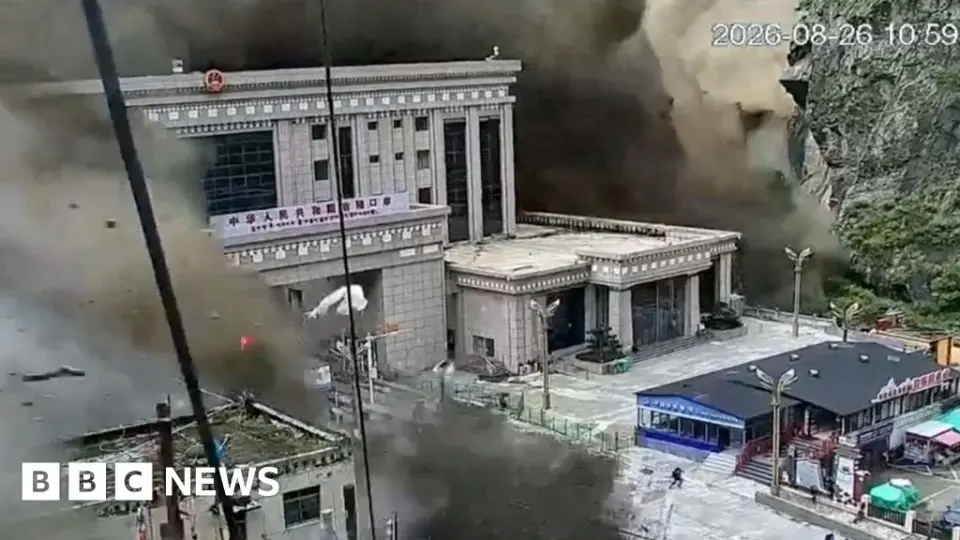
A glacial collapse in the Himalayas triggered massive flash floods on the Nepal-Tibet border, killing nearly 600 people and leaving 2,500 missing. While global media widely circulated footage of the devastation at Gyirong Port, Chinese state media restricted coverage to a single still image, prioritizing stability over transparency. Survivors describe the event as a 'tsunami' of water and debris, with international rescue efforts ongoing amid concerns about a second flood.
Key points
- A glacier near Langtang Lirung collapsed, sending a 7-9 meter surge of water and debris into the Lende Khola river, overwhelming the Gyirong Port border crossing between Nepal and Tibet.
- The disaster has killed nearly 600 people, with approximately 2,500 individuals reported missing, including 90 Americans and 33 British nationals.
- Chinese authorities have heavily censored the event, broadcasting only one still image on state news and removing user-generated footage from domestic platforms, contrasting with widespread global video coverage.
- Chinese Premier Li Qiang visited the region to inspect debris removal, while President Xi Jinping chaired an emergency meeting to coordinate rescue operations.
- Survivors, including a couple from California, described the flood as a 'monster' wave of dark water that swept away homes and people, forcing them to climb to higher ground for survival.
Background
This disaster follows a series of earlier reports indicating that the flood was caused by a rapid glacial collapse rather than seismic activity. Previous coverage noted that Nepal listed 537 foreign nationals as missing and that border rescue efforts were temporarily paused due to fears of a barrier lake overflowing. The current situation highlights the ongoing tension between China's desire for stability in the Tibetan region and the international community's demand for transparent information regarding the disaster's impact.
How outlets are covering it
BBC emphasizes the contrast between global visibility of the flood footage and China's domestic censorship, noting that the state media focused on rescue efforts and the launch of President Xi's new book rather than the disaster's human toll. CBS News focuses on the personal accounts of survivors, highlighting the terrifying nature of the event and the miraculous survival of some tourists. Both outlets agree on the scale of the disaster but differ in focus: BBC highlights the political and informational suppression, while CBS highlights the human experience and survival stories.
Why it matters
The incident underscores the challenges of disaster response in politically sensitive regions, where information control can hinder international coordination and family reunification. It also highlights the increasing frequency of glacial collapses in the Himalayas due to climate change, posing ongoing risks to border communities and infrastructure.
What to watch
Rescue operations are expected to continue as Chinese and Nepalese forces work to reach affected areas. International families are awaiting updates on missing relatives, and experts are monitoring the barrier lake for potential secondary floods. China may continue to restrict detailed information while emphasizing its rescue efforts to maintain public confidence.
- Footage of Tibet floods isn't being shown in China - and we know little about victims there BBC
- California couple recounts surviving deadly Nepal flood: "I knew I was going to die" CBS News
- Nepal needs help in technical areas, not search and rescue, foreign minister says Reuters
- Nepal floods latest: Search for survivors enters fourth day with almost 2,000 still missing - follow live BBC
- Disaster Experts Say Nepal Glacier Collapse Was Difficult to Predict The New York Times
Want the full story? Read the original reporting
Read on BBC