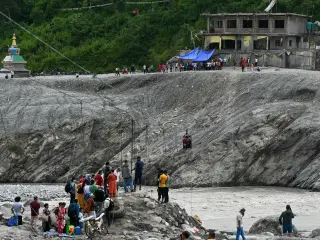
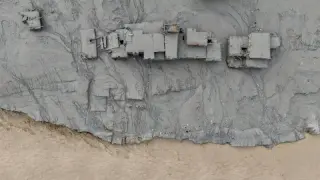
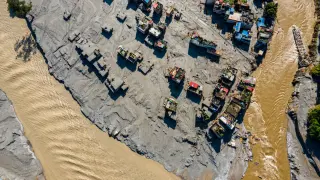
A massive rock-ice avalanche in Nepal on August 26, 2026, triggered a catastrophic debris flood that killed over 1,300 people and left thousands missing. Scientists attribute the event to a complex cascade of climate-driven factors, including permafrost thaw and glacier retreat, which exceeded the capacity of existing early-warning systems. The disaster highlights the urgent need for cross-border cooperation and anticipatory action across the Himalayan region.
A team of over 20 international scientists concluded that the August 2026 flood in Nepal was not caused by a single event, but by a complex cascade of factors intensified by human-driven climate change. The disaster, which killed at least 1,300 people and left over 5,000 missing, began when a massive chunk of rock and ice from Langtang Lirung mountain collapsed. This avalanche released energy equivalent to a magnitude 5.2 earthquake, melting ice instantly and triggering a flood wave that traveled over 20 miles downstream. The analysis highlights how rising temperatures, thawing permafrost, and glacier thinning weakened the mountain's stability, making such an unprecedented event possible.
A team of over 20 international scientists from World Weather Attribution (WWA) has concluded that the August 2026 flash floods in Nepal, which killed at least 1,300 people and left over 5,000 missing, were caused by a complex cascade of factors rather than a single event. The disaster began when a massive section of rock and glacier ice, approximately 2,000 feet wide, sheared off Langtang Lirung mountain. This collapse released energy equivalent to a magnitude 5.2 earthquake, triggering a debris flood that traveled over 200 miles downstream. While the event was fundamentally different from typical riverine floods, researchers found that human-induced climate change significantly weakened the mountain’s stability. Key factors included rising temperatures that degraded permafrost, accelerated glacier thinning, and record-breaking warmth in July and August 2026. The report notes that no existing early warning system could have provided sufficient lead time for such an unprecedented event, highlighting the limits of current adaptation strategies in the Himalayas.
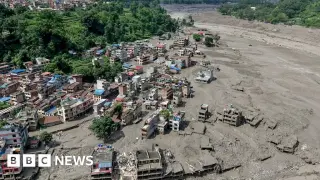
Floods triggered by a glacial collapse have devastated Nepal and Tibet, washing away communities and leaving thousands missing as the death toll rises; about 90 Americans are unaccounted for, and the U.S. has pledged $500,000 in aid as rescue teams continue searching amid widespread damage along the Bhotekoshi River and surrounding areas.
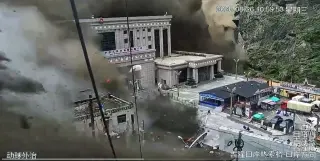
A flash flood triggered by a glacial collapse swept through Gyirong Port at the Nepal–China border, wiping out a major border crossing that handles about $600 million in annual trade and leaving dozens dead with hundreds missing. Relief teams are urgently searching for survivors as debris forms a potential upstream lake, and authorities note the border post is in a flood-prone Himalayan region with past flood damage and ongoing glacier retreat.
Flash floods and landslides along the Nepal-Tibet border, caused by a glacial collapse rather than an earthquake, have killed many and left hundreds missing as rescuers race to reach affected communities; scientists say climate-driven glacier instability may play a factor, while authorities warn of potential secondary flooding from debris and river blockages as international partners mobilize aid.
A catastrophic flash flood on the Nepal–Tibet border, likely triggered by a glacial collapse, has killed at least 160 and left hundreds missing, many foreign tourists. Nepal reports 157 bodies recovered and Tibet noting casualties, with totals of missing across both sides running into the thousands. Rescue teams continue searching as authorities warn of a potential second flood; the USGS says there was no earthquake, only a glacial collapse and debris flow. International aid networks, including the UN and Red Cross, are delivering relief as the disaster unfolds.