
Colombia Earthquake Death Toll Reaches 239 as Rescue Window Narrows Amid Aid Restrictions
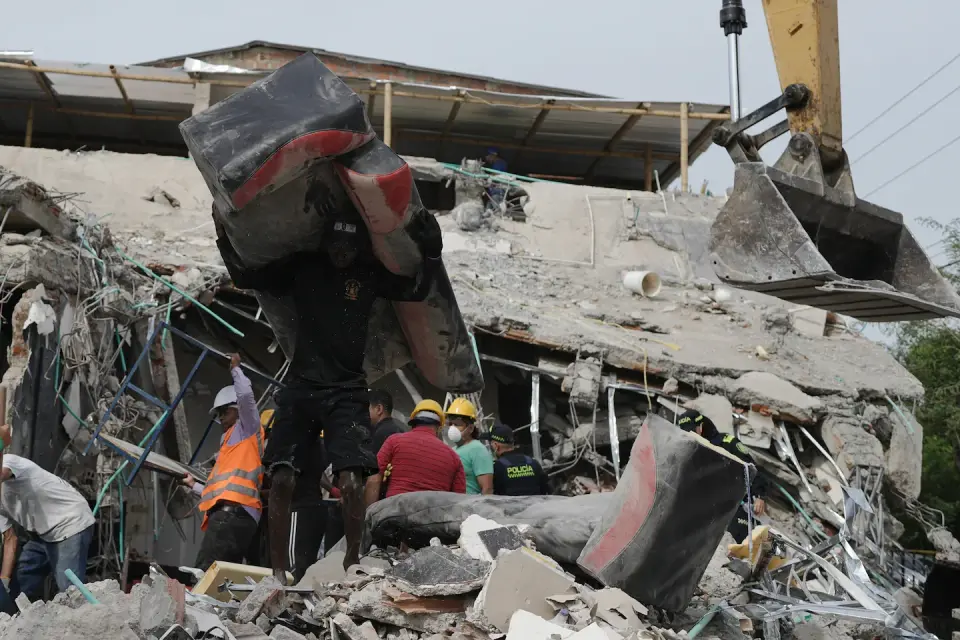
A 7.4-magnitude earthquake on Colombia’s Pacific coast has killed at least 239 people and left hundreds missing. As the critical 72-hour rescue window closes, authorities are limiting international search teams to four nations, sparking debate over the adequacy of domestic resources.
Key points
- At least 239 people have died and over 3,700 have been injured in the 7.4-magnitude quake that struck Monday, the strongest in a decade.
- Approximately 287 to 380 people remain missing, with nearly 50,000 left homeless after 140 buildings collapsed.
- The Colombian government has restricted rescue teams to the US, El Salvador, Ecuador, and Israel, citing certification requirements.
- The US State Department has committed $15.5 million in aid, while Mexico’s rescue brigade was denied entry despite offering assistance.
- Cali Mayor Alejandro Eder warned that the 'most critical' window for finding survivors is closing rapidly.
Background
This disaster follows a series of seismic events in the region, including Venezuela’s June earthquakes which killed nearly 5,000 people. Earlier reports from August 10 and 11 indicated the death toll had already surpassed 111, with widespread damage reported from Cali to Manizales and Pereira. The current situation represents a significant escalation in the severity of the response and the complexity of international coordination.
How outlets are covering it
The Washington Post emphasizes the scale of the destruction and the international aid response, noting the US commitment and the involvement of teams from Los Angeles and Virginia. CNN, however, highlights a diplomatic friction, reporting that Colombia’s new government under President Abelardo De la Espriella has restricted rescue teams to only four countries. CNN notes that Mexico’s renowned 'Topos' brigade was turned away, with Mexican President Claudia Sheinbaum confirming her team was not approved. Political scientist Sandra Borda, cited by CNN, criticized the move as a 'deep distrust' of the international community, while the Colombian Foreign Ministry insisted it was not excluding any country ideologically. The outlets differ in their focus: The Post centers on the human toll and aid logistics, while CNN scrutinizes the political decision-making behind the limited international access.
Why it matters
The earthquake marks the most severe seismic event in Colombia in a decade, testing the resilience of the newly inaugurated government. The decision to limit international rescue teams raises questions about the balance between sovereignty and the urgent need for specialized expertise during a natural disaster. As the 72-hour survival window closes, the effectiveness of the domestic response will be scrutinized, with potential long-term implications for regional disaster cooperation and the economic cost of recovery.
What to watch
Rescue operations will continue as the critical window closes, with authorities focusing on the missing. International aid shipments, including food and medical supplies from Mexico, are expected to continue. The government is preparing a list of 'specific needs' for international assistance, potentially expanding the scope of aid beyond search and rescue. The death toll is expected to rise as recovery operations proceed in remote areas.
- Colombia earthquake deaths climb to 239; hundreds remain missing The Washington Post
- A big earthquake reveals two very different Colombias The Economist
- Colombia limits foreign rescue teams as earthquake survival window narrows CNN
- King Charles 'dreadfully saddened' as he shares emotional message with Queen Camilla about 'most difficult of times' Currently.com
- A Bright Spot in Colombia as Rescuers Free Quake Victim The New York Times
Want the full story? Read the original reporting
Read on The Washington Post