
France Declares Emergency Measures After Historic Riots Target Heritage Sites
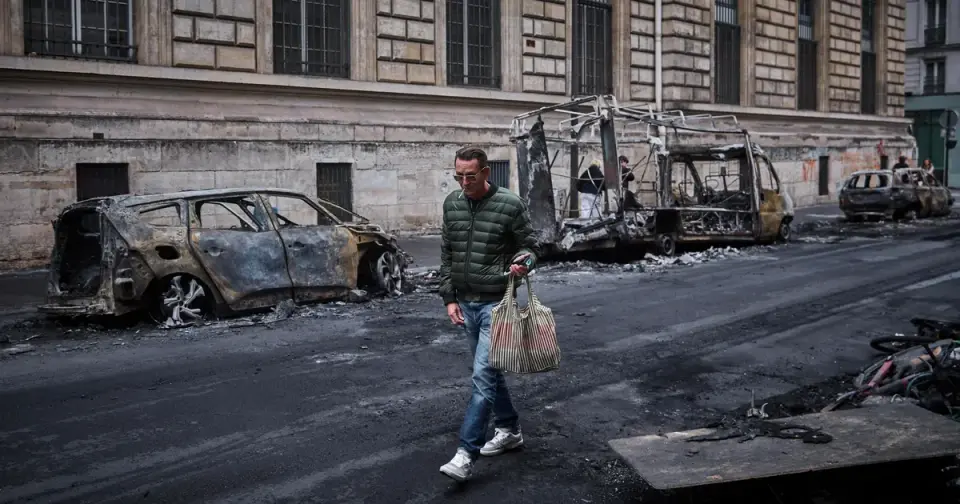
French authorities imposed curfews and considered a state of emergency after weekend riots destroyed historic landmarks and resulted in over 2,500 arrests. The unrest, which began as student protests over school conditions, escalated into nationwide violence involving looting and arson. While officials acknowledge police failures, Prime Minister Sébastien Lecornu blames far-left agitators, and President Emmanuel Macron vows to hold those responsible for the chaos accountable.
Key points
- Curfews were imposed in parts of Paris, Nice, and Lille, with Marseille banning all large gatherings.
- The 19th-century town hall in Limoges was burned to the ground, and the Louvre in Paris was blockaded by students.
- Over 2,500 people were arrested, and at least 3,000 businesses were pillaged across the country.
- Interior Minister Laurent Nuñez offered his resignation, acknowledging police were unprepared for the scale of the violence.
- President Macron vowed to hold those who sought to bring down the republic accountable, while PM Lecornu blamed an 'ultra-left movement' for orchestrating disorder.
Background
The current unrest follows weeks of student-led protests over crumbling schools and teacher shortages, which snowballed into nationwide demonstrations over the rising cost of living and declining public services. Earlier reports indicated that similar protests had emerged in Belgium, Portugal, Italy, and Albania, raising concerns about a broader European wave of unrest. The government has also demanded that online marketplaces purge listings for goods looted during the riots.
How outlets are covering it
CBS News reports that French officials were considering declaring a state of emergency and implementing local curfews, with President Macron vowing that those who sought to bring down the republic would be held accountable. The New York Times highlights that Interior Minister Laurent Nuñez offered his resignation, acknowledging police were unprepared, while Prime Minister Lecornu defended their efforts and blamed a 'shadowy network' of far-left instigators. AP News notes that the protests began as demonstrations by high school students about a month ago, but grew into a nationwide outpouring of anger over the soaring cost of living, with more than 500,000 people taking to the streets on Saturday. The sources disagree on the primary cause of the violence, with some emphasizing the role of opportunists and agitators, while others focus on the legitimate grievances of the protesters.
Why it matters
The riots have damaged historic landmarks and disrupted public life, with the government struggling to restore order. The unrest has also raised concerns about the stability of the French democratic process, with Lecornu warning that violent minorities could prevent the holding of the presidential election in April. The government's response, including curfews and potential state of emergency, will be closely watched as it attempts to balance public safety with the right to protest.
What to watch
The government is expected to implement further measures to restore order, including potential state of emergency and increased police presence. The students who started the protest movement are now on a two-week vacation, but other groups have called for another mass action next weekend. The government is also pushing insurance companies to speed up reimbursements for affected businesses and workers.
- France's leaders vow to restore order after weekend of violent riots across the country CBS News
- France to Impose Curfews After Nationwide Rioting The New York Times
- How France’s worst rioting in years erupted and how the government responded AP News
- France in turmoil after riots and looting: What we know Reuters
- Rioting in France: What’s Fueling the Violence and What Happens Next WSJ
Want the full story? Read the original reporting
Read on CBS News