
France Education Crisis: 2,000 Arrests and School Fires Spark Budget and Political Fallout
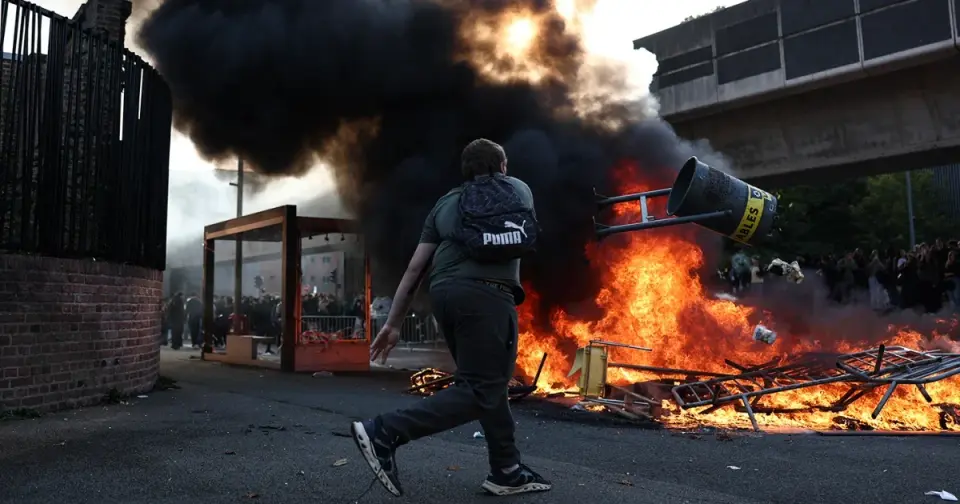
Student protests in France over poor school conditions and teacher shortages have escalated into violent unrest, resulting in approximately 2,000 arrests and the closure of over 400 schools. While the government blames radical left-wing parties for inciting the violence, trade unions and opposition figures argue the police response is disproportionate. The unrest coincides with a critical period for France's 2027 budget negotiations, where significant fiscal adjustments are planned.
Key points
- Approximately 2,000 people have been arrested since the protests began, with about two-thirds placed in police custody, according to Justice Minister Gerald Darmanin.
- Over 400 schools remained closed on Friday, with more than 560 educational establishments disrupted nationwide, according to the Education Ministry.
- Violence included fires at schools in Paris, Marseille, and Nantes, with nearly 40 schools in Nantes suffering approximately 3 million euros in damage.
- The government accused the hard-left party La France Insoumise (LFI) of initiating the movement, a claim denied by LFI leaders who described the protests as self-organized.
- France's second-largest trade union, CGT, called for members to join student protests on October 6, criticizing the government's use of force against 'legitimate demands.'
- The unrest occurs as the government prepares a 2027 budget targeting 54 billion euros in fiscal adjustments, including potential wage freezes for public sector workers like teachers.
Background
The current escalation follows a rapid intensification of student protests that began in late September in the Paris region. Previous coverage noted that by October 1, authorities had reported nearly 2,000 arrests and over 300 injuries in a single day. The movement has spread nationwide, with students blocking schools and public transport. The government has labeled the actions 'urban violence' and convened crisis meetings, while student unions and opposition parties have condemned the police response as disproportionate. The situation is particularly volatile ahead of the 2027 presidential election, with youth movements historically influencing political outcomes in France.
How outlets are covering it
Outlets differ in their framing of the protests' origins and the government's response. NBC News and CNBC emphasize the government's claim that the movement was initiated by politicians from the hard left, including La France Insoumise (LFI), with intelligence agencies viewing it as a 'maneuver organized by LFI and its ultra-left proxies.' LFI lawmakers, however, denied these claims, with Louis Boyard and Jean-Luc Mélenchon stating the protests are 'self-organized.' BBC News highlights the internal divisions among protesters, noting footage of students attempting to extinguish fires before being charged by other groups, suggesting not all participants share the same objectives. CBS News focuses on the students' grievances, such as overcrowded classrooms and teacher shortages, while also noting the government's call for parents to keep children out of the streets. All outlets agree on the scale of the unrest, with over 400 schools closed and 2,000 arrests, but differ in attributing the cause to either political manipulation or genuine student discontent.
Why it matters
The unrest highlights the intersection of social unrest, political polarization, and fiscal policy in France. The government's attempt to blame the radical left for the violence could influence the upcoming presidential election, as youth voters are a key demographic. The timing of the protests coincides with critical budget negotiations, where the government seeks to implement significant fiscal adjustments, including potential wage freezes for public sector workers. The unrest also raises questions about the effectiveness of the government's response to student grievances and the potential for further escalation, particularly with trade unions joining the movement. The situation could have broader implications for France's economic stability and political landscape, as the country faces challenges in reducing its budget deficit and debt while managing social unrest.
What to watch
The government is expected to continue its efforts to contain the unrest, with Justice Minister Gerald Darmanin calling for parents to be held liable for damage caused by their children. Education Minister Edouard Geffray is scheduled to meet with teachers' unions, student representatives, and parents' groups to discuss the situation. The CGT trade union has called for members to join student protests on October 6, which could further escalate the unrest. The government is also preparing a 2027 budget targeting 54 billion euros in fiscal adjustments, which could include wage freezes for public sector workers. The situation is expected to remain volatile ahead of the 2027 presidential election, with youth movements potentially influencing the outcome.
- 2,000 arrested in France as student protests escalate into violence nbcnews.com
- France school protests: Hundreds of schools closed and 40 head teachers hurt BBC
- France student protests spread from Paris, with violent clashes forcing hundreds of high schools to close CBS News
- A violent classroom revolt is becoming France's next big crisis CNBC
- Fires, fury and hundreds of arrests as France gripped by student protests theguardian.com
Want the full story? Read the original reporting
Read on nbcnews.com