
France Wakes to Widespread Damage After Protests Devolve into Riots
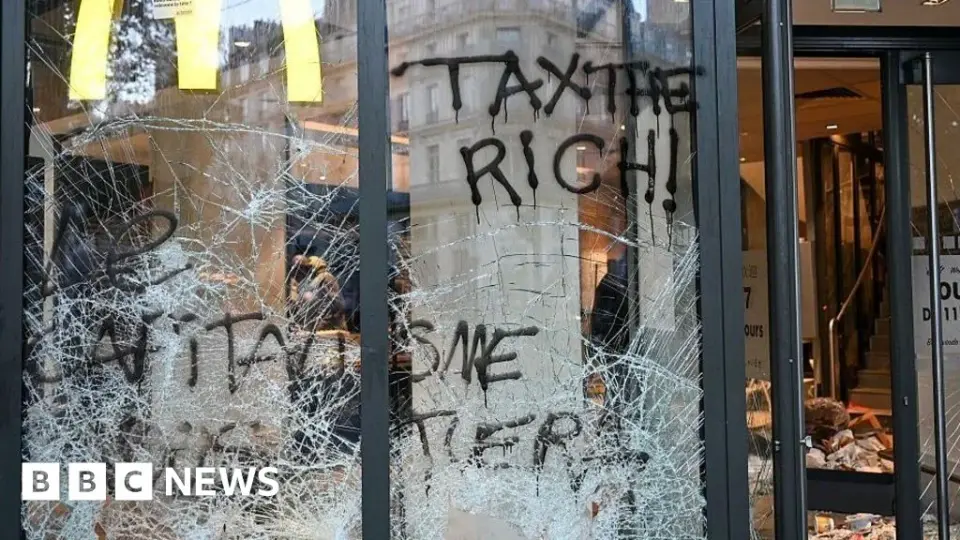
France faced its largest demonstrations in years on Saturday, with approximately 550,000 people protesting rising costs and poor public services. While much of the activity was peaceful, the day devolved into violent riots and looting in major cities, resulting in widespread damage to historic buildings and retail stores. Police arrested around 1,800 people, and over 500 emergency workers were injured. The unrest has left cities like Paris, Marseille, and Limoges in a state of shock, with significant infrastructure destroyed.
Key points
- Approximately 550,000 demonstrators took to the streets across France on Saturday, October 17, 2026.
- Protests initially focused on fuel prices, cost of living, and deteriorating school conditions.
- Violence escalated into riots and looting in Paris, Marseille, Lille, and other cities.
- Police arrested approximately 1,800 people during the unrest.
- Over 500 police officers, gendarmes, and firefighters were injured.
- Around 1,500 shops and retailers were damaged, including high-end stores in Paris.
Background
The unrest is part of a multi-week protest movement that began late last month, involving students, unions, and the 'yellow vest' movement. Earlier coverage noted that the demonstrations had already drawn in various groups and that President Macron had condemned the violence while political opponents blamed the government for failing to address legitimate grievances. The current events represent a significant escalation in this ongoing conflict.
How outlets are covering it
BBC and The New York Times both report on the widespread damage and the transition from peaceful protests to violent riots. BBC emphasizes the looting and the reactions of local residents, while The New York Times focuses on the destruction of symbols of the state, such as the Limoges city hall. Yahoo's coverage is limited to the aftermath in Paris, highlighting the debris and the clean-up efforts. All sources agree on the scale of the protests and the severity of the unrest, but they differ in their emphasis on the specific types of damage and the reactions of different groups.
Why it matters
The unrest highlights the deepening social and economic tensions in France, with significant implications for public safety, infrastructure, and political stability. The destruction of historic buildings and the widespread looting indicate a level of chaos that could have long-term consequences for the country's economy and social fabric. The response from authorities and political leaders will be crucial in determining how the situation evolves in the coming days.
What to watch
Authorities are likely to continue investigating the unrest and pursuing those responsible for the violence and looting. Political leaders may face increased pressure to address the underlying grievances that sparked the protests. The clean-up efforts in affected cities will continue, and there may be further demonstrations or unrest in the coming days.
- France protests: Burnt out cars and shattered glass on Paris streets after protests turn to riots and looting BBC
- France Reels After Largest Riots in Years The New York Times
- Parisians survey damage after night of clashes and looting Yahoo
- 'No place for violence,' Macron says, as protesters clash with police in cities across France BBC
- France counts cost of worst unrest in years Reuters
Want the full story? Read the original reporting
Read on BBC