
Gulf States Repel Iranian Strikes as U.S. Targets Qeshm Island in Escalating Tit-for-Tat
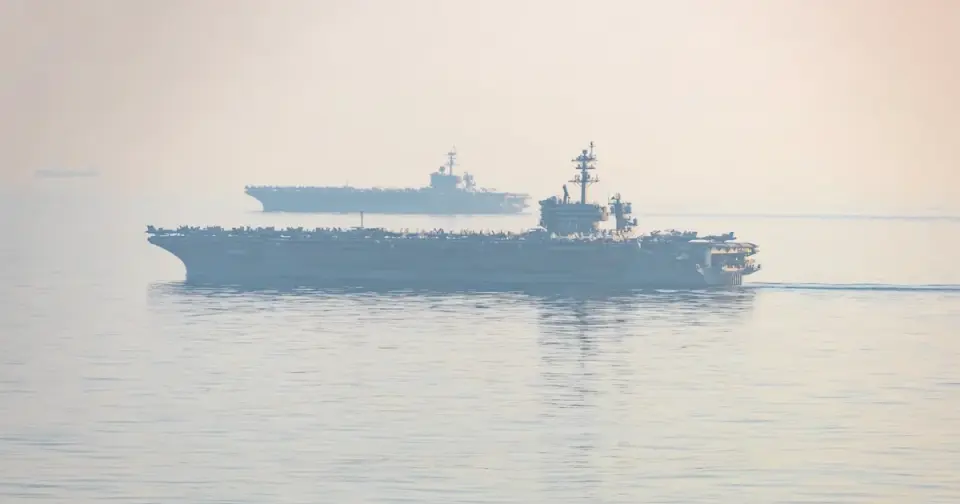
The U.S. and Iran have resumed direct military exchanges, with Washington striking an IRGC site on Qeshm Island in response to Iranian attacks on U.S. assets in Bahrain and Kuwait. Gulf states Bahrain and Kuwait reported intercepting Iranian drones, while Saudi Arabia launched major airstrikes against Houthi targets in Yemen. The U.S. naval presence in the region now exceeds levels seen during the peak of hostilities in July, featuring three carrier strike groups. Meanwhile, Iraq has resumed oil exports to Turkey via pipeline to bypass the Strait of Hormuz, and the IAEA has approved safeguards for a new U.S.-Saudi nuclear deal.
Key points
- U.S. Central Command confirmed precision strikes on an IRGC missile site on Qeshm Island, citing self-defense after Iranian attacks on U.S. facilities in Bahrain and Kuwait.
- Bahrain and Kuwait reported successfully intercepting Iranian drone and missile attacks, with Kuwait’s foreign ministry warning of dangerous escalation.
- The Saudi-led coalition announced airstrikes destroying 60 military targets in Houthi-held Yemen, including missile tunnels and drone workshops, though Houthis reported civilian casualties.
- The U.S. now maintains three aircraft carrier strike groups in the region, a naval presence greater than during the peak of Operation Epic Fury, according to the Institute for National Security Studies.
- Iraq resumed pumping 120,000 barrels of oil daily to Turkey via pipeline, aiming to reach 500,000 barrels daily to bypass Strait of Hormuz disruptions.
- IAEA chief Rafael Grossi called the U.S.-Saudi civilian nuclear agreement 'very satisfactory,' noting Saudi Arabia agreed to additional voluntary verification measures.
Background
This escalation follows a period of intermittent conflict since a June 2026 peace agreement collapsed. Previous incidents included tanker attacks in the Strait of Hormuz and U.S. strikes on Iranian-linked vessels in the Gulf of Oman. The current 'frozen war' dynamic involves both sides maintaining blockades and trading limited strikes while avoiding full-scale confrontation.
How outlets are covering it
CBS News and Al Jazeera focus on the immediate military exchanges, highlighting U.S. strikes on Qeshm Island and Iranian retaliatory attacks on Gulf states. The New York Times offers a broader strategic perspective, noting that Gulf Arab analysts fear the conflict may end with Iran more dominant, as the U.S. and Israel may lack the will or capability to fully defeat Iran through air power alone. While CBS emphasizes the tactical details of the strikes, The Times highlights the underlying anxiety among regional allies about the long-term implications of a protracted, unresolved conflict.
Why it matters
The renewed direct strikes between the U.S. and Iran risk triggering a wider regional war, particularly as Gulf states like Bahrain and Kuwait become direct targets. The increased U.S. naval presence signals a sustained commitment to the region, while the resumption of Iraqi oil exports via Turkey indicates efforts to mitigate economic impacts from Strait of Hormuz disruptions. The IAEA’s approval of the U.S.-Saudi nuclear deal also raises concerns about nuclear proliferation in the region, potentially altering the strategic balance.
What to watch
Analysts are watching for further escalation as the U.S. and Iran continue to trade strikes. The temporary nature of the three-carrier presence suggests rotations may occur, but the sustained naval buildup indicates a long-term commitment. Diplomatic efforts may resume if the current tit-for-tat strikes fail to achieve decisive outcomes, though the 'frozen war' dynamic suggests continued intermittent conflict is likely.
- Iran War Updates: Gulf states and tankers under fire as U.S. and Iran ramp back up tit-for-tat strikes CBS News
- Iran Attacks Kuwait and Bahrain, Further Escalating Fight Over Strait WSJ
- Iran widens Gulf attacks by targeting a US air base in Kuwait and sites in Bahrain The Boston Globe
- Iran war live: US says it hits IRGC Qeshm site; Iran says US drone downed Al Jazeera
- Opinion | Shock and Dread in the Gulf The New York Times
Want the full story? Read the original reporting
Read on CBS News