
Iranian Strikes on Bahrain Leave Navy Families in Financial Limbo and Force Logistics Overhaul
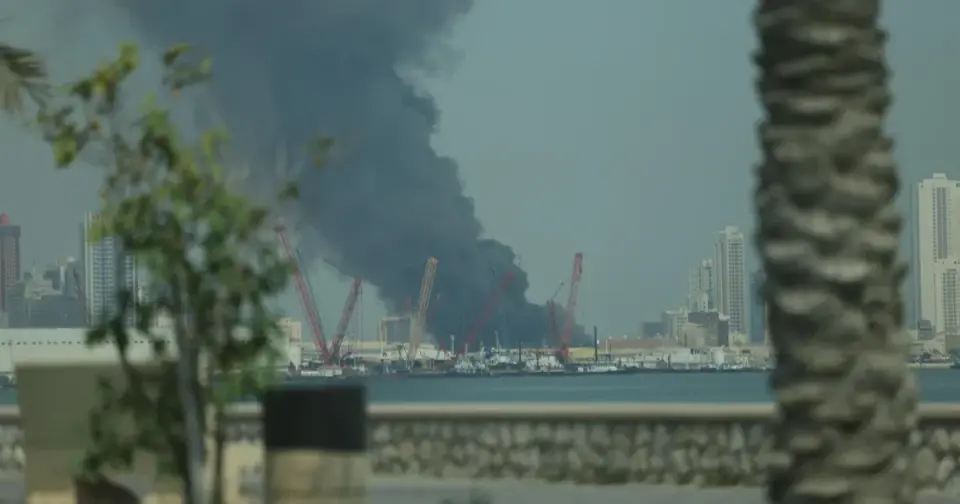
Iranian attacks on the US Navy’s Fifth Fleet headquarters in Bahrain during the war’s opening days caught military families off guard, delaying evacuations and causing significant financial strain. The damage has forced the Navy to reroute supply lines from Diego Garcia, extending delivery times from 5-7 days to 14-18 days. While no personnel were killed, the Pentagon has not released a public cost estimate for the base damage, and families remain in temporary housing in the US.
Key points
- Iran targeted Naval Support Activity Bahrain on the first day of the war, before all military families had evacuated, with some waiting over a week for safety.
- The attacks caused extensive damage to the base, including a key radar system, but the Pentagon has not included this damage in its public war cost estimates.
- Logistics for ships in the Middle East were disrupted, forcing the USS Abraham Lincoln to rely on supplies from Diego Garcia, 2,200 miles away, extending delivery cycles to 14-18 days.
- Approximately 1,450 service members and families have been evacuated from Bahrain, many now facing financial hardship due to dual housing costs and delayed reimbursement claims.
- The Navy has no immediate plans to restore its previous footprint in Bahrain, leaving some personnel’s belongings behind while they settle into temporary housing in Norfolk or Tampa.
Background
The USS Abraham Lincoln had already faced severe strain during a 270-day deployment, the longest since the Vietnam era, as Iranian attacks on Bahrain forced the carrier to rely on distant supply routes. Recent archive reports noted that sailors described this deployment as the worst they had experienced, with issues including moldy showers and broken toilets, before finally docking in Pattaya, Thailand, for shore leave. The current situation in Bahrain represents a continuation of these logistical challenges, now compounded by the permanent disruption of the Fifth Fleet’s primary hub.
How outlets are covering it
CBS News emphasizes the human impact on military families, highlighting their financial struggles and the surprise nature of the attacks, noting that families were not required to evacuate until the war had already begun. The BBC focuses on the physical damage, citing photos of destroyed equipment like a Boeing E-3 Sentry and referencing a Pentagon Inspector General report that valued equipment losses at $3.7 billion. The Telegraph source was inaccessible due to a security block, so its perspective cannot be synthesized. While CBS notes the lack of a public cost estimate for base damage, the BBC cites the broader war cost of $33.4 billion up to June 29, including the $3.7 billion in equipment losses.
Why it matters
The destruction of the Fifth Fleet’s headquarters in Bahrain has fundamentally altered US naval logistics in the Middle East, increasing supply times and costs. The financial and emotional toll on military families, who are paying for two households and facing delayed reimbursements, highlights the broader human cost of the conflict beyond immediate combat operations. The Navy’s decision not to return to its previous footprint in Bahrain signals a long-term strategic shift in its regional presence.
What to watch
The Navy is working to retrieve belongings left behind in Bahrain, but there are no imminent plans to restore the base’s previous level of activity. Families have until the end of November to transition from safe havens to designated residences to continue receiving benefits. The US House of Representatives has voted three times to end the war, with a final vote likely before the November midterm elections, potentially influencing the pace of any future military commitments in the region.
- In war's opening days, Iran's attacks on Bahrain caught Navy families and sailors by surprise CBS News
- Photos show widespread damage at US sites from Iranian attacks BBC
- Iran war puts future US military presence in Middle East in question The Hill
- Spidey sense smdailyjournal.com
- Iran is proving it can push America out of the Middle East The Telegraph
Want the full story? Read the original reporting
Read on CBS News