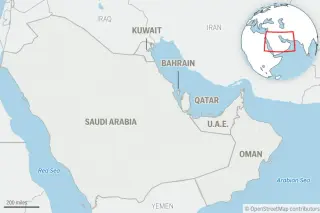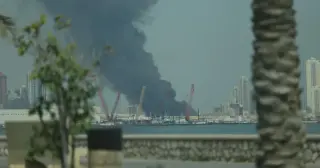
Iran vowed retaliation after U.S. strikes, naming Bahrain and Kuwait as targets, and moved to limit its oil sales in response to ship attacks, signaling heightened regional tension.
Iran, via the IRGC, fired ballistic missiles and drones at U.S. targets in Kuwait and Bahrain in retaliation for U.S. strikes on Iranian facilities, prompting condemnations and raising the risk of wider escalation around the Strait of Hormuz amid a fragile ceasefire.
On day 121 of the US-Israel confrontation with Iran, the US conducted a second day of strikes on Iranian coastal targets near the Strait of Hormuz, triggering air-raid sirens in Bahrain and heightened Kuwaiti defences. Iran’s IRGC said it retaliated by firing missiles and drones at the US Ali Al Salem base in Kuwait and the US Fifth Fleet HQ in Bahrain. Gulf states including Oman, Qatar, Kuwait and the UAE condemned the Bahrain attack, while a US official said there were no reported casualties or major damage. In parallel, Israel carried out new strikes in southern Lebanon amid a US-brokered framework deal with Beirut, which drew mixed reactions from regional actors.
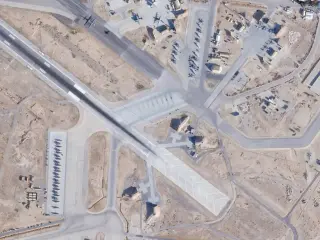
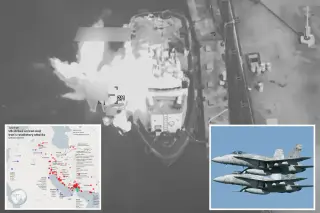
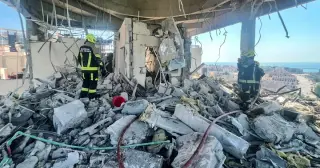
Iran’s missile and drone strikes hit NSA Bahrain, the US Navy base in Bahrain, damaging the command headquarters and several other facilities; US officials say no personnel were killed and most sailors were evacuated, but a Wall Street Journal investigation based on satellite imagery suggests the damage was greater than publicly acknowledged. The strikes have prompted the Pentagon to rethink America’s Gulf footprint, including possible base redesigns, relocations, or dispersed command nodes, with Israel mentioned as a potential hosting site. Total war costs remain unclear, CSIS estimates about $40 billion overall and base damages at roughly $2.2–$5.1 billion, while rebuilding NSA Bahrain could cost around $400 million.
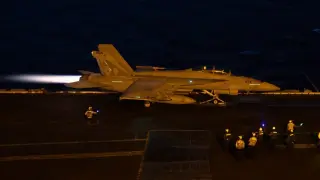
The United States says it carried out fresh strikes on multiple Iranian targets in response to Tehran’s aggression, while Iran retaliated by striking US bases in Bahrain and Kuwait and claiming to have closed the Strait of Hormuz, threatening to disrupt oil traffic; Trump warned of more attacks and Iran’s president vowed to stand firm amid the widening Gulf crisis.
Iran’s IRGC says it attacked U.S. bases in Bahrain with a drone and in Azraq, Jordan with a long-range missile in retaliation for U.S. strikes in the Strait of Hormuz, with Kuwait also reporting attacks; the move follows the downing of a U.S. Apache helicopter and the IRGC warns of further escalation, saying Washington will bear responsibility for the consequences.
The United States carried out self-defense strikes on an Iranian ground-control station on Qeshm Island after Iran fired missiles at Kuwait and Bahrain. Iran retaliated with missiles and drones targeting Bahrain and Kuwait; some missiles failed or were intercepted, while Iranian drones hit Kuwait International Airport, killing an Indian national and injuring 63 people, prompting flight suspensions. Bahrain intercepted missiles and drones with no reported casualties. Iran’s IRGC claimed strikes on the U.S. Fifth Fleet HQ in Bahrain and an American air base. Talks between the United States and Iran remain deadlocked as regional tensions escalate.
US Central Command said Iran fired several ballistic missiles toward Kuwait and Bahrain, which either fell short or were intercepted, while US forces shot down drones and carried out self-defence strikes on Qeshm Island; a new wave of Iranian drones targeted Kuwait but caused no hits, and Bahrain was attacked for the first time since the ceasefire in early April. Iran claimed the US Fifth Fleet HQ was hit, a claim Centcom denied. The flare-up comes as ceasefire talks stall and oil prices edged up.
Bahrain’s Interior Ministry said 41 people were arrested over alleged links to a group tied to Iran’s IRGC, with legal proceedings under way. While charges weren’t detailed, officials tied the case to espionage and support for Iranian attacks during the US-Israel war on Iran. The crackdown mirrors similar actions in the UAE and follows Bahrain’s broader steps against perceived pro-Iran sentiment.
Bahrain’s Interior Ministry says 69 people, described as non-Bahraini, had their citizenship revoked for allegedly supporting Iran and colluding with foreign entities amid the US–Israel war on Iran; rights groups call the move dangerous and potentially a violation of international law, with little clarity on who was affected or where they are.
A Bahraini man, Sayed Mohammed Al-Mousawi, disappeared after a Ramadan night out and eight days later his body was returned from detention with extensive injuries; officials say the death was due to cardiopulmonary arrest amid espionage charges, while rights groups allege mistreatment, highlighting a broader Gulf crackdown on dissent and social-media activity and prompting UN calls for an independent investigation into his death and due-process concerns.
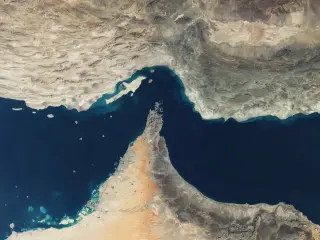
Bahrain pushed at the UN for a mandate to use all necessary means to keep the Strait of Hormuz open for international shipping, but the proposal drew opposition from several countries, highlighting global disagreements over how to safeguard this critical oil artery amid heightened regional tensions.
Formula 1 and the FIA say the Bahrain and Saudi Arabia Grands Prix will not take place in April due to safety concerns amid the Iran conflict, with no replacements planned and a five-week gap before the next race in Miami (May 3).
Formula 1 and the FIA announced the Bahrain and Saudi Arabian Grands Prix will not take place in April due to safety concerns linked to the Iran war and broader Middle East tensions, with no substitutions planned and a five-week gap before the next race in Miami.
Formula 1 canceled the April Grands Prix in Bahrain and Saudi Arabia due to the ongoing Middle East conflict, with F2, F3, and F1 Academy rounds also scrapped; the 2026 season had begun in Melbourne in early March.