
Japan summons Russian envoy after FSB arrests Hokkaido Shimbun reporter on espionage charges
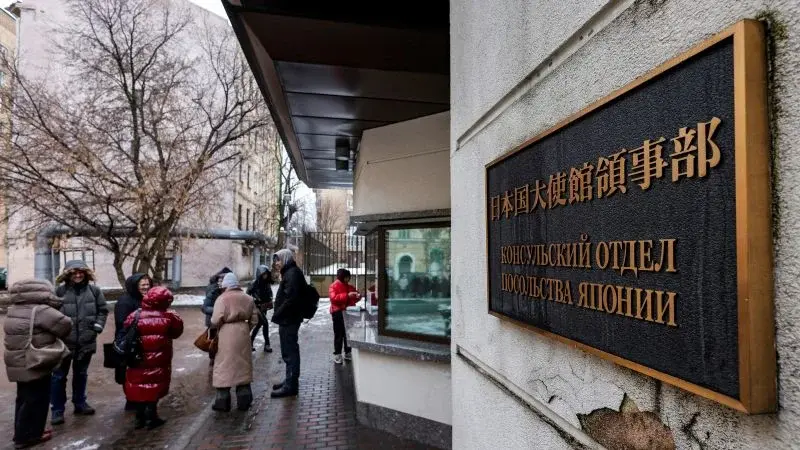
Russian security services arrested Yuki Imai, a Japanese journalist for the Hokkaido Shimbun, on Sakhalin Island, accusing him of spying on defense capabilities. The detention, which carries a potential 20-year prison sentence, has triggered a strong diplomatic protest from Tokyo and escalated tensions over the disputed Kuril Islands.
Key points
- The Federal Security Service (FSB) arrested Yuki Imai in Yuzhno-Sakhalinsk as he prepared to return to Japan, charging him with espionage and gathering intelligence on Russian military capabilities.
- Imai was flown to Moscow and placed in pre-trial detention until December 12, 2026, with charges carrying a maximum penalty of 20 years in prison.
- Japan’s Foreign Ministry summoned Russian ambassador Nikolay Nozdrev to lodge a strong protest, demanding humane treatment and consular access for the detained reporter.
- Russian Foreign Ministry spokesperson Maria Zakharova criticized Tokyo for using foreign correspondents to undermine Russian security, linking the incident to Japan’s anti-Russian policies and remilitarization concerns.
- The arrest occurs amid deteriorating relations, including Japan’s support for Western sanctions against Russia and a longstanding dispute over the sovereignty of the Kuril Islands.
Background
This incident follows a pattern of escalating tensions between Moscow and Tokyo. In August 2026, Russian President Vladimir Putin visited Iturup, one of the disputed Kuril Islands, a move Japanese Prime Minister Sanae Takaichi called 'absolutely unacceptable.' The dispute over the four southernmost islands, known in Japan as the Northern Territories, has persisted since the end of World War II, with Russia seizing the archipelago in 1945 and expelling approximately 17,000 Japanese citizens. Japan has not signed a peace treaty with Russia due to this territorial disagreement. Additionally, Russia has designated Japan as an 'unfriendly' country due to its participation in Western sanctions over the war in Ukraine, a status that has previously led to the detention of foreign nationals, including US journalist Evan Gershkovich in 2023.
How outlets are covering it
CNN and The New York Times reported the arrest but did not initially release the journalist's name, focusing on the diplomatic fallout and Japan's demand for 'humane' treatment. Al Jazeera and The Guardian provided the full name, Yuki Imai, and detailed the FSB's accusation that he intended to pass information to Japanese intelligence. While all outlets agree on the core facts, Al Jazeera emphasized the historical context of the Kuril dispute and the 1855 treaty, whereas The Guardian highlighted the FSB's release of a video showing the arrest and the potential 20-year prison sentence. Russian officials, as cited by Al Jazeera and The Guardian, framed the arrest as a response to Japan's 'hostile steps' and 'remilitarization,' contrasting with Japan's view that the detention is an unjustified violation of press freedom and a result of deteriorating bilateral relations.
Why it matters
The arrest of a Japanese journalist by Russian security services marks a significant escalation in a long-standing diplomatic rift. It highlights the increasing risk for foreign press in Russia and the broader geopolitical tensions between Tokyo and Moscow, driven by the Ukraine conflict and the unresolved Kuril Islands dispute. The incident could further strain relations, potentially impacting any future negotiations or cooperation between the two nations, and serves as a reminder of the volatile nature of international diplomacy in the current global landscape.
What to watch
Japan is expected to continue diplomatic efforts to secure the release or fair treatment of Yuki Imai, potentially through consular visits and further protests. The Russian government is likely to maintain its stance, using the case to justify its security measures against foreign journalists. The outcome of the pre-trial detention, which lasts until December 12, 2026, will be a key indicator of the trajectory of Russia-Japan relations. Additionally, the incident may influence Japan's ongoing support for Western sanctions and its stance on the Kuril Islands dispute, potentially leading to further diplomatic confrontations or, conversely, a push for de-escalation if international pressure mounts.
- Russia detains Japanese journalist on suspicion of spying CNN
- Russia’s arrest of Japanese journalist: Why are tensions rising? Al Jazeera
- Japan Protests Russia’s Detention of Journalist Accused of Spying The New York Times
- Russia arrests Japanese journalist on allegations of spying The Guardian
- Russia detains Japanese journalist, alleging espionage The Washington Post
Want the full story? Read the original reporting
Read on CNN