
Krakow Market Square Shooting Leaves 6 Dead, 15 Wounded; Suspect’s Home Yields 3 More Bodies
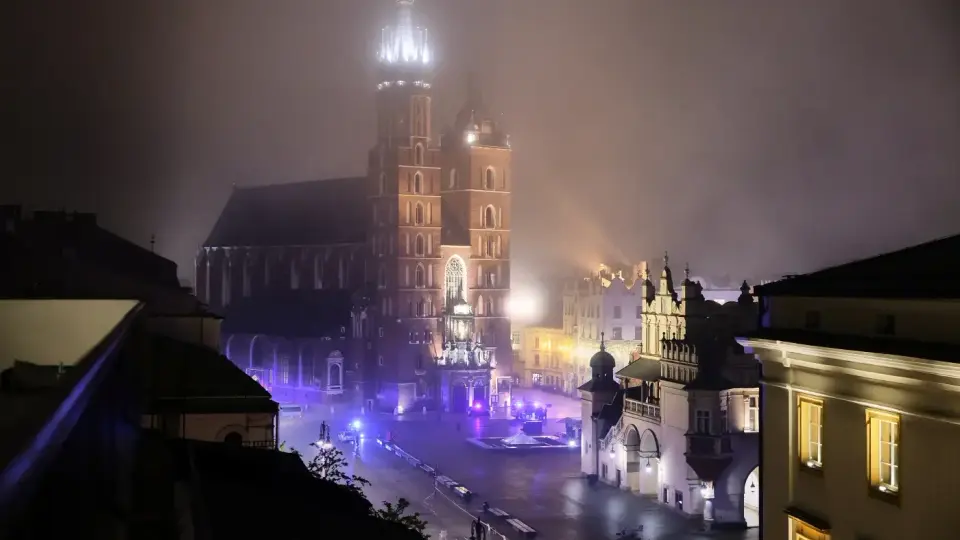
A gunman opened fire in Krakow’s Main Market Square on November 7, killing six people and injuring 15, including two police officers. The 25-year-old suspect, described by officials as holding far-right views, was shot and detained after a brief chase. Authorities later discovered three additional bodies at his home in Ostrowiec Świętokrzyski, believed to be family members. Poland’s prime minister labeled the incident a terrorist attack, marking a rare mass shooting in the country.
Key points
- Six people died and 15 were injured after a suspect drove into Krakow’s Main Market Square and fired at random pedestrians around 3 p.m. local time on November 7, 2026.
- The suspect, a 25-year-old Polish citizen, was wearing military-style fatigues and a bulletproof vest, and used a military-type long gun; police found additional weapons and ammunition in his vehicle.
- Two police officers were wounded, one critically, during a gunfight that ended after the suspect’s car crashed; he was hospitalized and remains in custody.
- Three additional bodies, believed to be immediate family members, were found at the suspect’s home in Ostrowiec Świętokrzyski, approximately 120 miles north of Krakow.
- Polish Interior Minister Marcin Kierwinski stated the suspect was influenced by far-right ideologies and held ultra-nationalist views, though it remains unclear if he acted alone or had external support.
Background
Mass shootings are uncommon in Poland, which has strict gun laws and only about 411,000 gun permits for a population of 37 million. However, three school attacks occurred in the Mazovia province in mid-October 2026, leaving one dead and many wounded. Krakow, Poland’s second-largest city, attracts around 15 million tourists annually, with the Main Square being a primary destination. The city declared a period of mourning until November 11, coinciding with Polish Independence Day, prompting heightened security measures.
How outlets are covering it
NPR and ABC News initially reported the death toll as six, while CNN and BBC confirmed the discovery of three additional bodies at the suspect’s home. All sources agree on the suspect’s age (25) and his military-style attire, though NPR initially noted a 24-year-old suspect, likely a reporting error. BBC and CNN emphasized the far-right ideological motivation, citing Interior Minister Kierwinski, while ABC News focused on the legal status of the weapons found. Polish Prime Minister Donald Tusk labeled the attack a terrorist act, a characterization not explicitly used by all outlets but supported by the scale and nature of the violence. International reactions, including from the UK, Czechia, Slovakia, and Ukraine, expressed solidarity and condemned the attack, with UK Prime Minister Andy Burnham and Foreign Secretary Ed Milliband offering condolences.
Why it matters
The Krakow shooting is the deadliest mass shooting in Poland in recent history, challenging the country’s reputation for low gun violence. The discovery of additional bodies at the suspect’s home and the alleged far-right motivation raise concerns about domestic terrorism and extremist ideologies in Europe. The incident has prompted heightened security measures across Poland, including for Independence Day events, and has drawn international attention to the potential rise of far-right violence in the region.
What to watch
Police will continue investigating the suspect’s motives, connections to extremist groups, and the legality of the weapons used. Authorities are also examining whether the suspect acted alone or had support, as well as reviewing security protocols for public events. The suspect remains in custody, and the three bodies found at his home are under forensic examination to confirm their identities and relationship to the suspect.
- Gunman opens fire in Polish city of Krakow, killing 6 people and injuring 15 NPR
- Gunman who killed 6 in Kraków attack held far-right views, Polish minister says CNN
- Six dead after gunman opens fire in Polish city of Krakow WPRI.com
- Six killed in Krakow 'far-right' shooting, as three more bodies found in attacker's home BBC
- At least 6 killed, several injured in shooting at Polish market square: Police ABC News - Breaking News, Latest News and Videos
Want the full story? Read the original reporting
Read on NPR