
Kyushu Quake Death Toll Rises to 34 as Heat Complicates Rescue Efforts
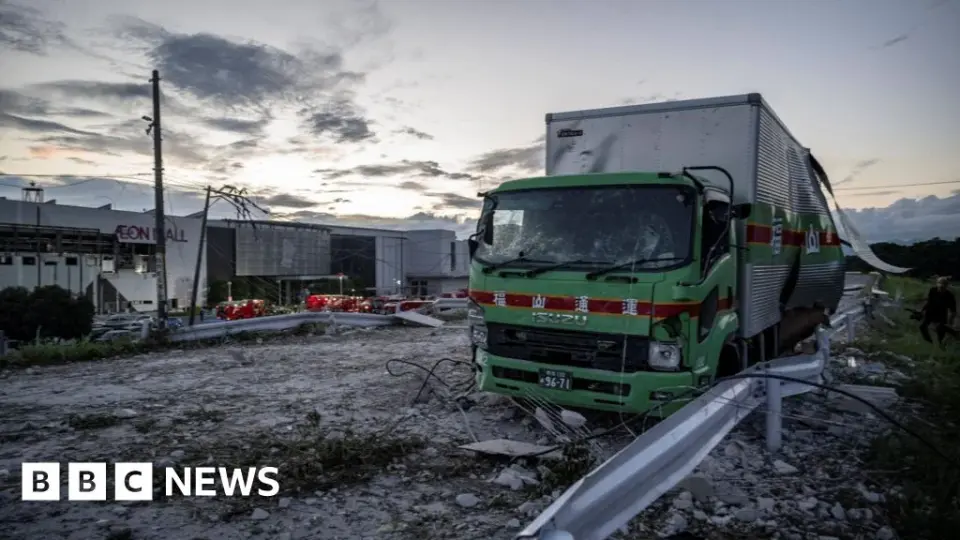
A magnitude 7.1 earthquake struck Kumamoto, Japan, on Tuesday, killing at least 34 people and triggering over 100 aftershocks. The shallow quake caused a partial collapse and explosion at the Aeon Mall in Kashima, while extreme heat hampers rescue operations. Prime Minister Sanae Takaichi described the situation as a 'race against time,' with thousands displaced and power outages affecting the region. The event highlights Japan's ongoing vulnerability to seismic activity, particularly in areas recovering from previous disasters.
Key points
- At least 34 people died, with 62 injured, according to NHK and local authorities.
- The earthquake, measured at 7.1 by the JMA and 6.8 by the USGS, occurred at a shallow depth of 10 km.
- The Aeon Mall in Kashima suffered a partial collapse and explosion, killing five people.
- Over 100 aftershocks have been recorded, with the strongest reaching magnitude 5.4.
- Rescue efforts are hindered by temperatures exceeding 35°C, prompting heatstroke warnings.
- Thousands of residents are in evacuation centers, and power outages affect many homes.
Background
This event follows a pattern of seismic activity in Japan, including a 6.9-magnitude quake in northern Japan in June 2026. Kumamoto previously suffered a major earthquake in 2016 that killed over 270 people, making the current disaster a repeat trauma for the region. Japan's location on the 'Ring of Fire' and its history of devastating quakes, such as the 2011 Tohoku disaster, underscore the persistent risk despite advanced infrastructure and preparedness measures.
How outlets are covering it
BBC and CNN report on the immediate aftermath, with CNN noting a higher death toll of 34 compared to the initial 13 reported by BBC. CNN emphasizes the long-term tectonic risks and Japan's preparedness, while BBC focuses on the immediate rescue efforts and survivor accounts. Yahoo provides visual evidence of the quake's intensity through dashcam footage but does not offer additional factual details beyond the initial reports. All sources agree on the magnitude and the impact on the Aeon Mall, but differ in the final death toll and the emphasis on future risks versus immediate response.
Why it matters
The earthquake underscores the ongoing seismic risks in Japan, a country prone to frequent and powerful earthquakes due to its tectonic location. The disaster highlights the challenges of rescue operations in extreme heat and the importance of robust infrastructure and emergency preparedness. It also raises concerns about the potential for future megathrust earthquakes, such as the Nankai Trough event, which could have catastrophic consequences.
What to watch
Rescue efforts will continue in the coming days, with a focus on finding survivors trapped under rubble. Authorities will monitor for strong aftershocks, which are expected to continue for at least a week. Power restoration and heatstroke prevention measures will be prioritized. Long-term, Japan will likely review its earthquake preparedness and infrastructure resilience, particularly in areas vulnerable to future seismic events.
- More than 100 aftershocks hit Japan after deadly quake that killed 13 BBC
- The Quake Struck Japan. Eighty Minutes Later, a Lethal Explosion. WSJ
- Why does Japan experience so many large earthquakes unlike any other country in the world? CNN
- Murakami eager to aid hometown after devastating earthquake MLB.com
- Vehicles Rock Side to Side During Japanese Earthquake Yahoo
Want the full story? Read the original reporting
Read on BBC