
New Zealand Election Leaves No Clear Winner as Minor Parties Gain Leverage
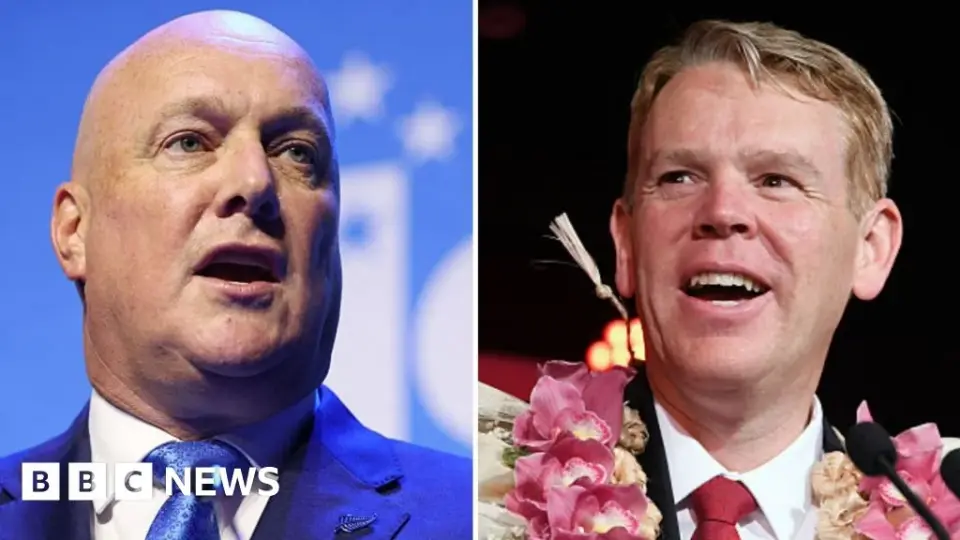
New Zealand’s general election produced a fragmented result with no clear winner, leaving the country in political limbo. Prime Minister Christopher Luxon’s National Party won the most seats but fell short of a majority, while opposition leader Chris Hipkins’ Labour Party secured the highest popular vote share. The outcome hinges on the centrist Opportunity Party, which entered parliament for the first time and is positioned as a potential kingmaker. Both major parties are now preparing for coalition negotiations, with final results delayed until November 27 due to the counting of special votes.
Key points
- National Party won 42 seats, 19 short of a majority, while Labour won 36 seats.
- The right-wing coalition (National, ACT, NZ First) holds a slim 67-seat lead, but the margin is too tight to guarantee power.
- Opportunity Party crossed the 5% threshold, securing 6% of the vote and entering parliament for the first time.
- Labour, Greens, and Te Pāti Māori form a left-leaning bloc with 57 seats, potentially gaining power if they secure Opportunity’s support.
- Final results are delayed until November 27 as hundreds of thousands of special votes, including overseas ballots, are counted.
Background
New Zealand uses a mixed-member proportional voting system, which typically results in coalition governments. The 2023 election brought the current National-led coalition to power, capitalizing on post-pandemic discontent. This 2026 election follows a period of high cost of living and unemployment, which dominated the campaign. The recent surge in support for minor parties mirrors global trends where voters are rejecting traditional major parties in favor of new or fringe options, similar to the fragmented results seen in recent Israeli elections.
How outlets are covering it
BBC and CNN emphasize the uncertainty and the role of the Opportunity Party as a 'kingmaker' that could determine the next government. The Washington Post highlights the 'battle of the Chrises' and the near-tie in popular vote share (29.21% for National vs. 29.36% for Labour). The New York Times frames the election as part of a global revolt over soaring costs, noting that both major parties are at historic lows. CNN points out that National’s vote share dropped significantly from 38% in 2023 to 29.3%, while its coalition partners ACT and NZ First gained strength, potentially pushing the government further right. All sources agree that the final outcome is uncertain due to the counting of special votes.
Why it matters
The election result signals deep public dissatisfaction with the incumbent government’s handling of economic issues, particularly cost of living and unemployment. The rise of the Opportunity Party, a centrist party led by a former consultant, indicates a shift in voter preferences toward new political voices. The outcome will determine whether New Zealand continues with a right-wing coalition or shifts to a left-leaning government, with significant implications for healthcare, immigration, and economic policy. The delay in final results adds to political uncertainty, potentially affecting economic stability and policy implementation.
What to watch
The Electoral Commission will announce official results on November 27 after counting special votes. Coalition negotiations will likely begin immediately, with both the right and left blocs seeking the support of the Opportunity Party. The negotiations could take weeks, as the margins are too tight to guarantee a clear path to power. The outcome will determine the next prime minister and the direction of New Zealand’s policies on key issues such as healthcare, immigration, and economic management.
- New Zealand election: No clear winner after tight general election BBC
- New Zealand’s election results are too close to call The Washington Post
- New Zealand in political limbo after knife-edge election CNN
- New Zealand’s Election ‘Too Close to Call’ as Voters Turn to Minor Parties The New York Times
- New Zealand’s Conservatives Narrowly Lead in Election WSJ
Want the full story? Read the original reporting
Read on BBC