
Pope Leo XIV addresses Peru’s violence crisis amid massive homecoming crowds
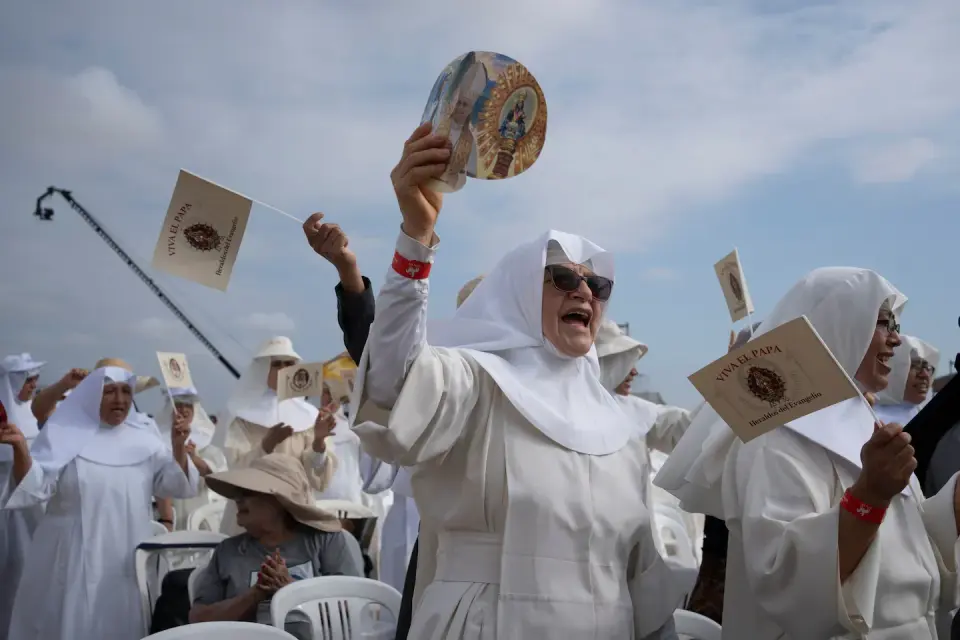
Pope Leo XIV returned to Chiclayo, Peru, his former diocese, drawing over 1.5 million people for Mass and street gatherings. During the visit, he addressed rising violence, gender-based killings, and political instability, urging prayer and perseverance over brutality. The pontiff, formerly Robert Prevost, visited remote communities and local parishes, emphasizing his pastoral ties to the region where he served as bishop from 2014 to 2023. The trip concludes with a final Mass in Lima before his return to the Vatican.
Key points
- Over 1.5 million people gathered in Chiclayo for Pope Leo XIV’s homecoming, with 1 million lining streets and 500,000 attending Mass, according to Vatican estimates.
- The pope addressed Peru’s rising homicide rate, which nearly doubled from 5.8 to 10.7 per 100,000 over five years, and a surge in extortion cases from 2,421 in 2019 to 26,734 in 2025.
- Leo condemned 'machismo' and gender-motivated violence, noting 1,261 femicide victims between 2016 and 2024, a 44% annual increase.
- He traveled by helicopter to Santa Cruz de Succhabamba, a remote high-altitude community, to minister to the peripheries, a practice he maintained as bishop.
- The visit is part of a 12-day Latin American tour, concluding with a Mass in Lima before the pope returns to the Vatican.
Background
Pope Leo XIV, born Robert Prevost in Chicago, served as bishop in Chiclayo from 2014 to 2023 and holds Peruvian citizenship. He is known locally as 'Padre Roberto' for his outreach to poor and remote communities. The current visit follows his recovery from lung cancer surgery and occurs amid political instability in Peru, where President Keiko Fujimori has declared states of emergency and pursued anti-drug coalition efforts with the U.S.
How outlets are covering it
The Washington Post emphasized the emotional scale of the homecoming, highlighting crowds of 1.5 million and personal anecdotes from attendees. AP News focused on the pope’s critique of Peru’s violence crisis, linking his prayers to official crime statistics and President Fujimori’s security policies. Vatican News highlighted his pastoral outreach to the sick and remote communities in Santa Cruz de Succhabamba, framing the visit as a spiritual fulfillment. NPR provided broader context on his Latin American tour but offered limited detail on the Peru-specific events. Outlets differed in emphasis: The Post and Vatican News centered on the human and spiritual dimensions, while AP News stressed the socio-political crisis of violence and governance.
Why it matters
The visit underscores the intersection of religious leadership and socio-political crisis in Peru, where rising violence and gender-based killings have shaped public sentiment and electoral outcomes. The pope’s advocacy for non-violent responses to injustice contrasts with the government’s security-focused measures, highlighting a tension between spiritual and political approaches to national instability. His outreach to remote communities also reinforces the Vatican’s emphasis on pastoral care for marginalized populations.
What to watch
Pope Leo XIV is expected to meet with Amazonian and Indigenous peoples on Sunday and celebrate a final Mass in Lima on Monday before returning to the Vatican. His statements on violence and gender-based harm may influence public discourse and policy discussions in Peru, particularly as President Fujimori advances security measures and international anti-drug cooperation.
- More than 1.5 million people welcome Pope Leo XIV in northern Peru The Washington Post
- Pope laments violence enveloping Peru as he ministers to far-flung former flock AP News
- Pope Leo greets faithful at parish in Santa Cruz and asks for prayers Vatican News
- Pope Leo is welcomed back to Peru, a country he called home NPR
- Chiclayo, Pope Leo’s Other Home, Comes Out In Force to Welcome Father Robert The New York Times
Want the full story? Read the original reporting
Read on The Washington Post