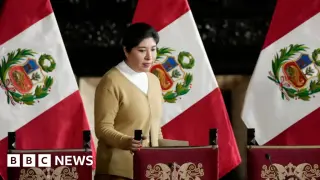
Peru Sets June 7 Runoff Between Fujimori and Sánchez
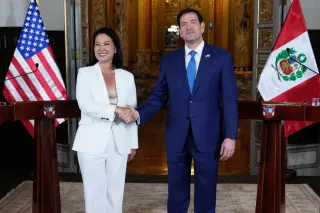
Peru's electoral board confirmed June 7 as the date for the presidential runoff, setting up a head-to-head vote between Fujimori and Sánchez in the final round.
All articles tagged with #peru

Peru's electoral board confirmed June 7 as the date for the presidential runoff, setting up a head-to-head vote between Fujimori and Sánchez in the final round.

Matthew McConaughey recalled fleeing to Peru and adopting the alias 'Mateo' to reconnect with ordinary people and reaffirm his identity, a process he says helped him distinguish real from performative fame and even informed his poetry work; the entertainment roundup also notes renewed talk of an all-female Expendables spinoff, Expendabelles, pitched as a late-1990s origin story, and Apple TV’s The Studio recreating Venice for filming rather than using the actual festival; and Stephen Colbert and David Letterman reunite to smash CBS props on a rooftop as Colbert approaches the final Late Show episode on May 21.

Matthew McConaughey revealed on the No Magic Pill podcast that, early in his career, he exiled himself from Hollywood and lived in Peru for 22 days without electricity, using the name Mateo to disconnect from fame. The experience helped him reconnect with his identity, after which he returned home and later moved his family to Texas; he also noted turning down a $14.5 million rom‑com, underscoring his resolve to shape his career on his terms.

Two Peruvian cabinet-level ministers resigned after interim President Balcazar postponed the decision to buy 24 Lockheed Martin F-16 jets, saying the next elected government should decide on such a large purchase. Defence Minister Carlos Diaz and Foreign Minister Hugo de Zela cited fundamental disagreement with delaying a national-security decision. The move comes amid Peru's political instability and a stalled presidential race, drawing US pushback and noting alternative offers from Dassault and Saab. The deal, approved in 2024, remains tied to the transition to the next administration.

Peru has finalized a contract to purchase 12 F-16 Block 70 fighters from Lockheed Martin under the U.S. Foreign Military Sales program, in a deal valued at about $3.42 billion. The signing followed days of uncertainty and tensions with Washington, and the package includes weapons, radar systems, and logistics support, with delivery slated to begin in 2029 and the possibility of a second squadron, as Peru contemplates replacing its Mirage 2000 fleet.

Peru’s election chief Piero Corvetto resigned amid public anger over a chaotic April vote and slow tallying, saying the move was aimed at restoring confidence ahead of a planned June 7 runoff; authorities expect final results by May 15, with Keiko Fujimori leading and Roberto Sánchez and Rafael López Aliaga in close contention, while observers say there is no firm evidence of fraud and thousands of ballots remain under review.

Peru heads to the polls with about 35 contenders vying to become the ninth president in 10 years, as a 2024 constitutional change restores a bicameral Congress where impeachment powers shift to a 60-seat Senate requiring 40 votes; the crowded race underscores ongoing political volatility, with candidates like Rafael López Aliaga and Carlos Álvarez promising different security and governance approaches.

Peru kicks off a record-sized presidential race amid a decade of upheaval that has seen nine presidents and widespread corruption probes, with about 35 candidates vying for a run-off and Keiko Fujimori among the front-runners; many voters remain undecided and skeptical, while analysts warn the outcome could intensify a power struggle with a Congress that is gaining influence as Peru prepares to reintroduce a Senate.

Peru’s presidential race features 35 candidates, but Rafael Lopez Aliaga, once the frontrunner with a pro‑Trump stance, has slipped to about 7% and is unlikely to reach a June runoff, as Keiko Fujimori leads in polls. Analysts say Trump’s endorsement is not decisive for most Peruvians, who remain focused on domestic issues and distrust the US more than China, making Aliaga’s late alignment with Trump a potential risk rather than a boost in this highly unpredictable contest.

Peruvian voters head to the polls to try to escape a decade of instability, facing a record 35 presidential candidates and a long ballot as crime and corruption loom large; Keiko Fujimori leads polls but no candidate is above 15%, making a runoff likely and illustrating a crowded, volatile field that includes a comedian-turned-candidate, a hard-right former Lima mayor, and other outsiders.

Peru is holding a presidential election with a sprawling field of 35 candidates, while also deciding congressional seats, in a race that could shape the country’s political direction and potentially lead to a run-off given the fragmented field.

A Peru-wide study links exposure to 31 pesticides with about a 150% higher cancer risk in high-exposure areas, using six-year environmental dispersion models and national cancer registry data (2007–2020). Indigenous and rural communities face greater exposure, averaging 12 pesticides. Early molecular analyses suggest pesticides disrupt liver function and cellular identity long before cancer develops, indicating non-genetic pathways to cancer and challenging traditional single-chemical risk assessments. None of the chemicals are currently WHO-classified as known human carcinogens. The findings call for considering real-world chemical mixtures and environmental factors like climate shifts in prevention and policy.

Jose Jeri, 39, Peru's president for four months, was ousted by Congress amid a scandal over undisclosed meetings with a Chinese businessman, highlighting Peru's ongoing political volatility ahead of April elections.

Peru’s Congress voted to oust President Jose Jeri, four months into his term, amid multiple corruption accusations. The 75-3-24 vote clears the way for an interim president as Peru heads toward an April general election, with a runoff possible in June if no candidate wins a majority. The scandal, highlighted by the so‑called “Chifagate” meetings with Chinese businessmen, adds to a pattern of political turmoil in the country’s leadership,”,

Peru's interim president José Jerí was removed by a 75-24 vote in an express impeachment after four months in office amid the 'Chifagate' scandal over secret meetings with Chinese businessmen; prosecutors are probing influence-peddling and a timber-trafficking network, while lawmakers prepare to name a replacement ahead of April presidential elections, as Peru continues a period of political instability amidst U.S.-China debates over the Chancay port.