
Explosives and Air Vents: The Race to Reach Trapped Workers in Nepal's Flooded Tunnels
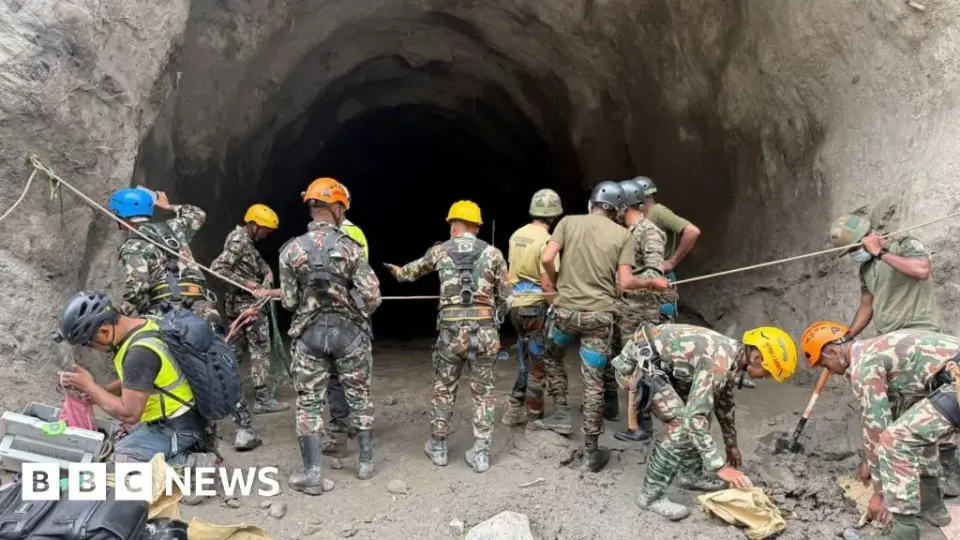
Nepal's death toll from the recent Himalayan floods has reached 939, with nearly 4,000 people still missing. Rescuers are using explosives to blast through hillsides and pumping air into tunnels to reach over 600 workers trapped at hydropower sites along the Trishuli River. International teams from China, India, and other nations are assisting, though families criticize the slow pace of the operation.
Key points
- The death toll in Nepal has risen to 939, with 3,925 people missing, including 592 foreign nationals.
- More than 600 workers are believed trapped in mud-filled tunnels at the Trishuli-3A hydropower site.
- Rescuers are using explosives to clear boulders and pumping air into tunnels to sustain potential survivors.
- International teams from China, India, South Korea, and Australia are leading the rescue efforts.
- Families of the missing have criticized the slow pace of the operation, fearing a critical window for survival is closing.
Background
The disaster began when a glacier collapse triggered a massive debris flow that traveled 62 miles downstream, devastating communities and infrastructure along the Nepal-Tibet border. Previous reports indicated that at least 11 hydropower projects were damaged, and rescue teams had already begun drilling and rappelling into tunnels to deliver oxygen and food. The current operation represents an escalation in tactics, moving from initial access attempts to explosive breaching to reach deeper, more inaccessible sections of the tunnel network.
How outlets are covering it
BBC reports that families are 'clinging to hope' but express frustration at the 'frustratingly slow' pace of the rescue, noting that air pumping should have begun earlier. Fox News highlights the international dimension, noting that 80 Americans remain unaccounted for, with 13 confirmed safe, and details the U.S. State Department's $500,000 aid package. The New York Times provides a human angle, noting that many of the missing were Hindu pilgrims who had traveled to the region for spiritual purposes, adding a layer of tragedy to the industrial disaster. AP News emphasizes the scale of the logistical challenge, noting that over 10,000 people have been rescued so far, but the number of missing continues to rise. All sources agree on the severity of the event but differ in focus: BBC on the technical rescue methods, Fox on the diplomatic and casualty counts, and NYT on the cultural context of the victims.
Why it matters
This disaster highlights the vulnerability of Nepal's energy infrastructure to climate-induced glacial events. The use of explosives to reach trapped workers underscores the extreme difficulty of the terrain and the urgency of the situation. The international response, involving multiple nations, reflects the global concern for the safety of foreign nationals and the potential for similar disasters in other mountainous regions. The slow pace of the rescue raises questions about the preparedness of remote infrastructure for such catastrophic events.
What to watch
Rescue teams will continue to use explosives and air pumping to reach trapped workers in the Trishuli-3A site. Authorities will likely update the death toll and missing count as more bodies are recovered and identified through DNA testing. International aid, including supplies from the U.S., UAE, and other nations, will continue to flow into the affected areas. The focus will shift from immediate rescue to long-term recovery and infrastructure repair.
- Nepal rescuers blast hillside in search of hydropower workers as families wait anxiously BBC
- Before Nepal’s Floods, Hindu Pilgrims Sought the Divine at Mount Kailash The New York Times
- Roughly 80 Americans still unaccounted for after Himalayan disaster kills 903, officials say foxnews.com
- Hundreds feared stuck in hydropower tunnels as flood deaths surpass 950 in Nepal and China AP News
- Bartlett, Illinois woman among dozens of Americans missing after Nepal flash floods CBS News
Want the full story? Read the original reporting
Read on BBC