
Trump’s Offhand Endorsement of Irish Unification Sparks Diplomatic Friction During Dublin Visit
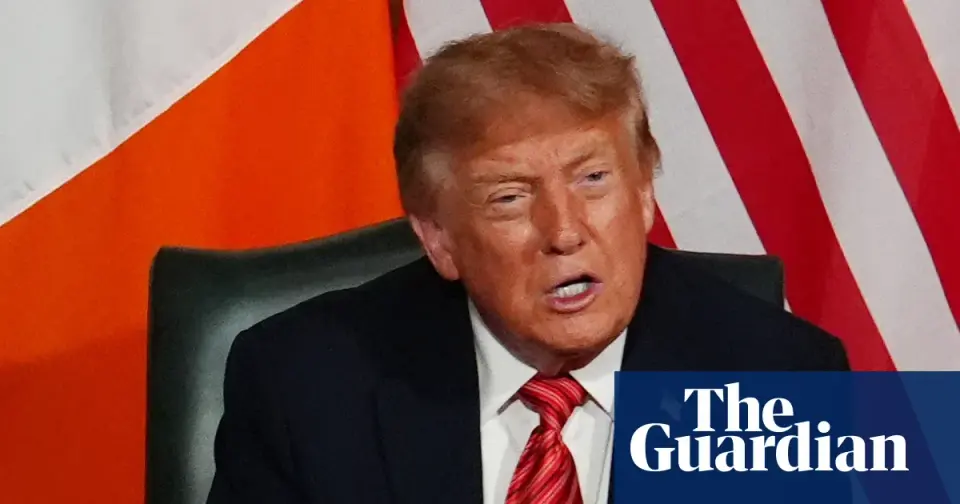
US President Donald Trump broke with decades of American neutrality on the constitutional status of Northern Ireland during a weekend visit to Dublin, stating that unification with the Republic of Ireland would be 'fantastic' and 'may as well happen now.' The remarks, made at a joint press conference with Irish Taoiseach Micheál Martin, triggered immediate backlash from the UK government and unionist leaders in Northern Ireland. While Trump later acknowledged the comments were controversial, he maintained that reunification is inevitable. The visit, primarily focused on golf at his Doonbeg resort in County Clare, was accompanied by significant protests in Dublin and Doonbeg, with demonstrators opposing his presence and US military ties. Irish President Catherine Connolly, a former critic of Trump, met with him but issued a statement condemning the 'normalization of war and genocide,' signaling continued diplomatic tension despite the cordial nature of their private meeting.
Key points
- Trump stated at a Dublin press conference that he would 'love' to see a united Ireland, calling it a 'great feather in everybody's cap' and suggesting it 'may as well happen now.'
- The comments broke with the long-standing US policy of neutrality on the issue, which had been maintained even by previous presidents with Irish heritage.
- UK Prime Minister Andy Burnham’s office reiterated that a referendum on unification is 'off the table' under the Good Friday Agreement, which requires majority support in both jurisdictions.
- DUP leader Gavin Robinson condemned the remarks, asserting that Northern Ireland’s future is determined by its people, not by 'commentary in London, Dublin or Washington.'
- Conservative leader Kemi Badenoch criticized Trump for 'shooting from the hip,' comparing the remarks to his previous comments on Greenland and Canada.
- Thousands of protesters gathered in Dublin and Doonbeg, with some carrying Palestinian flags and chanting against Trump’s visit and US military use of Shannon Airport.
Background
The US has historically maintained a neutral stance on the constitutional status of Northern Ireland, a position rooted in the 1998 Good Friday Agreement, which ended decades of sectarian violence known as the Troubles. The agreement stipulates that unification can only occur if a majority of voters in both Northern Ireland and the Republic of Ireland support it. Previous US presidents, including Joe Biden, who frequently referenced his Irish heritage, avoided explicit commentary on the issue. Trump’s remarks mark a significant departure from this precedent, though analysts suggest the off-the-cuff nature of the comments indicates no formal change in US policy. The visit follows a period of heightened tensions, including Trump’s previous comments on Greenland and Canada, and occurs amid ongoing protests against US military use of Shannon Airport and opposition to his foreign policy, particularly regarding Gaza and Iran.
How outlets are covering it
The Guardian and CNN both reported on Trump’s remarks as a breaking of US neutrality, with CNN emphasizing the historical context of the Troubles and the Good Friday Agreement. The New York Times highlighted the unprecedented nature of the comments, noting that even President Biden, who frequently referenced his Irish heritage, had avoided explicit commentary. RTE.ie focused on the logistical and security aspects of the visit, including the large-scale policing operation and the arrests of protesters. All sources reported on the backlash from UK and unionist leaders, with the Guardian and CNN quoting Downing Street and DUP leader Gavin Robinson, while the New York Times noted the lack of a formal policy change. The Guardian and CNN both reported on the protests, with CNN providing more detail on the anti-Trump march in Dublin and the presence of Palestinian flags. RTE.ie provided additional detail on the arrests in Doonbeg and the security operation. The New York Times focused on the diplomatic tension between Trump and Irish President Catherine Connolly, noting her previous criticism of him and her statement condemning the 'normalization of war and genocide.'
Why it matters
Trump’s comments on Irish unification represent a significant departure from decades of US neutrality on a sensitive issue that has been a source of decades of violence in Northern Ireland. The remarks have the potential to inflame tensions between unionists and nationalists, and between the UK and Ireland, at a time when the Good Friday Agreement is still the foundation of peace in Northern Ireland. The visit also highlights the complex relationship between the US and Ireland, with Trump’s comments on unification and his criticism of US pharma companies in Ireland contrasting with his praise for the Irish people. The protests and the diplomatic tension with Irish President Catherine Connolly underscore the ongoing challenges in US-Ireland relations, particularly regarding foreign policy and military cooperation. The visit also serves as a test of Trump’s ability to navigate sensitive international issues, with his off-the-cuff remarks potentially having long-term implications for US-Ireland and UK-Ireland relations.
What to watch
The immediate aftermath of Trump’s comments will likely involve continued diplomatic maneuvering between the US, UK, and Ireland. The UK government and unionist leaders are expected to continue to push back against the remarks, while the Irish government may seek to manage the fallout while maintaining its relationship with the US. The visit’s focus on golf and economic ties may help to offset the diplomatic friction, but the comments on unification are likely to remain a point of contention. The protests and the arrests in Doonbeg suggest that public opposition to Trump’s visit is significant, and the Irish government may face pressure to address the concerns of its citizens. The diplomatic tension with Irish President Catherine Connolly may also have implications for future US-Ireland relations, particularly regarding foreign policy and military cooperation. The visit’s impact on the Good Friday Agreement and the peace process in Northern Ireland will be closely monitored, as any perceived shift in US policy could have significant consequences for the region.
- Donald Trump says he would ‘love’ to see united Ireland The Guardian
- Trump says Irish unification would be ‘fantastic,’ wading in to sensitive topic during weekend visit | CNN Politics CNN
- Trump moves to Doonbeg after Dublin courtesy calls RTE.ie
- Trump meets Ireland's leaders before heading to his golf club in Doonbeg NPR
- Trump Says Irish Unification Would Be ‘Fantastic,’ Breaking With Precedent The New York Times
Want the full story? Read the original reporting
Read on The Guardian