
Two Workers Rescued Alive From Nepal Hydropower Tunnel Nine Days After Glacier-Triggered Floods
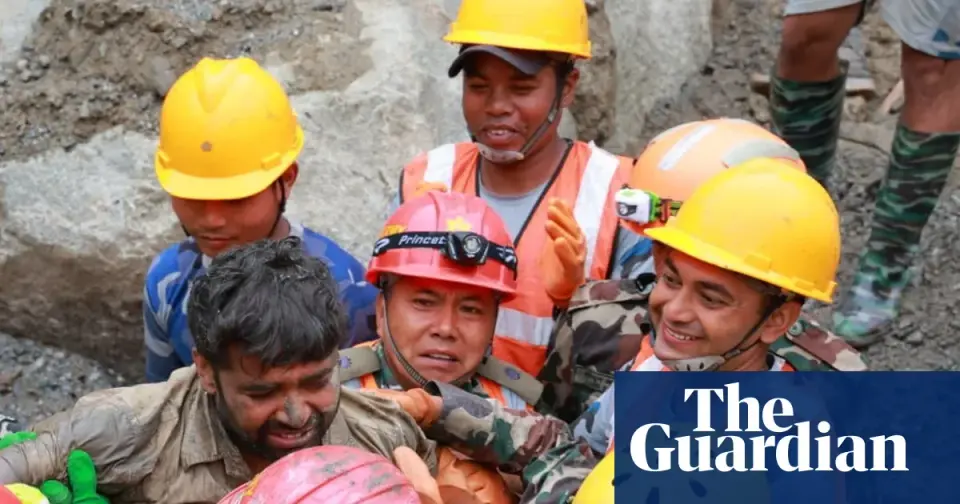
Nine days after a glacier collapse triggered catastrophic flash floods on the Nepal-China border, rescuers pulled two workers alive from the Upper Trishuli 3A hydropower tunnel. The survivors, Sanjay Shah and Kabir Maharjan, were trapped for nine days after the August 26 disaster, which has killed over 1,259 people and left more than 5,000 missing. The rescue, achieved after hearing voices from inside the tunnel, has renewed hope for finding other trapped workers, though hundreds remain missing across 12 hydropower projects.
Key points
- Two workers, Sanjay Shah (30, mechanical foreman) and Kabir Maharjan (45, mechanical supervisor), were rescued alive from the Upper Trishuli 3A hydropower tunnel nine days after the August 26 flash floods.
- The disaster, triggered by a glacier collapse on the Nepal-China border, has killed at least 1,259 people in Nepal and 31 in Tibet, with over 5,000 missing in Nepal and 531 in China.
- Rescuers heard voices from inside the tunnel on Friday morning, leading to the successful extraction of the two men, who were flown to a hospital in Kathmandu.
- Shah stated he remained in the control room to help others escape, delaying his own exit, and survived by chanting mantras in the darkness.
- Approximately 900 workers are missing from 12 hydropower projects, with about 500 believed trapped in tunnels; rescue efforts continue with international assistance.
Background
The August 26 flash floods, triggered by a glacier collapse on the Nepal-China border, devastated communities and hydropower infrastructure. Earlier reports indicated hundreds of workers were trapped in tunnels, with rescue efforts hindered by mud, debris, and communication blackouts. The disaster has caused massive loss of life and infrastructure, with estimated property damage of $2.56 billion.
How outlets are covering it
The Guardian and AP News emphasize the miraculous nature of the rescue and the emotional impact on families, while CNN highlights the technical challenges and the 'Goldilocks zone' where survivors were likely to be found. U.S. News & World Report provides broader context on the disaster's economic impact and international response, noting the $2.56 billion in losses and the involvement of multiple countries in rescue efforts. All sources agree on the core facts but differ in emphasis: some focus on the human story, others on the logistical and economic implications.
Why it matters
The rescue of two workers after nine days offers a rare glimmer of hope in a devastating disaster that has claimed over 1,300 lives and left thousands missing. It underscores the resilience of survivors and the effectiveness of international rescue efforts, while also highlighting the ongoing crisis and the need for continued support in the affected regions.
What to watch
Rescue operations will continue at other hydropower sites, particularly the Rasuwagadhi plant, where 46 workers are believed to be alive. International teams from India, South Korea, China, and Australia will assist in clearing debris and searching for more survivors. Nepal will face a long recovery process, including rebuilding 20,000 homes and addressing the economic fallout from the disaster.
- Nepal-Tibet flash flood: Two workers pulled alive from hydropower tunnel nine days after disaster The Guardian
- Nepal-China floods latest: Rescues underway as two men pulled alive more than a week after disaster CNN
- Two People Pulled Alive From Nepal Hydropower Tunnel U.S. News & World Report
- How engineers in a WhatsApp group are guiding Nepal's tunnel rescue efforts reuters.com
- One trapped worker rescued alive from a tunnel in Nepal, official says AP News
Want the full story? Read the original reporting
Read on The Guardian