
UN General Assembly adopts Equal Earth map to correct Africa's size, with US as sole dissenter
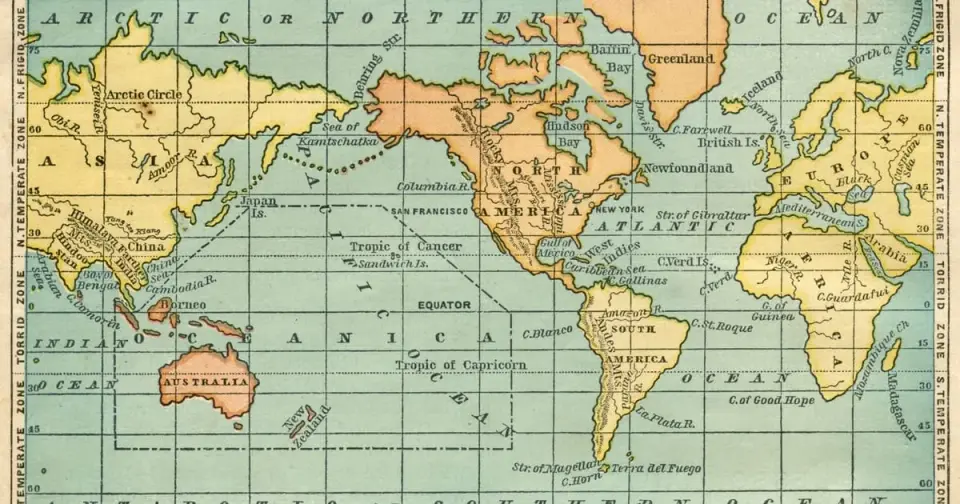
The UN General Assembly passed a non-binding resolution endorsing the Equal Earth map projection to replace the Mercator projection, which distorts continental sizes. The vote, led by African nations, passed 164 to 1, with the US as the only opponent and six nations abstaining. The resolution frames accurate cartography as a matter of 'cognitive justice' and urges member states to adopt the new map in schools and institutions.
Key points
- The UN General Assembly voted 164 to 1 to endorse the Equal Earth projection, which accurately reflects the relative sizes of continents, particularly Africa.
- The Mercator projection, devised in 1569 for navigation, distorts sizes by making landmasses near the poles appear larger, making Africa look similar in size to Greenland despite being 14 times larger.
- The resolution, sponsored by Togo and backed by the African Union, calls for the Equal Earth projection to be used in schools and institutions, framing the change as an act of 'cognitive justice and memorial reparation.'
- The United States was the only country to vote against the resolution, calling it part of a 'much larger and more radical ideological project' and urging 'common sense.'
- Estonia, Georgia, Lithuania, Moldova, Serbia, and Ukraine abstained from the vote, while France and the UK supported the resolution.
Background
The Equal Earth projection was developed by a team of cartographers in 2018 to correct the distortions of the Mercator map. In February 2026, the African Union's 54 member states adopted the projection, stating it 'more accurately represents the sizes of all continents, particularly Africa.' This UN vote follows a broader trend of African-led initiatives at the UN, such as the reappointment of Volker Türk as UN High Commissioner for Human Rights in July 2026, which also faced US opposition.
How outlets are covering it
Politico and The Washington Post both report the vote as 164 to 1, with the US as the sole dissenter. The BBC adds that France and the UK supported the resolution, while Politico notes that six nations abstained. The US delegation, according to Politico, dismissed the resolution as part of a 'much larger and more radical ideological project,' while Togo's foreign minister, Robert Dussey, framed the decision as about 'justice, dignity, equality, and the way we represent our world.' The BBC notes that critics argue the Mercator map minimizes the development needs and potential of countries near the equator.
Why it matters
The resolution, though non-binding, signals a shift in how global institutions may represent geographic data, potentially influencing maps used in education, technology platforms, and international organizations. It highlights ongoing tensions between the US and African nations over issues of representation and global power dynamics, and could set a precedent for other symbolic or normative changes at the UN.
What to watch
Member states are now encouraged to adopt the Equal Earth projection in schools and institutions. The resolution may influence how technology platforms and international organizations display maps, though its non-binding nature means implementation will vary. The US may continue to oppose the change, potentially affecting its influence on other UN resolutions.
- UN backs effort to depict Africa correctly on maps despite US opposition politico.eu
- Explanation of Vote Before the Vote for UNGA 80 Adoption on the Resolution to “Correct the Map” United States Mission to the United Nations (.gov)
- The U.N. backed a map that shows Africa true to size. The U.S. was sole objector. The Washington Post
- UN votes to adopt new world map to reflect Africa's true size BBC
- US only country to oppose UN resolution correcting Africa’s size on world maps thehill.com
Want the full story? Read the original reporting
Read on politico.eu