
US Airman Describes 'Free-Falling' After F-15E Downed in Iran
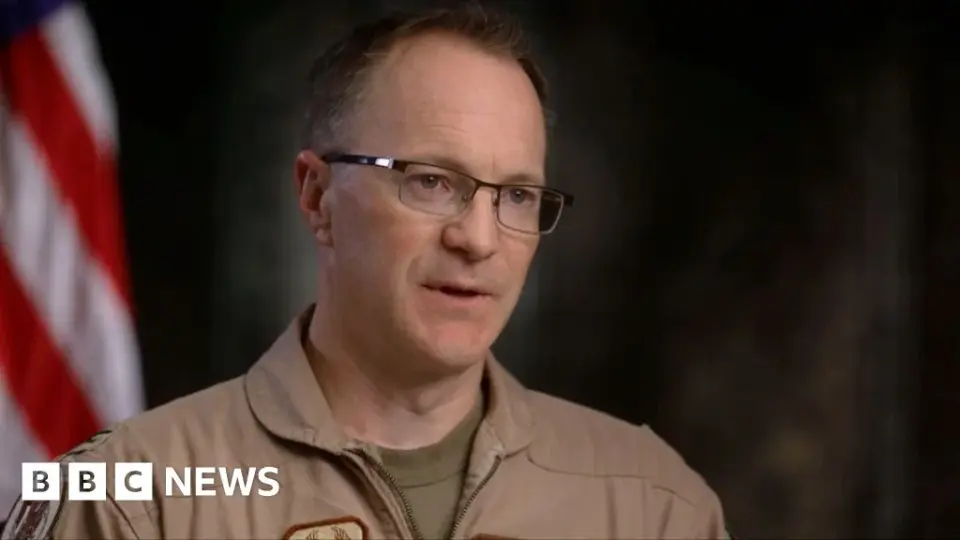
A US Air Force officer, identified as 'Bravo,' gave his first public interview regarding the April 2026 downing of an F-15E over Iran. He described free-falling with a damaged parachute after a shoulder-fired missile hit the jet, surviving a 70-100 mph impact that broke his back, arm, and shoulder. Despite severe injuries, he evaded Iranian forces for 48 hours before being rescued by special forces, marking the first US ground operation inside Iran in 46 years.
Key points
- Bravo, the weapons systems officer, spoke for the first time in a CBS '60 Minutes' segment aired on September 13, 2026.
- The F-15E was shot down on April 2, 2026, by a shoulder-fired missile valued at approximately $100,000.
- Bravo survived a fall at speeds estimated between 70 and 100 mph, suffering fractures to his back, shoulder, and arm.
- He evaded capture for 48 hours, hiking to a ridgeline, while his pilot, 'Alpha,' was rescued within six hours.
- The rescue involved over 90 US service members and required the destruction of aircraft and helicopters to prevent technology transfer to Iran.
Background
This incident occurred approximately five weeks into the US-Israel war against Iran, which began in early 2026. The conflict has continued into its seventh month, contributing to rising global energy prices and political dissatisfaction in the US ahead of the November midterm elections. Previous archive coverage of military shootdowns or rescue operations is not directly related to this specific 2026 conflict, but the current war has reshaped regional alliances and trade routes, as noted in recent reports on Brics and Houthi advances.
How outlets are covering it
CBS News and NBC News both reported on the '60 Minutes' interview, confirming Bravo's account of the damaged parachute and his injuries. BBC News highlighted the broader context of the war's unpopularity and the cost of the destroyed aircraft, noting that two jets were worth approximately $100 million each. While all sources agree on the basic facts of the ejection and rescue, BBC emphasized the political fallout and energy price impacts, whereas CBS and NBC focused more on the personal narrative and the complexity of the rescue operation. The pilot, Alpha, declined to be interviewed, a detail noted by all outlets.
Why it matters
The incident underscores the risks of the ongoing US-Iran conflict and the high cost of military assets, with a single missile costing $100,000 destroying a $30 million jet. The rescue operation, described as one of the most complex in US history, highlights the strategic challenges of operating inside Iran. The war's impact on energy prices and public opinion is influencing US domestic politics and international trade dynamics.
What to watch
The war is expected to continue until at least November 3, 2026, according to President Trump. The US public is increasingly dissatisfied due to rising energy prices, which may influence the upcoming congressional midterm elections. Further developments in the conflict could affect global oil prices and trade routes, particularly through the Bab al-Mandab Strait.
- US aviator shot down over Iran recalls 'free-falling' in first interview since rescue BBC
- Sunday on 60 Minutes: U.S. Air Force officer details story of survival; hidden camera probe explores the pardon economy CBS News
- Air Force officer recalls ‘free-falling’ after jet was shot down over Iran nbcnews.com
- U.S. Air Force officer shot down in Iran says he prayed while "free-falling" to the ground behind enemy lines CBS News
- Hegseth, associates pushed F-15 airmen downed over Iran to appear on ’60 Minutes’ – report The Times of Israel
Want the full story? Read the original reporting
Read on BBC