
Hidden Victorian Bridge Painting Discovered on Back of Geological Map
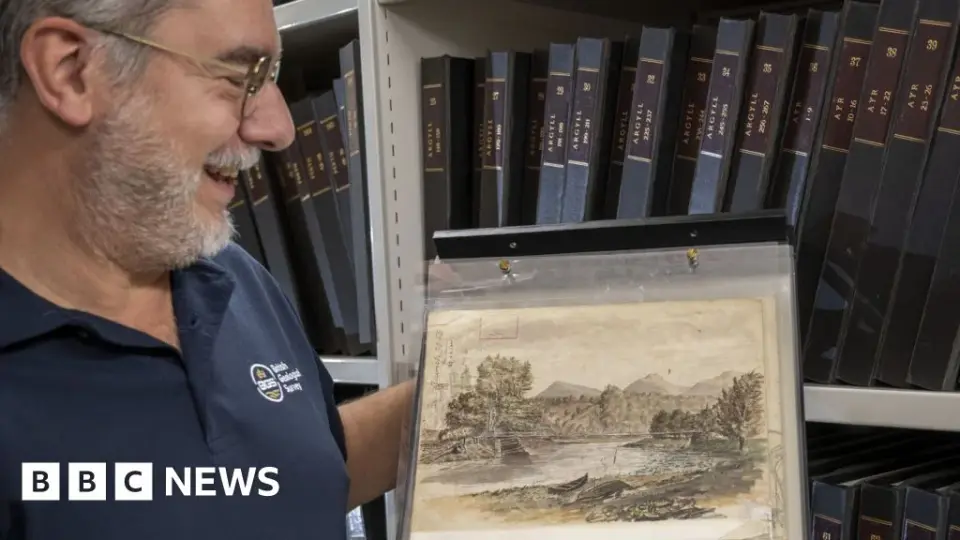
A watercolor of the Dryburgh Suspension Bridge, painted in the 1870s by geologist Benjamin Peach, was accidentally discovered on the reverse of a geological field map after being hidden for 150 years. The artwork, found by Luis Albornoz-Parra of the British Geological Survey (BGS) while researching building stones for Historic Environment Scotland, depicts the third bridge at the site, which was completed in 1872. The discovery highlights the dual skills of 19th-century geologists who often sketched landscapes during fieldwork. The painting is now recognized as a unique record of the Victorian landscape and Peach’s artistic talent, complementing his significant contributions to resolving the Highlands Controversy in geology.
Key points
- Luis Albornoz-Parra of the British Geological Survey found the painting while reviewing old field slips for Historic Environment Scotland research on Dryburgh Abbey.
- The artwork is believed to have been created by Benjamin Peach in the 1870s, shortly after the current Dryburgh Suspension Bridge was completed in 1872.
- Peach, a BGS employee from 1862 to 1905, was known for both his geological expertise and his hundreds of sketches and paintings made during field surveys.
- The painting was hidden on the back of a geological map in the BGS archives at The Lyell Centre in Edinburgh for over 150 years.
- The discovery provides a unique visual record of the Victorian landscape, including the Eildon Hills, and showcases the artistic skills of 19th-century geologists.
Background
This discovery adds to the historical record of Dryburgh Abbey and the Scottish Borders, which have seen various restoration and safety projects in recent years. The archive articles from our system do not provide direct background on this specific event but highlight broader trends in historical preservation and public interest in heritage sites. The focus on Dryburgh Abbey's restoration and the surrounding landscape aligns with the significance of the newly found painting, which captures the area's Victorian-era appearance. The discovery underscores the value of archival research in uncovering hidden historical artifacts, similar to how other historical sites and structures are being reassessed or restored in the region.
Why it matters
The discovery of the painting underscores the importance of archival research in uncovering hidden historical artifacts and the dual roles of 19th-century scientists as both researchers and artists. It provides a unique visual record of the Victorian landscape and highlights the contributions of Benjamin Peach, a key figure in resolving the Highlands Controversy. The find also emphasizes the value of preserving and reviewing historical documents, as such discoveries can offer new insights into the past and enhance our understanding of historical sites like Dryburgh Abbey.
What to watch
The painting will likely be further studied and possibly exhibited to showcase its historical and artistic value. The British Geological Survey may continue to review its archives for similar hidden artifacts, and the discovery could lead to increased interest in the history of Dryburgh Abbey and the Scottish Borders. Additionally, the find may inspire further research into the artistic practices of 19th-century geologists and their contributions to both science and art.
Want the full story? Read the original reporting
Read on BBC