
German-Ukrainian firm confirms SPYS drone shot down Russian Geran-5 K5-K cruise missile
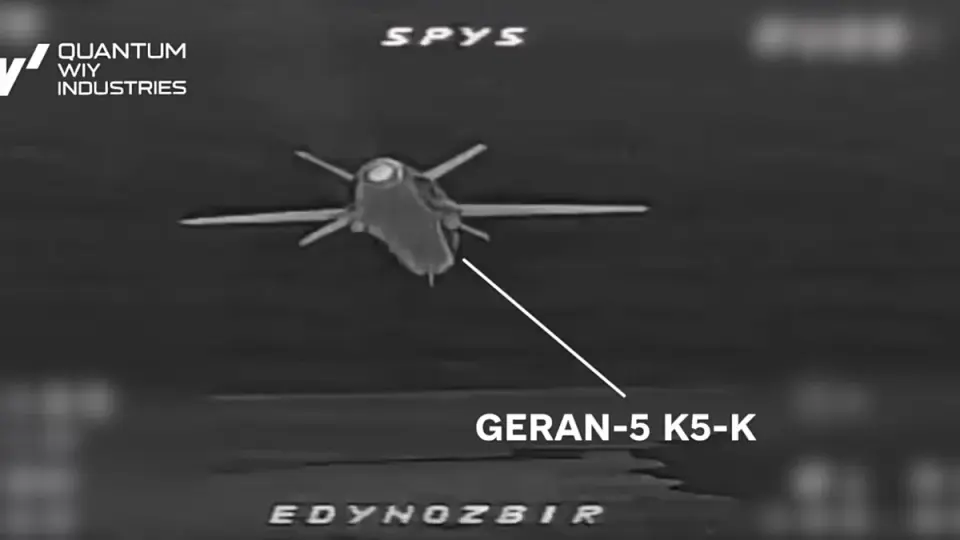
Quantum WIY Industries, a German-Ukrainian joint venture, confirmed on November 23 that its SPYS interceptor drone successfully shot down a Russian Geran-5 K5-K attack drone during combat testing in Ukraine. The interception was achieved without assistance from other air defense systems. The Geran-5 K5-K, deployed by Russia in early autumn 2026, is classified by Ukrainian military intelligence as a compact cruise missile due to its jet propulsion and high speed. The SPYS interceptor, which can reach speeds of up to 500 km/h, was upgraded with new electronics and aerodynamic improvements to counter these fast targets. This development follows a rise in Russian use of jet-powered drones against Ukrainian cities and critical infrastructure.
Key points
- Quantum WIY Industries confirmed the SPYS interceptor shot down a Russian Geran-5 K5-K drone in combat testing.
- The Geran-5 K5-K is a jet-powered drone classified by Ukraine's GUR as a compact cruise missile.
- The SPYS interceptor reaches speeds of up to 500 km/h and has a flight ceiling of 4 km.
- The interception was accomplished without support from other air defense weapons.
- Russia began using the Geran-5 K5-K variant in attacks on Ukrainian cities in early autumn 2026.
Background
Ukraine has faced increasing challenges from Russian jet-powered drones, which are significantly faster than conventional propeller-driven models. In late October 2026, interception rates for these high-speed drones rose to 74%, though they remain lower than the 95% rate achieved against slower drones. A jet-powered drone strike on a Dnipro train station in October killed 13 people, highlighting the threat to civilian infrastructure. Germany has committed to funding the procurement of tens of thousands of interceptor drones for Ukraine, including those developed by Quantum WIY Industries.
How outlets are covering it
Euronews reported that the SPYS interceptor reached speeds of around 450 kph, while United24 Media and Ukrainska Pravda cited higher figures, with the latter noting a record average speed of 520 km/h in recent tests. United24 Media emphasized that the interception was achieved without assistance from other air defense systems, a detail not highlighted by Euronews. Ukrainska Pravda detailed technical upgrades to the SPYS, including new flight controllers and locally produced components, which were not mentioned in the other sources. All sources agree on the successful interception of the Geran-5 K5-K, but they differ in the specific performance metrics and technical details of the SPYS interceptor.
Why it matters
The successful interception of a jet-powered drone by the SPYS interceptor demonstrates Ukraine's growing capability to counter high-speed aerial threats. As Russia continues to deploy faster and more advanced drones, the ability to intercept them without relying on traditional air defense systems is crucial for protecting cities and critical infrastructure. This development also highlights the importance of international cooperation, particularly with Germany, in providing Ukraine with advanced defense technologies.
What to watch
Quantum WIY Industries plans to continue developing and scaling interceptor drones to protect Ukrainian cities and critical infrastructure. The company will work closely with Ukrainian brigades to adjust its systems as Russia adapts its attack systems. Germany is expected to proceed with the procurement of tens of thousands of interceptor drones for Ukraine's defense forces.
- German-Ukrainian interceptor shoots down Russian jet-powered drone, company says Euronews.com
- Ukraine Just Shot Down Russia’s Elusive New Geran-5 K5-K Cruise Missile With One Drone UNITED24 Media
- SPYS interceptor drone sets new speed record of 520 km/h – photos Українська правда
- Ukrainian-built SPYS interceptor drone tops 520 km/h with warhead to hunt enemy jet-powered UAVs The New Voice of Ukraine
- SPYS Intercepts New Russian Geran-5 K5-K Drone in Ukraine ASDNews
Want the full story? Read the original reporting
Read on Euronews.com