
Banksy's London Artworks Cost Public Funds Nearly £150k
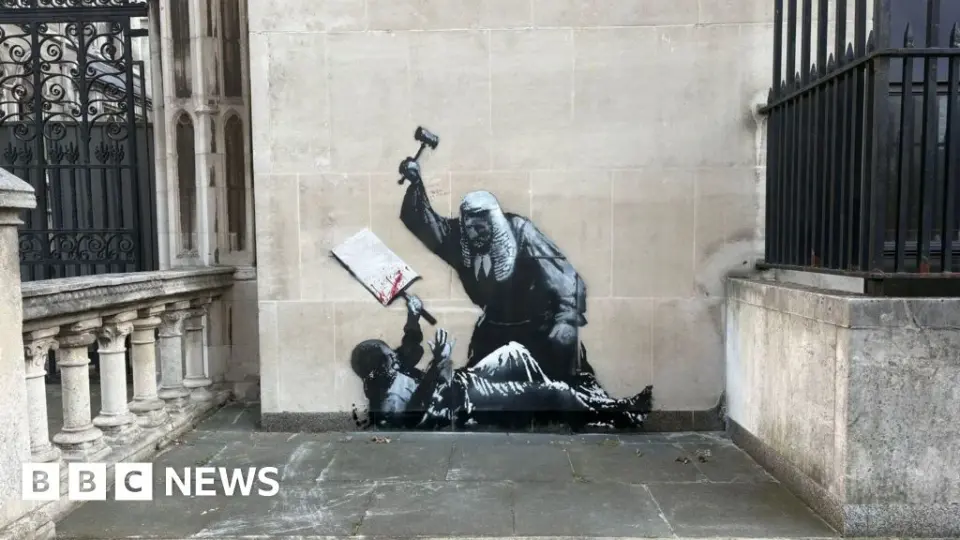
Three recent works by street artist Banksy have incurred nearly £150,000 in public costs for removal, security, and maintenance. The largest expense, over £85,000, relates to a mural on the Royal Courts of Justice, with additional costs for a statue in Waterloo Place and a painted police box.
Key points
- A mural depicting a judge striking a protester appeared on the Royal Courts of Justice in September 2025, costing the Ministry of Justice over £85,000 in removal and security efforts.
- A statue of a man carrying a flag appeared in Waterloo Place in April, costing Westminster City Council nearly £60,000 for barriers and security.
- A piranha-themed painting on a City of London police sentry box in August 2024 cost £2,200 to remove, with the box now slated for the London Museum.
- Banksy claimed responsibility for all three works via social media, though no arrests have been made regarding the court mural.
- The costs have sparked debate over whether such actions constitute vandalism or valuable public art, with officials and critics offering conflicting views.
Background
Banksy emerged from Bristol's graffiti scene in the 1990s and has long been associated with controversial public installations. Previous works in Bristol, such as a mural of a man hanging from a window, also incurred public costs. The current spending follows a pattern of Banksy creating works on historic or public structures, often leading to legal and financial disputes over their removal or preservation.
How outlets are covering it
The BBC and The Guardian report identical figures and facts, confirming the £150,000 total and the breakdown of costs. However, they highlight different reactions: Shadow Justice Secretary Nick Timothy condemned the spending as 'outrageous' and called for Banksy to pay the bill, while art critic Estelle Lovatt defended the artist, arguing his work boosts tourism and makes art accessible. Both outlets note the ongoing debate over whether Banksy's actions are vandalism or public art, but neither provides new data beyond the FOI disclosures.
Why it matters
The rising costs of removing Banksy's works from public buildings raise questions about the balance between artistic expression and public property rights. The financial burden on taxpayers, combined with the legal complexities of cleaning listed buildings, could influence future policies on street art and public space usage in the UK.
What to watch
Cleaning efforts at the Royal Courts of Justice are ongoing, with laser technology being used after initial scrubbing failed. If the removal is deemed incomplete, further methods or even stonework replacement may be required. Westminster City Council is reviewing options for the Waterloo Place statue, and the London Museum is preparing to display the removed police sentry box. No arrests have been made, and the investigation into the court mural remains open.
- Bristol artist Banksy's works cost taxpayers nearly £150k BBC
- Three Banksy artworks in London have cost taxpayers nearly £150,000 The Guardian
- Banksy street art cost taxpayer nearly £150,000, with bill expected to rise AOL.co.uk
- Banksy in pictures - guerrilla artists' best-known works as bills to remove pieces soar The Mirror
- Measuring The Banksy Valuation Paradox: Why Public Asset Calculations Fail Lavender Hotel
Want the full story? Read the original reporting
Read on BBC