
Indonesia's 'Godzilla' El Niño drives 175,000 respiratory cases as fires burn 895,000 hectares
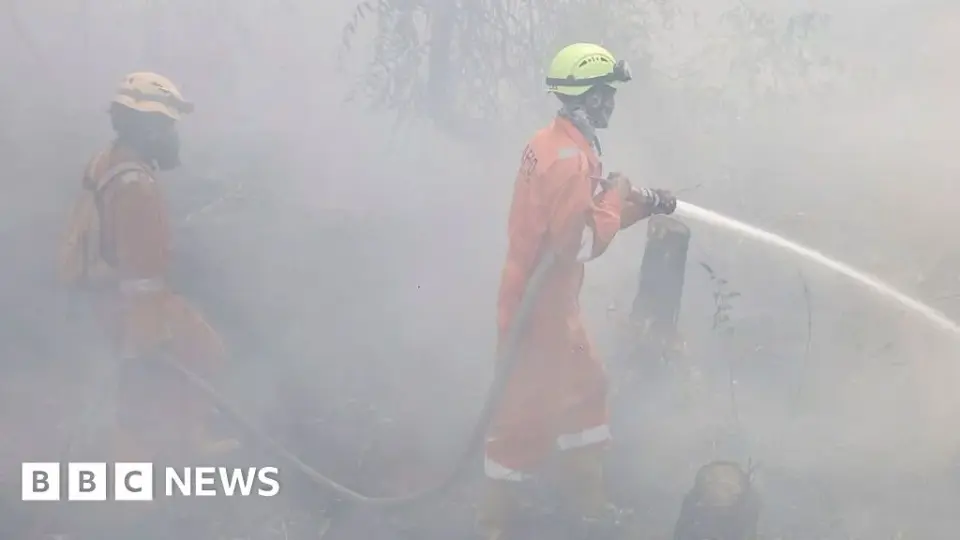
Indonesia faces a severe public health crisis as wildfires fueled by a 'Godzilla' El Niño have burned nearly 896,000 hectares of land since January. The resulting toxic haze has caused 175,000 respiratory cases, including 40,000 among toddlers, while authorities deploy 54,000 personnel and international aid to combat the fires.
Key points
- Indonesia's health ministry reports 175,000 respiratory cases since August, with 40,000 involving children under five.
- The independent monitoring platform Nusantara Atlas detected 734,000 hotspots, a 30% increase over the 2019 record.
- Approximately 895,657 hectares of land have burned since January, an area six times the size of Greater London.
- Authorities have deployed over 54,000 officials and dozens of aircraft for water bombing and cloud seeding.
- The haze has spread to Malaysia, Singapore, and the Philippines, prompting school closures and hospital surges.
Background
This crisis follows months of escalating tensions. In August, authorities arrested 72 individuals for suspected arson. Earlier in September, a 'super' El Niño was identified as the primary driver of extreme dryness, with smoke already reaching neighboring nations. A separate volcanic ash event in early September also disrupted air travel, compounding regional environmental stresses.
How outlets are covering it
BBC and The Independent both highlight the scale of the disaster but emphasize different aspects. BBC focuses on the health toll and the government's massive logistical response, including cloud seeding and international aid from Japan. The Independent, while largely obscured by technical code in the provided text, suggests a focus on the immediate humanitarian impact, such as evacuations from facilities threatened by spreading fires. Both sources agree that the 'Godzilla' El Niño is the primary exacerbating factor, though BBC notes meteorological skepticism regarding the effectiveness of cloud seeding.
Why it matters
The crisis illustrates the compounding effects of climate change and land-use practices on public health and regional stability. The high number of pediatric cases indicates severe air quality degradation, while the legal actions and international aid signal a growing recognition of the transboundary nature of the hazard. The potential for worsening conditions in October, as noted by Malaysian officials, suggests the region may face further economic and health disruptions.
What to watch
Authorities warn that October may bring hotter and drier conditions, potentially intensifying the fires. Malaysian officials are conducting cloud seeding to boost hydropower dam levels before a severe dry spell. Indonesia continues to deploy resources to extinguish peatland fires, though officials acknowledge the difficulty of the task. Legal proceedings in West Kalimantan may set precedents for government accountability in disaster management.
- More than 170,000 respiratory cases recorded in haze-choked Indonesia BBC
- Indonesian women volunteers on Borneo battle worst fires in 11 years Reuters
- ‘Fire after fire’: What Sumatra reveals about Indonesia’s recurring haze problem CNA
- The women fighting Indonesia’s wildfires South China Morning Post
- Almost 170 patients evacuated from hospital threatened by Indonesia wildfires The Independent
Want the full story? Read the original reporting
Read on BBC