
Rostov Oil Terminal Fire Enters Third Day Amid Broader Ukrainian Refinery Campaign
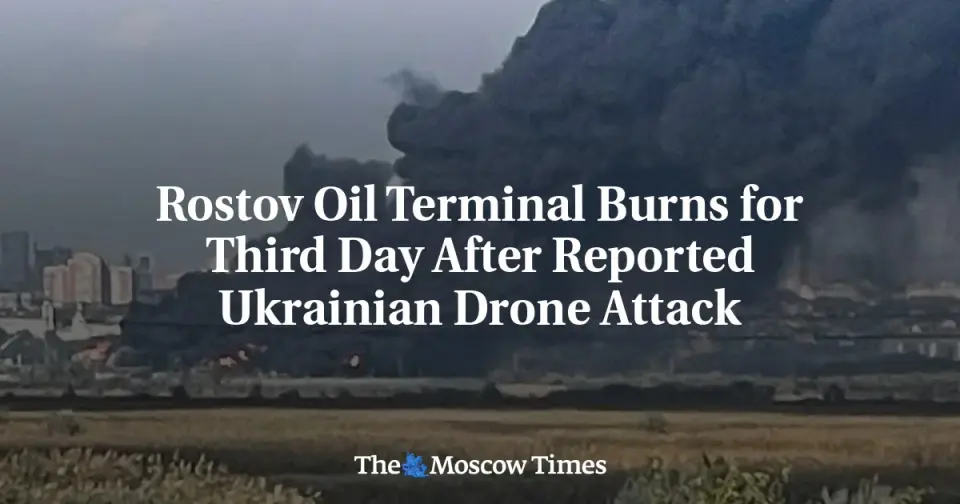
A fire at the Yug Rusi oil terminal in Rostov-on-Don has burned for three days following a reported Ukrainian drone strike, with preliminary reports indicating seven of twelve storage tanks were damaged. This incident is part of a sustained Ukrainian campaign targeting Russian energy infrastructure, which has knocked half of Russia's refining capacity offline by August 2026. While Russian authorities confirmed air defense activity and injuries, they did not initially acknowledge the terminal damage. The strikes have triggered a fuel crisis in Russia, with gasoline and diesel prices rising 20% since early 2026, and have intensified diplomatic tensions between Washington and Kyiv over energy sanctions.
Key points
- The fire at the Novoshakhtinsk-owned terminal in Rostov-on-Don’s Zheleznodorozhny district continued burning through Monday, with Ukrainian monitoring channel Supernova reporting that seven of the facility’s 12 tanks burned and another showed fire damage.
- The terminal, formerly known as Yug Rusi, has a storage capacity of 60,000 cubic meters and handles 3.5 million metric tons of petroleum products annually, serving as a key node for military fuel and exports.
- Russian Railways reported that the overnight attacks also damaged a railway drawbridge between Rostov-on-Don and Bataysk, causing delays for dozens of trains, while Governor Yury Slyusar confirmed six injuries and the destruction of two vessels in nearby Azov.
- The Washington Post analysis indicates that at least two-thirds of Russia’s 36 major refineries were struck between April and August 2026, with over half of analyzed strikes damaging critical desalting and distillation units that are difficult to repair due to international sanctions.
- By August 2026, half of Russia’s total refining capacity was offline, and refined export volumes had fallen to half of the 2025 levels, contributing to a fuel crisis and a 20% rise in gasoline and diesel prices.
Background
This incident follows a pattern of escalating Ukrainian deep-strike operations against Russian energy infrastructure, including previous attacks on the Rostov region in September 2026 and strikes on refineries in Omsk and Ukhta in October 2026. The current campaign represents a significant escalation in the frequency and precision of drone attacks, which began in earnest in August 2025. The broader context includes a diplomatic dispute between the US and Ukraine, with President Trump urging Kyiv to halt refinery strikes to stabilize global diesel prices, while President Zelensky insists on reciprocal measures from Russia.
How outlets are covering it
The Moscow Times reported on the ongoing fire and local damage, noting that Russian authorities had not confirmed the extent of the terminal damage or claimed responsibility for the attack. The Washington Post provided a strategic analysis, emphasizing that Ukraine’s targeting of hard-to-repair components like ELOU-AVT units is a deliberate strategy to exploit sanctions and cause long-term economic damage. Kyiv Post highlighted the diplomatic fallout, quoting former US envoy Keith Kellogg, who defended Ukraine’s right to strike refineries and dismissed Trump’s pressure as 'noise,' arguing that Russia’s strategic goals remain unmet despite the attacks. The Telegraph source was inaccessible due to a security block, so no perspective could be extracted.
Why it matters
The sustained damage to Russian energy infrastructure is exacerbating a domestic fuel crisis and inflation in Russia, while simultaneously complicating global energy markets. The diplomatic friction between the US and Ukraine over these strikes threatens to undermine Western support for Kyiv, as Washington seeks to stabilize diesel prices and manage relations with Moscow. The inability to repair critical refinery components due to sanctions suggests that the economic impact of these strikes may be long-lasting, potentially altering the strategic balance of the conflict.
What to watch
Russian authorities are likely to accelerate efforts to repair damaged infrastructure, potentially utilizing state takeovers of private refineries as authorized by recent decrees. Diplomatic tensions between Washington and Kyiv may escalate, with potential impacts on US military aid and sanctions policy. Ukraine may continue its campaign of precision strikes on energy targets, aiming to further degrade Russian refining capacity and economic resilience. The global diesel market may experience continued volatility as supply chains adjust to reduced Russian exports.
- Rostov Oil Terminal Burns for Third Day After Reported Ukrainian Drone Attack The Moscow Times
- Trump’s Ex-Envoy Says Ukraine Should Be Free to Strike Russia Bloomberg.com
- How Ukraine uses precision drone strikes to hobble Russian oil refineries The Washington Post
- Trump’s deal with Putin will not deter Zelensky from playing his strongest card The Telegraph
- ‘You’re Not Winning This Fight’: Kellogg Says Putin Shows Weakness as War Drags On Kyiv Post
Want the full story? Read the original reporting
Read on The Moscow Times