
Forced Recruitment: St. Petersburg Youth Sent to Front Without Medical Check, Omsk Residents Report Coerced Signings
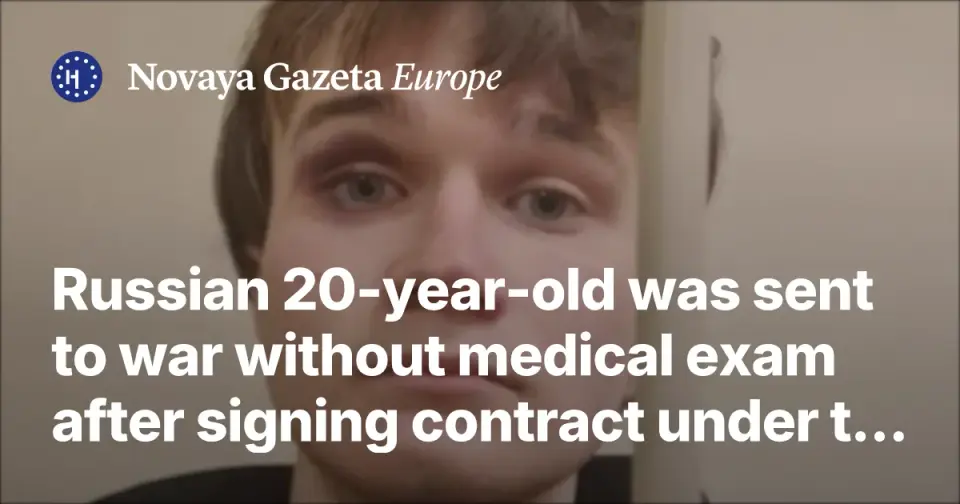
A 20-year-old from St. Petersburg was allegedly beaten and coerced into signing a military contract while in pre-trial detention, then sent to occupied Luhansk without a medical examination. Meanwhile, residents of Omsk report that recruitment centers are using similar tactics to force individuals into service, with some victims being sent to the front within hours of signing.
Key points
- Daniil Zaloznyi, a 20-year-old from St. Petersburg, was detained on drug charges and allegedly beaten by police to extract false testimony, according to his mother, Anna.
- In pre-trial detention, another inmate threatened Zaloznyi with physical harm, including burning him with an immersion heater, to force him to sign a military contract.
- Zaloznyi was sent to Belovodsk in occupied Luhansk without undergoing a required medical examination, which officials planned to conduct later in Luhansk.
- Anna Zaloznyi has filed complaints with the military prosecutor’s office and the Investigative Committee regarding her son’s forced recruitment.
- In Omsk, residents have reported that the Sirius-55 recruitment center at 8th Maryanovskaya Street is used to abduct and coerce individuals into signing contracts, with some victims sent to the front within hours.
- A father who voluntarily visited the Omsk recruitment center in spring was reportedly sent away immediately after signing, without time to secure benefits or tax holidays, according to his son.
Background
This case occurs amid a broader pattern of forced recruitment in Russia, as highlighted by Novaya Gazeta Europe’s earlier coverage of a man declared unfit for service being forced to sign a contract. The situation is part of a larger context of Russian military escalation and the closure of independent media, including Novaya Gazeta, which ceased operations on November 9, 2026, after sustained state pressure. The Kremlin has rejected ceasefire proposals while Ukrainian forces have advanced in Donetsk and Kherson Oblast, with a localized humanitarian ceasefire holding in Kherson.
How outlets are covering it
Novaya Gazeta Europe focuses on the individual case of Daniil Zaloznyi, emphasizing the coercion and lack of medical examination, while Astra Press highlights a broader pattern of forced recruitment in Omsk, citing map comments and a father’s experience. The two outlets differ in scope: Novaya Gazeta Europe centers on a single, detailed case, while Astra Press points to systemic issues in a specific city. Both agree that coercion and rapid deployment are common tactics, but Astra Press notes that some comments have been deleted or marked as anomalous, suggesting potential suppression of information.
Why it matters
These cases illustrate the growing use of coercion and forced recruitment by the Russian military to sustain its war effort in Ukraine. The lack of medical examinations and the rapid deployment of individuals without proper preparation raise serious human rights concerns. The suppression of information, as seen in the deletion of map comments, further complicates efforts to document and address these abuses.
What to watch
Anna Zaloznyi’s complaints to the military prosecutor’s office and the Investigative Committee may lead to further scrutiny of forced recruitment practices. In Omsk, the deletion of map comments and the promotion of a military boarding school by the Sirius-55 center suggest ongoing efforts to control the narrative. The closure of Novaya Gazeta on November 9, 2026, may reduce independent reporting on such cases, making it harder to document and address these abuses.
- Russian 20-year-old was sent to war without medical exam after signing contract under threat, his mother says Новая газета Европа
- Anxiety grips Russian men over fears Putin will launch a stealthy draft NBC News
- Russia’s Next Mobilization Is Already Happening Foreign Policy
- Russia Expands Practice of Rounding Up Men on Streets to Send Them to War Мілітарний
- Omsk residents shared information in the online map comments about the selection point for contracts at the education center Astra Press
Want the full story? Read the original reporting
Read on Новая газета Европа