Israeli settler violence in the West Bank has intensified, utilizing sheep herds and armed outposts to displace Palestinian communities. With over 1,600 incidents recorded this year, the strategy aims to make land unlivable, a tactic condemned by international observers but supported by the current Israeli government.
Months after a major border surge, teenage migrants remain stranded in Spain's Ceuta enclave, sleeping on streets and beaches due to inadequate housing. While Spanish authorities have relocated hundreds to a new port camp, many minors lack legal status or family support, leaving them vulnerable to exploitation and abuse. Spanish prosecutors are investigating allegations of mistreatment by security forces, and the situation has drawn criticism from human rights groups and local residents.
The 2026 Nobel Peace Prize was awarded to South African jurist Navi Pillay, prompting sharp criticism from President Donald Trump and Israeli leadership. Trump reposted a Truth Social attack on the committee, while Israel called the decision 'grotesque.' Pillay, a former UN human rights chief, was honored for her work on genocide and international law, including a 2025 finding that Israel committed genocide in Gaza.
Christa Pike’s survival after a botched lethal injection in Tennessee has intensified scrutiny of capital punishment in the US and globally. While 145 countries have abolished the death penalty, only 17 carried out executions in 2025, with Iran and Saudi Arabia accounting for 93% of confirmed cases. The incident has prompted Governor Bill Lee to pause executions in Tennessee for the remainder of 2026, though Pike’s sentence remains uncommuted.
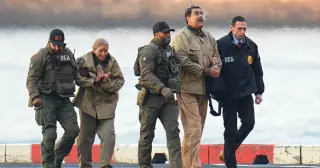
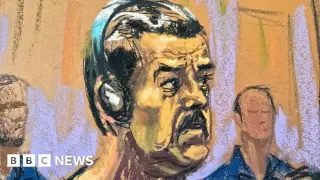
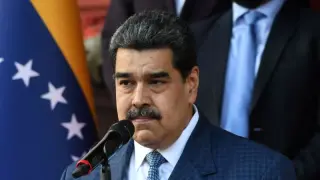
US federal prosecutors have unsealed a superseding indictment charging former Venezuelan President Nicolas Maduro and his wife, Cilia Flores, with conspiracy to commit torture. The new charges allege that Maduro authorized a state-sponsored system of repression against political opponents and Americans, adding to existing drug trafficking counts. While Maduro’s defense team claims sovereign immunity, prosecutors argue he is a rogue official with no such protection. The couple, captured in a January 2026 US military raid, remain in custody in New York, with a trial scheduled for June 2027.
US federal prosecutors have unsealed a superseding indictment charging former Venezuelan President Nicolás Maduro and his wife, Cilia Flores, with conspiracy to commit torture. The new charges, added to existing drug trafficking and weapons counts, allege that the couple oversaw a state-sponsored system of repression against political opponents and American citizens. The indictment details specific abuses, including electrocution, waterboarding, and forced ingestion of vomit, occurring between 2013 and 2025. Maduro and Flores, who were captured in a US military raid in January 2026, have pleaded not guilty to all charges. Their trial is scheduled to begin in June 2027.
Christa Pike, 50, has been discharged from a Nashville hospital after surviving a botched lethal injection attempt on September 30, 2026. Her lawyers report a 'profound' physical recovery, including the ability to walk with assistance and eat, though she suffers from a blood clot, pneumonia, and severe psychological trauma. Pike, convicted for the 1995 murder of Colleen Slemmer, is believed to be the first person to survive an execution attempt in the US. Governor Bill Lee has paused all executions in Tennessee for the remainder of 2026 and ordered a review, while Pike’s legal team seeks to downgrade her sentence to life in prison. The case has intensified national debate over the reliability and ethics of lethal injection, with experts citing frequent procedural errors and drug sourcing issues.
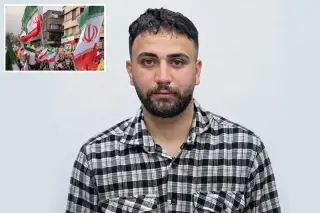
Alireza Sepahi, 25, was executed in Iran on Oct. 5, 2026, just hours after marrying his imprisoned fiancée over a phone line. Sepahi and co-defendant Alireza Raisi were hanged at Isfahan Central Prison for their roles in the Jan. 8 Alikhani Square protests, which killed four security personnel. His fiancée, Mahshad Keshani, 22, remains in custody facing additional charges. Sepahi had previously survived a failed hanging in July after suffering a heart attack. The execution is part of a broader crackdown on protesters from the January 2026 uprising, with 12 people sentenced to death in the Alikhani case alone.
Alireza Sepahi, 25, was hanged in Isfahan just hours after marrying his imprisoned fiancée, Mahshad Keshani, 22, via a phone call. Both were arrested during January 2026 anti-regime protests. Sepahi’s execution followed a failed attempt to hang him in July due to a heart attack. Keshani remains in custody. The wedding was officiated by rights lawyer Amirsalar Davoudi, with families joining remotely. Sepahi was one of 12 accused in the Alikhani Square case, linked to the deaths of four security guards during the January 8 demonstrations. Human rights groups allege the trials were unfair and confessions coerced. Sepahi’s family was barred from burying him in his hometown.
New York prosecutors have added conspiracy to commit torture charges against former Venezuelan President Nicolás Maduro and his wife, Cilia Flores. The indictment alleges a state-sponsored system of abuse against Americans and Venezuelans, including electrocution and waterboarding. While Maduro’s defense argues for head-of-state immunity, the judge denied Flores a request for house arrest, citing flight risks and the severity of the alleged crimes.
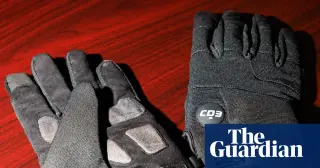
ICE signed a $16.7 million contract for 6,000 pairs of electric-shock gloves despite an Army study showing the devices cause intense pain and immediate compliance. Critics argue the gloves are unsafe and prone to misuse, while ICE defends them as necessary de-escalation tools.
Christa Pike, a 50-year-old Tennessee death row inmate, is conscious and speaking after surviving a botched lethal injection on September 30, 2026. Her survival, described as medically unprecedented, has led to a state-wide execution halt, a prison commissioner's resignation, and intense legal battles over her future and the reliability of capital punishment.
Egyptian authorities have charged one journalist from the independent outlet Matsadaash with terrorism after detaining the entire six-person staff. Rights groups condemn the move as a severe crackdown on press freedom, while the government accuses the outlet of publishing false news linked to the Muslim Brotherhood. International organizations and the Egyptian Journalists Syndicate are demanding their immediate release.
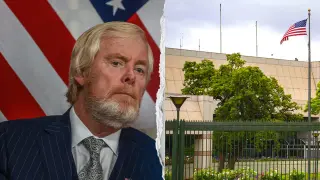
US Ambassador L. Brent Bozell III has sharply criticized South African President Cyril Ramaphosa for failing to condemn the 'Kill the Boer' chant and for enforcing race-based mining regulations that block billions in US investment. Bozell, who has received three diplomatic rebukes from Pretoria in nine months, argues that South Africa is drifting toward US adversaries like Russia, China, and Iran. While the US State Department demands immediate action on Trump’s executive order, South Africa maintains its commitment to the bilateral relationship, noting that the 'big sticks' of severe sanctions have not yet been deployed.
Ali Albokhari, a Finnish-Syrian chief mate, has been imprisoned in Turkey for three years after 137kg of cocaine was found on the cargo ship Phoenician M. Despite no forensic evidence linking him to the drugs, he was convicted under 'command responsibility' and sentenced to 33 years. His wife, Elena, is lobbying for his release while his captain, Marko Bekavac, was released via a prisoner swap. The case highlights the vulnerability of seafarers to organized crime and inadequate legal protections.