
Pakistani Airstrikes Kill Four in Afghanistan, Escalating Border Crisis
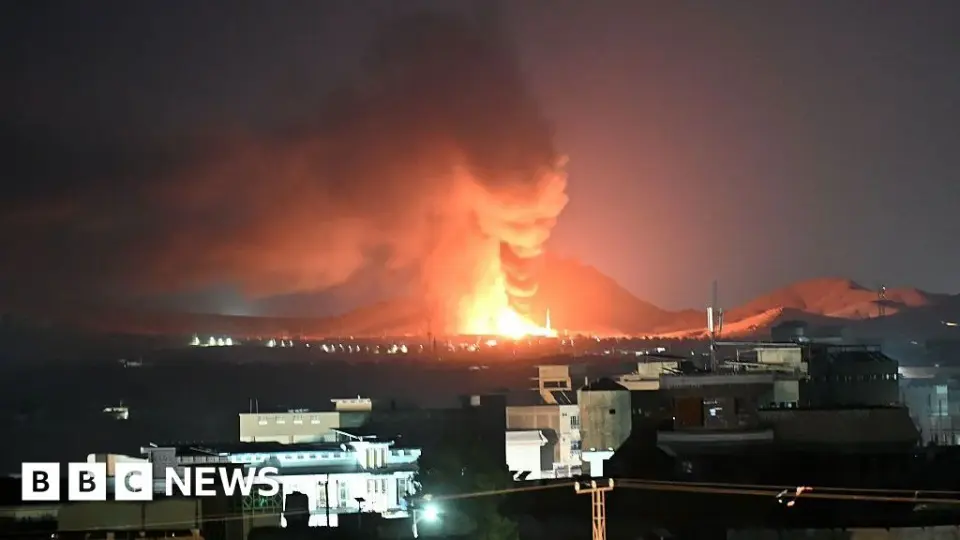
Pakistan launched a second wave of airstrikes in Afghanistan within a week, killing at least four civilians in Kandahar, Paktia, and Khost. The Taliban government condemned the attacks as 'reckless' and vowed an 'appropriate response,' while Islamabad insisted the strikes targeted military objectives linked to cross-border drone attacks. This escalation follows a deadly bombing in Pakistan and threatens to collapse recent mediation efforts by China, Turkey, Qatar, and Saudi Arabia.
Key points
- Pakistan struck 10 targets in Afghanistan, killing four civilians according to the Taliban government.
- The Taliban labeled the strikes 'reckless' and promised retaliation, while Pakistan called them 'precise' and 'proportionate.'
- The attacks follow a deadly mosque bombing in Pakistan that killed at least 31 people, reigniting tensions after three months of calm.
- Pakistan accused Afghanistan of harboring Tehreek-e-Taliban Pakistan (TTP) militants, a claim Kabul denies.
- International mediation efforts by China, Turkey, Qatar, and Saudi Arabia are now threatened by this escalation.
Background
This latest escalation follows a series of cross-border incidents in September 2026. On September 18, a bombing at a police facility in northwestern Pakistan killed at least 31 people, claimed by a group linked to the TTP. In response, Pakistan conducted airstrikes in Kunar province on September 21, killing three civilians and injuring four, according to the UN. A ceasefire agreed in March 2026 had failed to produce lasting peace, with UN data showing 499 civilians killed and 1,216 wounded in cross-border violence between October 2025 and June 2026.
How outlets are covering it
BBC and Al Jazeera report that the Taliban government in Kabul condemned the strikes as 'reckless, careless, and hostile,' with spokesman Zabihullah Mujahid warning of 'adverse consequences' for Pakistan. In contrast, Pakistan's Information Minister Attaullah Tarar described the strikes as 'deliberate, precise, calibrated, and proportionate,' targeting 'identified military objectives' linked to drone attacks. Al Jazeera notes that the escalation threatens mediation efforts by China, Turkey, Qatar, and Saudi Arabia, while BBC highlights that Pakistan's Foreign Minister Ishaq Dar called for 'concrete and verifiable' measures to prevent Afghan territory from being used for terrorism. Both outlets agree that the Taliban denies harboring TTP militants, calling the issue Pakistan's internal problem.
Why it matters
The strikes mark a significant escalation in the Pakistan-Afghanistan conflict, threatening to collapse fragile peace efforts and potentially leading to further cross-border violence. The involvement of the TTP and the failure of international mediation highlight the deepening instability in the region, with potential implications for regional security and humanitarian aid.
What to watch
The Taliban government has vowed an 'appropriate response' to the strikes, while Pakistan has warned that any 'provocative act' will be met with retaliation. International mediators, including China, Turkey, Qatar, and Saudi Arabia, are expected to intensify efforts to broker a lasting peace, though success remains uncertain. The situation may lead to further cross-border violence and a potential collapse of the March 2026 ceasefire.
- Four civilians killed in Pakistani strikes in Afghanistan, Taliban says BBC
- Pakistani airstrikes target Afghanistan after Islamabad accuses Kabul of drone attacks AP News
- Pakistan air strikes kill 4 civilians in Afghanistan, Kabul says Reuters
- Afghanistan vows to respond after Pakistani air strikes kill four Al Jazeera
- What's behind the Pakistani strikes on Afghanistan? Yahoo
Want the full story? Read the original reporting
Read on BBC