
Iranian singer Parastoo Ahmadi flogged 74 times for 2024 online performance without hijab
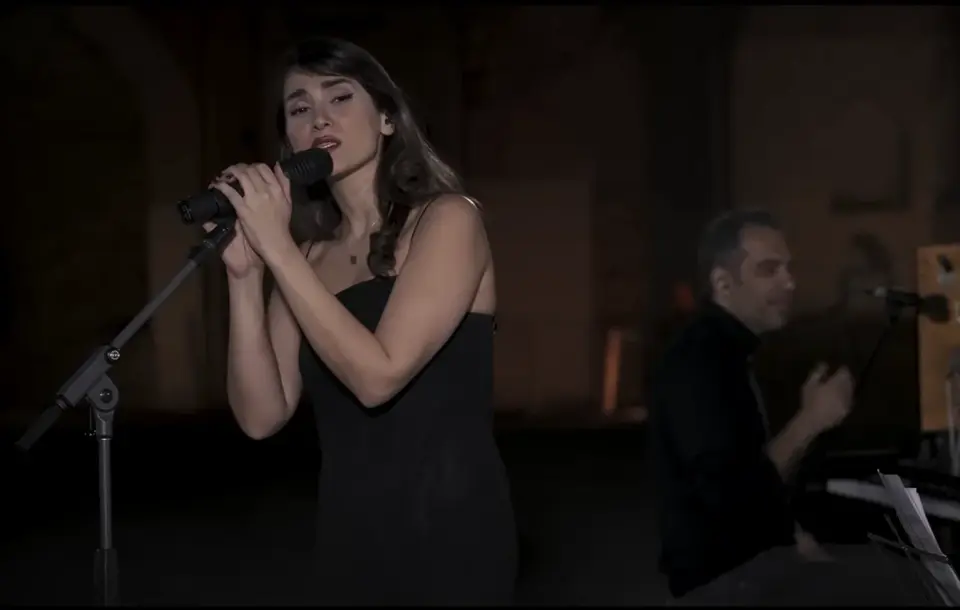
Iranian authorities carried out a sentence of 74 lashes against singer Parastoo Ahmadi and four members of her production team in Qom on November 23, 2026. The punishment follows a June 2026 conviction for 'offending public decency' related to a December 2024 online concert where Ahmadi performed without the mandatory hijab. The five individuals also received two-year bans on artistic activities and foreign travel. Human rights groups condemned the flogging as torture, while Iranian authorities maintained the action upheld public decency laws.
Key points
- Parastoo Ahmadi, 29, and four male colleagues received 74 lashes each at the Criminal Sentence Enforcement Office in Qom.
- The punishment follows a June 2026 conviction for 'offending public decency' and 'complicity in the production of obscene content' related to a December 2024 online concert.
- Ahmadi performed in a sleeveless gown without a hijab at the Deir-e Gachin Caravanserai near Qom, a site viewed by millions on YouTube.
- The five defendants also received two-year bans on artistic and musical activities and foreign travel.
- An appeals court in Qom rejected the defendants' appeal in September 2026, confirming the sentence.
- Human rights organizations, including Amnesty International and Iran Human Rights, condemned the flogging as cruel, inhuman, and degrading punishment.
Background
This case follows a pattern of Iranian authorities using flogging against artists who challenge restrictions on women. In March 2025, singer Mehdi Yarrahi was whipped 74 times over a song calling on women to remove their headscarves. The mandatory hijab rules became a flashpoint during 2022 protests following the death in custody of Mahsa Amini, who was arrested for allegedly violating the dress code. Since then, many Iranian women have stopped covering their hair in public, leading to periodic waves of arrests and enforcement measures by authorities.
How outlets are covering it
The Times of Israel and BBC reported that Ahmadi and four members of her team were flogged 74 times, citing lawyer Mostafa Nili. CNN and NBC News confirmed the flogging and noted that the five defendants also received two-year bans on artistic activities and foreign travel. Amnesty International and Iran Human Rights condemned the flogging as torture and a violation of international law. Iranian authorities defended the action as upholding public decency laws, though they did not immediately comment on the implementation of the flogging sentences. The Times of Israel noted that it was unclear what happened to the other four individuals sentenced in June, while CNN and BBC identified the four men flogged alongside Ahmadi as Soheil Faghih-Nasiri, Amin Taheri, Amirali Pirnia, and Mohsen Lashkari.
Why it matters
The flogging of Parastoo Ahmadi highlights ongoing tensions over compulsory veiling and artistic expression in Iran. It demonstrates the Iranian government's continued use of punitive measures against women who challenge dress code restrictions, despite widespread defiance of hijab rules since the 2022 protests. The case also underscores the international condemnation of flogging as a form of torture and a violation of human rights, with Western governments and human rights groups criticizing Iran's human rights record.
What to watch
The case may lead to further international pressure on Iran to abandon flogging sentences and respect human rights. It could also inspire more Iranian women to defy hijab rules, despite the risk of punishment. The Iranian government may continue to enforce dress code restrictions and punish those who challenge them, potentially leading to more arrests and prosecutions.
- Iranian singer lashed 74 times over online concert without hijab The Times of Israel
- Iran flogs female singer and four members of concert team over her performance without hijab CNN
- Iran carries out flogging of singer who performed without a hijab NBC News
- Iranian authorities flog singer who performed without hijab, lawyers say BBC
- Iran flogs singer Parastoo Ahmadi for performing without headscarf Al Jazeera
Want the full story? Read the original reporting
Read on The Times of Israel