
Ukrainian Drones Strike Bashkortostan Refinery and Wildberries Hub
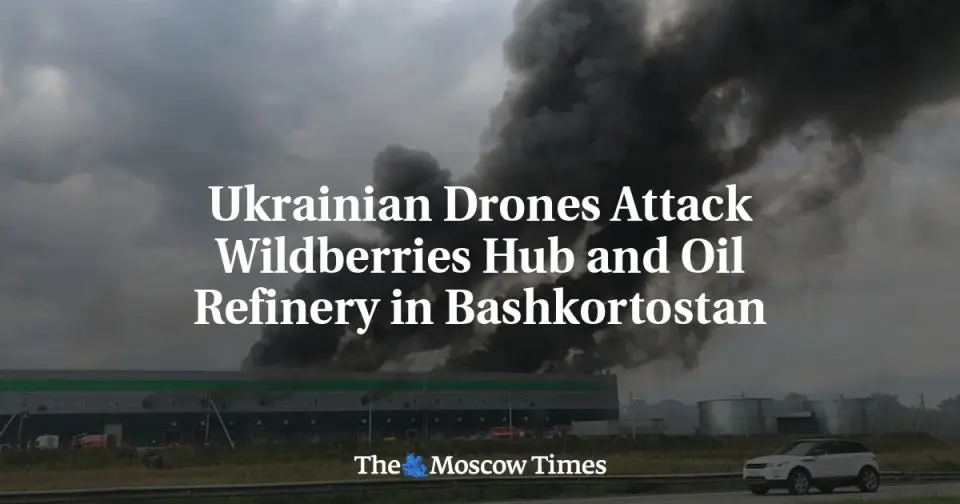
Ukrainian drones struck a Gazprom Neftekhim oil refinery and a Wildberries logistics hub in Bashkortostan on Thursday, injuring two people and halting operations at the refinery. The attacks, occurring over 1,200 kilometers from Moscow, are part of a broader campaign targeting Russian economic infrastructure. Regional officials reported 21 drones were shot down, while Russia’s Defense Ministry claimed 362 drones were intercepted across 18 regions. Wildberries confirmed a fire at its facility but stated no merchandise was stored there and staff were evacuated. The strikes have intensified since mid-July, damaging at least 12 warehouses and killing 13 employees, prompting Kyiv to label the retailer a legitimate target due to alleged military supply links.
Key points
- Two people were injured in the Bashkortostan attacks, with falling debris causing a fire in an industrial area near the Gazprom Neftekhim Salavat refinery.
- The refinery, which accounts for 2.7% of Russia’s refining throughput, halted operations after being damaged; it had previously been hit in a prior month’s attack.
- Wildberries confirmed a fire at its logistics hub in the Chishminsky district, noting that staff were evacuated and no retail merchandise was stored at the site.
- Regional head Radiy Khabirov stated that 16 drones were shot down over Salavat and five over the Chishminsky district, with a Ka-32 helicopter deployed to assist firefighting efforts.
- Russia’s Defense Ministry reported that air defense systems intercepted 362 Ukrainian drones across 18 regions and annexed Crimea between Wednesday evening and Thursday morning.
- Temporary flight suspensions and restrictions were imposed at airports in Ufa, Kazan, Samara, and Krasnodar due to the drone barrage.
Background
This incident follows a series of Ukrainian drone strikes on Russian infrastructure since mid-July, including attacks on Wildberries warehouses in Volgograd, Voronezh, and Elektrostal, as well as oil refineries in Nizhnekamsk and Ufa. Previous strikes have resulted in casualties, significant fires, and disruptions to logistics and energy production. The Bashkortostan attacks extend the geographic reach of these operations, targeting sites deep within Russia’s interior.
How outlets are covering it
The Moscow Times and AP News report the immediate impact of the Thursday strikes, focusing on the injuries, fires, and operational halts at the refinery and logistics hub. Al Jazeera and ABC News provide broader context, emphasizing the strategic rationale behind targeting Wildberries. Al Jazeera notes that Kyiv views the retailer as a legitimate target due to alleged sales of dual-use military items, while ABC News highlights the potential financial contagion risk to Russian banks like VTB and Sberbank, which hold significant debt from Wildberries. Russian officials, including Kremlin spokesman Dmitry Peskov, condemn the strikes as terrorism against civilian targets, whereas Ukrainian officials frame them as retaliation for Russian attacks on Ukrainian infrastructure. Analysts like Nikolay Mitrokhin argue that while the strikes cause social and economic disruption, they are unlikely to significantly affect Russia’s military readiness due to alternative supply chains.
Why it matters
The strikes underscore the escalating scale and geographic reach of Ukrainian drone campaigns, targeting critical economic infrastructure far from the front lines. The damage to the Gazprom Neftekhim refinery and Wildberries hub highlights vulnerabilities in Russia’s energy and retail sectors, potentially impacting fuel supplies and consumer goods availability. The financial implications are significant, as Wildberries’ debt to Kremlin-controlled banks could trigger broader economic instability if the company faces prolonged disruptions. These attacks also reflect Kyiv’s strategy of imposing 'long-range sanctions' to pressure Russia’s economy and morale, while raising international concerns about the targeting of civilian infrastructure and the potential for further escalation in the conflict.
What to watch
Authorities in Bashkortostan are likely to continue firefighting efforts and assess the full extent of damage to the refinery and logistics hub. Wildberries may further decentralize its logistics network and adjust service costs in response to ongoing threats. Russian air defense systems will remain on high alert to intercept additional drone attacks, while Kyiv may continue targeting economic infrastructure to sustain pressure on Russia’s economy. International observers will monitor the financial impact on Russian banks and the broader economic stability, as well as any retaliatory actions by Moscow against Ukrainian targets.
- Ukrainian Drones Attack Wildberries Hub and Oil Refinery in Bashkortostan The Moscow Times
- Ukraine’s drones hit a major Russian refinery 800 miles from the border, sparking a fire AP News
- Wildberries under fire: Why is Ukraine targeting a Russian retail giant? Al Jazeera
- She is Russia’s richest woman. Her business empire is going up in flames. The Japan Times
- 'People are losing everything': Ukraine's drones could crash Russian banks ABC News & Headlines – Australian Broadcasting Corporation
Want the full story? Read the original reporting
Read on The Moscow Times