
Yemen’s Red Sea Battle: Government Forces Retake Coast as Houthi Strikes Escalate Regional Tensions
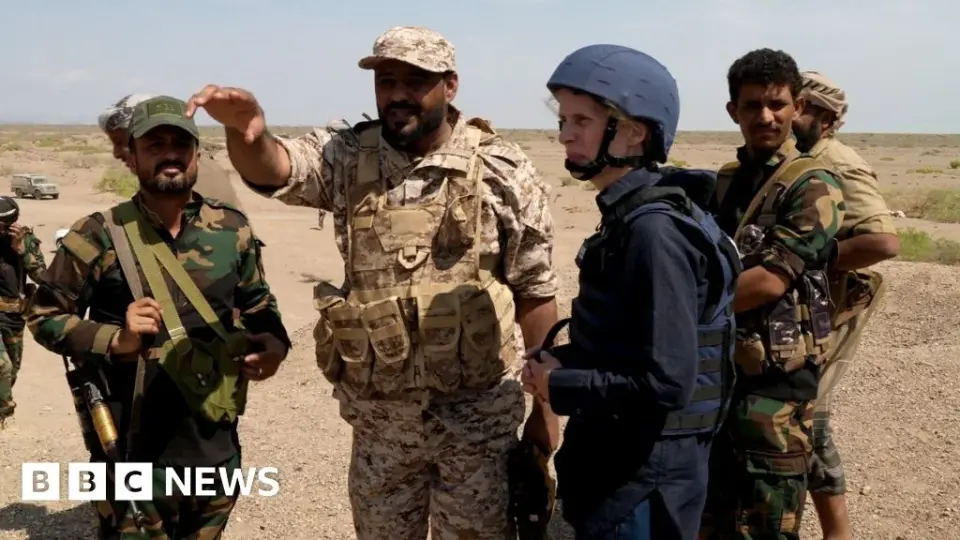
Pro-government forces in Yemen have reclaimed approximately 85% of the Bab al-Mandeb coastline from Houthi rebels, a strategic waterway critical for global oil exports. This advance, part of 'Operation Yemen Dawn,' follows a September Houthi seizure of key ports. Despite these gains, the Houthis continue launching deadly missile attacks on Saudi Arabia, including a recent strike on Riyadh’s King Khalid International Airport that killed 12 people. The conflict remains fragmented by internal divisions among anti-Houthi factions, particularly between Saudi-backed forces and the UAE-backed Southern Transitional Council (STC). Humanitarian conditions are dire, with 200,000 people displaced since September and hospitals in Aden overwhelmed by casualties. Analysts warn that while military progress is being made, the Houthis retain the capability to disrupt maritime traffic from highland positions, and a lasting peace requires resolving deep political grievances in southern Yemen.
Key points
- Pro-government forces, including the Southern Giants Brigades, have retaken roughly 85% of the Bab al-Mandeb coastline from Houthis, according to BBC reporting.
- Houthi forces remain entrenched in highland areas like the Kahbub Mountains, retaining the ability to launch drone and missile attacks despite losing coastal positions.
- A recent Houthi strike on Riyadh’s King Khalid International Airport killed 12 people and wounded 300, marking the deadliest attack on Saudi soil in over a decade.
- The anti-Houthi coalition is fractured by tensions between Saudi Arabia and the UAE, particularly regarding the status of the Southern Transitional Council (STC), which was dissolved in January 2026 but retains significant popular support.
- Over 200,000 people have been displaced since the September escalation, and hospitals in Aden are treating hundreds of casualties daily, including children injured by drone strikes.
- President Donald Trump has declined direct US military intervention against the Houthis, viewing the conflict as a bilateral issue between Saudi Arabia and the Houthis, though he has evaluated potential involvement following the Riyadh attacks.
Background
This escalation follows a series of Houthi advances in September 2026, which seized key Red Sea ports and the Bab al-Mandeb Strait, disrupting global oil routes and pushing crude prices above $100 per barrel. The conflict is part of a broader regional tension involving Iran, which backs the Houthis, and Saudi Arabia. Previous attempts at mediation, including a 2022 truce, have failed to produce a lasting peace. The current situation is complicated by internal divisions within the anti-Houthi coalition, particularly between Saudi Arabia and the UAE over the role of the Southern Transitional Council (STC), which was dissolved in January 2026 but continues to mobilize support for southern independence.
How outlets are covering it
BBC emphasizes the military progress of pro-government forces in retaking the Bab al-Mandeb coastline and highlights the humanitarian crisis, including displacement and hospital overcrowding. Al Jazeera focuses on the strategic importance of Bab al-Mandeb for global trade and energy flows, noting that while government forces have advanced, the Houthis retain the capability to launch attacks from highland positions. Al Jazeera also stresses the need for unity among anti-Houthi factions and the potential for a broader regional conflict if the situation escalates. GIS Reports highlights the deep divisions within the anti-Houthi coalition, particularly between Saudi Arabia and the UAE, and argues that any political settlement must address the grievances of the Southern Transitional Council (STC) and southern Yemen’s desire for independence. GIS Reports also notes that the STC remains a potent political force despite its dissolution in January 2026.
Why it matters
The conflict in Yemen has significant global implications, particularly for oil prices and maritime security. The Bab al-Mandeb Strait is a critical chokepoint for global oil exports, and any disruption to this route can have a major impact on global energy markets. The conflict also has regional implications, as it involves major powers such as Saudi Arabia, Iran, and the UAE, and could potentially escalate into a broader regional conflict. The humanitarian crisis in Yemen is also a major concern, with hundreds of thousands of people displaced and hospitals overwhelmed by casualties. The conflict also highlights the challenges of achieving a lasting peace in a fragmented and divided country, where internal divisions and external influences complicate efforts to resolve the conflict.
What to watch
The next steps in the Yemen conflict will depend on the ability of pro-government forces to consolidate their gains and secure the Bab al-Mandeb coastline. If they succeed, it could shift the balance of power in the conflict and potentially lead to a new negotiating process. However, if the advance stalls, the conflict could become a protracted war of attrition, with devastating humanitarian and economic consequences. The conflict will also depend on the ability of the anti-Houthi coalition to resolve its internal divisions, particularly between Saudi Arabia and the UAE, and to address the grievances of the Southern Transitional Council (STC). Any political settlement will need to include the STC and address the question of southern Yemen’s political status. The conflict will also depend on the response of Saudi Arabia to the Houthi attacks on its territory, which could potentially escalate the conflict into a broader regional war.
- On Yemen's desert battlefield, a war with global consequences is being waged BBC
- The escalation in Yemen is a turning point Al Jazeera
- Peace in Yemen runs through the South GIS Reports
- Yemen Plunges Back into “Full-Scale Civil War,” Houthis Trade Strikes with Saudi Arabia Democracy Now!
- Yemen escalation Dawn
Want the full story? Read the original reporting
Read on BBC