
Spanish King Visits Ceuta as Polls Reveal Deep Fear of Conflict with Morocco
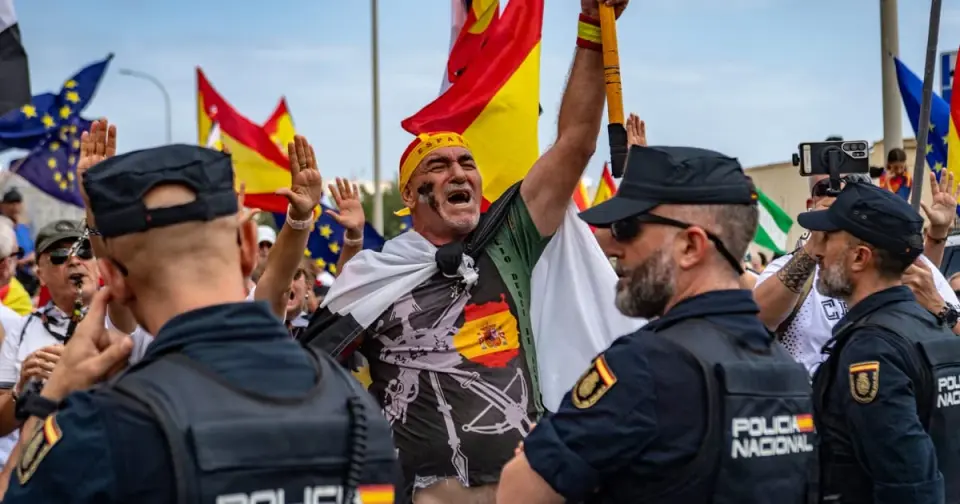
King Felipe VI and Queen Letizia are visiting the disputed North African enclaves of Ceuta and Melilla, marking the monarch’s first trip to these territories since ascending the throne in 2014. The visit follows a July migrant crisis in which over 70,000 people crossed into Ceuta, resulting in at least 141 deaths. A new poll indicates that 58% of Spaniards believe tensions over these territories could lead to armed conflict with Morocco within a decade, while 75% view Morocco as a threat to Spain’s territorial integrity. The trip coincides with a snap election and rising diplomatic friction, as Morocco continues to claim sovereignty over the cities, which Spain considers integral parts of its nation.
Key points
- King Felipe VI and Queen Letizia arrived in Ceuta on October 13 for a two-day visit that includes a stop in Melilla, the first such royal tour since 2014.
- The visit follows a July surge where over 70,000 migrants entered Ceuta, causing at least 141 deaths and leaving thousands stranded, which sparked severe criticism of Prime Minister Pedro Sánchez’s government.
- A September poll by POLITICO found that 58% of Spaniards believe tensions over Ceuta and Melilla could trigger an armed conflict with Morocco within the next decade.
- 75% of respondents in the same poll stated that Morocco poses a genuine threat to Spain’s territorial integrity, a view held by 68% of conservative voters and 47% of Sánchez’s own supporters.
- Morocco has refused to repatriate the bodies of those who died during the crisis, a move described by local officials as a 'slap in the face,' while Rabat maintains its sovereignty claims over the enclaves.
- The visit occurs ahead of a snap election, with immigration and border security becoming central political issues, as opposition leaders accuse the government of failing to stand up to Rabat.
Background
The dispute over Ceuta and Melilla dates back to the 15th century, when Portuguese forces captured Ceuta in 1415, later transferring it to Spanish control after the Iberian Union. Morocco, which gained independence in 1956, has long claimed these territories as occupied regions. The current crisis is part of a broader pattern of tension, including a 1975 'Green March' where Morocco mobilized civilians to force Madrid to hand over Western Sahara. Recent months have seen escalating friction, including a leaked police report alleging Moroccan involvement in the July migrant surge, which Madrid denies, blaming smugglers instead.
How outlets are covering it
POLITICO highlights the internal Spanish political divide, noting that while 75% of Spaniards view Morocco as a threat, support for the likelihood of armed conflict varies significantly by party affiliation, with 75% of Vox supporters and 68% of People’s Party supporters believing conflict is likely, compared to a split among Socialist Party supporters. BBC focuses on the humanitarian and political fallout, emphasizing the discrepancy between local estimates of 15,000 remaining migrants and central government figures of 7,400, and the criticism of Sánchez’s handling of the crisis. Al Jazeera provides historical context, explaining that the sovereignty dispute is rooted in differing interpretations of history, with Spain citing centuries of control and Morocco citing the cities' location on the North African coast and their pre-1415 Muslim heritage. All sources agree on the factual basis of the July surge and the royal visit but differ in emphasis: POLITICO on public opinion, BBC on the humanitarian crisis, and Al Jazeera on the historical and legal dimensions of the dispute.
Why it matters
The Ceuta crisis has transformed a long-standing territorial dispute into an immediate security and political challenge for Spain, influencing domestic elections and EU migration policy. The high level of public fear regarding armed conflict with Morocco, a key partner in North African security and migration management, could destabilize regional relations and complicate Spain’s diplomatic position. The royal visit signals Madrid’s attempt to assert sovereignty and unity, but the unresolved status of the enclaves and the humanitarian aftermath of the migrant surge continue to strain relations with Rabat and test the EU’s border management capabilities.
What to watch
King Felipe VI is expected to deliver a carefully worded speech in Ceuta and visit Melilla on October 14, with a protest planned in Fnideq, Morocco, as he leaves. The Spanish government is discussing emergency measures to address potential mass movements, while the EU explores new migration frameworks. The snap election, where immigration is a key issue, will likely determine the future direction of Spain’s policy toward Morocco and the enclaves. Morocco’s muted response so far may shift as diplomatic tensions escalate, and the repatriation of the deceased remains a point of contention.
- Poll: Spaniards say Ceuta crisis could spark armed conflict with Morocco POLITICO.eu
- Spain’s king and queen visit Ceuta as territory grapples with protracted migration crisis AP News
- Spanish royals make rare visit to Ceuta after migrant crisis BBC
- Ceuta or Sebta? Why one city has two names and a disputed status Al Jazeera
- Spain's King Felipe and Queen Letizia visit Ceuta DW.com
Want the full story? Read the original reporting
Read on POLITICO.eu