
Bangsamoro holds first parliamentary vote amid pre-election violence
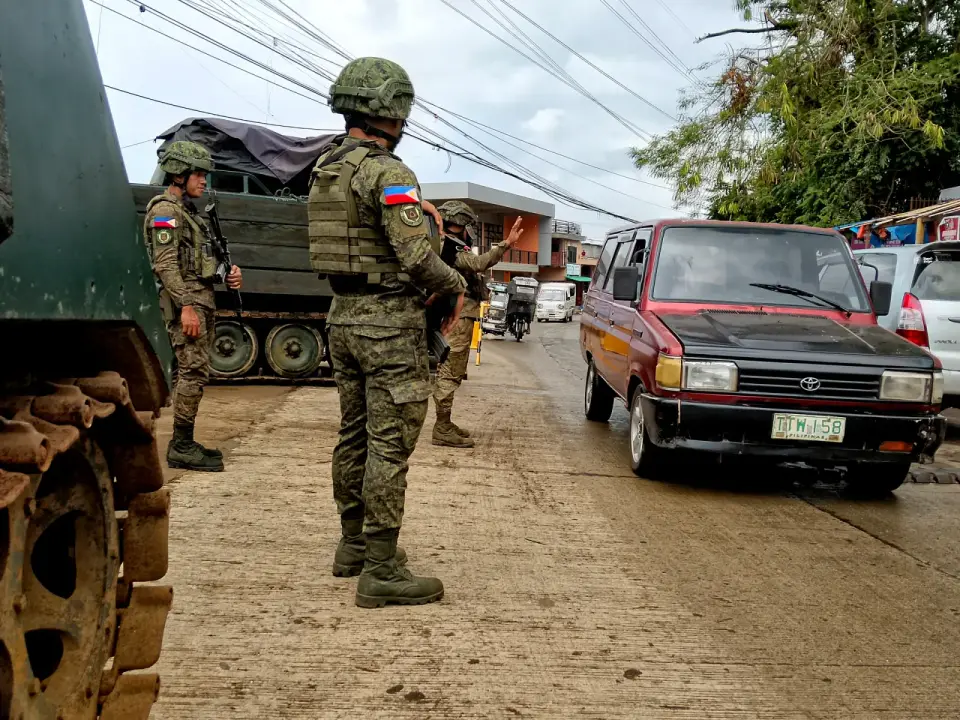
Nearly 2.4 million voters in the Philippines' Bangsamoro region cast ballots in the region's first parliamentary election, marking the end of a seven-year transition period. The historic vote, which aims to establish self-governance after decades of conflict, was marred by violence and ballot irregularities in the days leading up to polling.
Key points
- Voters in the Bangsamoro Autonomous Region in Muslim Mindanao (BARMM) elected 80 members of parliament, including 40 party representatives, 32 district representatives, and eight sectoral representatives.
- The parliament will subsequently elect the region's chief minister, who heads the executive branch, in its first session.
- Violence erupted in Cotabato City on Sunday, killing three and injuring 15, prompting the Commission on Elections to place the city under its direct control.
- In Basilan's Maluso town, pre-shaded ballots were found in 36 of 68 precincts, leading to the immediate reprinting of ballots and delayed voting in those areas.
- The election concludes the transition from the appointed Bangsamoro Transition Authority, which was established in 2019 following a 2014 peace deal with the Moro Islamic Liberation Front (MILF).
Background
The BARMM was created in 2019 after voters ratified a law granting greater autonomy to the Muslim-majority south, replacing an earlier arrangement. This followed a 2014 peace agreement between the Philippine government and the MILF, which ended a conflict that had killed over 120,000 people since the 1970s. The region covers parts of Mindanao, Basilan, Tawi-Tawi, and Cotabato City, with a population of approximately 4.5 million.
How outlets are covering it
Al Jazeera emphasized the violence that marred the elections, highlighting the shooting in Cotabato City and the discovery of pre-shaded ballots in Basilan, which led to the Commission on Elections taking control of affected areas. U.S. News & World Report focused on the broader significance of the election as the culmination of a decade-long peace process and the transition to elected self-government, noting the region's economic growth and untapped potential. AP News highlighted the shift from armed struggle to self-governance, framing the election as a critical step in ending separatist conflict and addressing long-standing grievances over poverty and marginalization.
Why it matters
The election represents a pivotal moment in the peace process in the southern Philippines, aiming to consolidate autonomy and reduce support for armed groups. Success could lead to improved economic performance and stability, while failure could reignite conflict in a region that has seen significant violence and displacement over the past five decades.
What to watch
The newly elected parliament will convene to elect the region's chief minister. Election officials are monitoring turnout, targeting at least 80%, and addressing any remaining irregularities. The outcome will determine the direction of the region's governance and its ability to sustain peace and development.
- Philippines’ Muslim-majority Bangsamoro region votes for first parliament Al Jazeera
- Factbox-What Is the Philippines' BARMM Regional Election and Why Does It Matter U.S. News & World Report
- A Muslim region in the southern Philippines votes in its first elections WANE 15
- Philippine Muslim Region Holds First Election in Heavy Security Bloomberg.com
- What to know as a Philippine region with a history of conflict holds its first parliamentary polls AP News
Want the full story? Read the original reporting
Read on Al Jazeera