
Ethiopia’s Pretoria Peace Collapses as Rebel Alliance Launches Cross-Border Offensive
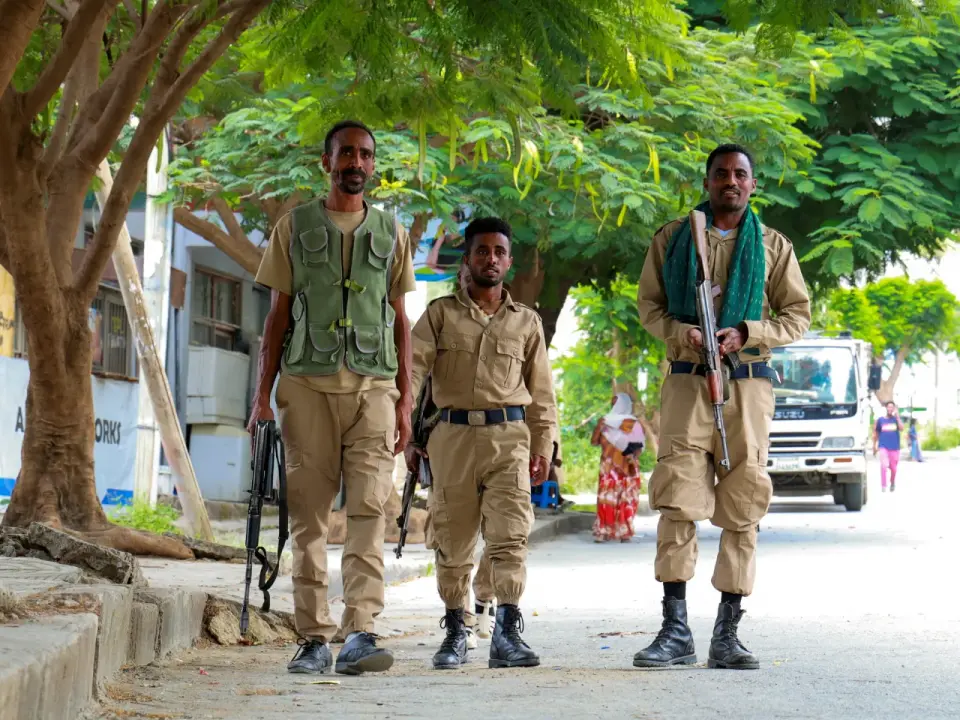
Renewed fighting between Ethiopia’s federal army and Tigrayan forces has shattered the 2022 Pretoria peace agreement, raising fears of a return to full-scale civil war. The conflict escalated after seven armed groups, including the Tigray People’s Liberation Front (TPLF) and the Amhara Fano National Movement, formed the Ethiopian Peoples’ Forces Alliance for Survival to oust Prime Minister Abiy Ahmed. Tigrayan forces have seized control of airports in Mekelle, Axum, and Shire, while fighting has spread into the Afar and Amhara regions. Both sides blame each other for initiating the latest clashes, with the government accusing the TPLF of attacking first and Tigrayan leaders claiming they are responding to federal drone strikes and ground offensives. The African Union has called for an immediate halt to hostilities and renewed talks, but trust between the parties remains extremely low.
Key points
- The Ethiopian Peoples’ Forces Alliance for Survival, formed in September 2026, unites seven armed groups including the TPLF, Amhara Fano National Movement, and Oromo Liberation Army with the stated goal of removing Prime Minister Abiy Ahmed’s government.
- Tigrayan forces have seized control of the airports in Mekelle, Axum, and Shire, disrupting civilian flights and violating the terms of the 2022 Pretoria peace agreement.
- Fighting has spread beyond Tigray into the neighboring Afar and Amhara regions, with clashes reported in towns such as Abala, Lalibela, and areas in North Wello.
- The federal government claims to have killed more than 270 rebel fighters in Amhara, a figure that has not been independently verified, while Tigrayan authorities report civilian casualties from drone strikes on schools and hospitals.
- The African Union has asked former Nigerian President Olusegun Obasanjo to engage the parties urgently, while the UN and IGAD have warned against a wider regional conflict.
- The conflict has led to the suspension of telecommunications services in Tigray, exacerbating a humanitarian crisis that already left approximately 750,000 people displaced within the region from the previous war.
Background
The current escalation follows a two-year civil war (2020-2022) that killed an estimated 500,000 to 600,000 people and displaced millions. The Pretoria peace agreement, signed in November 2022, ended the full-scale war but left key disputes unresolved, particularly regarding the status of western Tigray and the disarmament of TPLF forces. Relations between the federal government and the TPLF had deteriorated over the past six months, with the TPLF reasserting control of Tigray’s administration earlier in 2026 after displacing an interim government established under the peace deal.
How outlets are covering it
Al Jazeera emphasizes the risk of a return to full-scale civil war and highlights the breakdown of the Pretoria agreement, noting that both sides blame each other for the latest escalation. BBC focuses on the humanitarian impact, including panic buying, disrupted internet services, and the potential for forced recruitment of young men. ACLED provides detailed conflict monitoring data, confirming the seizure of airports and the spread of fighting into multiple regions, while also noting that the Gumuz Peoples Democratic Movement has refuted its membership in the new alliance. All sources agree that the formation of the Ethiopian Peoples’ Forces Alliance for Survival marks a significant shift in the conflict dynamics, but they differ in their emphasis on the immediate military outcomes versus the broader political implications.
Why it matters
The collapse of the Pretoria peace agreement threatens to reignite a devastating civil war in Ethiopia, with potential spillover into neighboring countries such as Eritrea and Sudan. The formation of a broad rebel alliance could destabilize the entire Horn of Africa, while the humanitarian crisis in Tigray, already severe from the previous war, is likely to worsen. The conflict also raises questions about the future of Ethiopia’s political structure and the role of external actors in the region.
What to watch
The African Union and other international actors are pushing for renewed talks under the Pretoria agreement, but the lack of trust between the parties and the formation of the new rebel alliance make a quick resolution unlikely. The conflict could spread further into other regions of Ethiopia, and there is a risk of regional escalation if Eritrea or other neighboring countries become directly involved. The humanitarian situation in Tigray will likely worsen as fighting continues and communications remain disrupted.
- Is Ethiopia on the verge of another civil war as fighting erupts in Tigray? Al Jazeera
- Telecoms networks disrupted in Tigray as Ethiopia's military cites major losses by rebels Reuters
- A disastrous new war threatens in Africa The Economist
- Ethiopia fighting: Are Tigray's TPLF forces and the army heading back to war? BBC
- ACLED ALERTS: Ethiopia Conflict Live ACLED
Want the full story? Read the original reporting
Read on Al Jazeera