
Kramatorsk Bus Strike Kills 30 Amid Surge in Russian Civilian Attacks
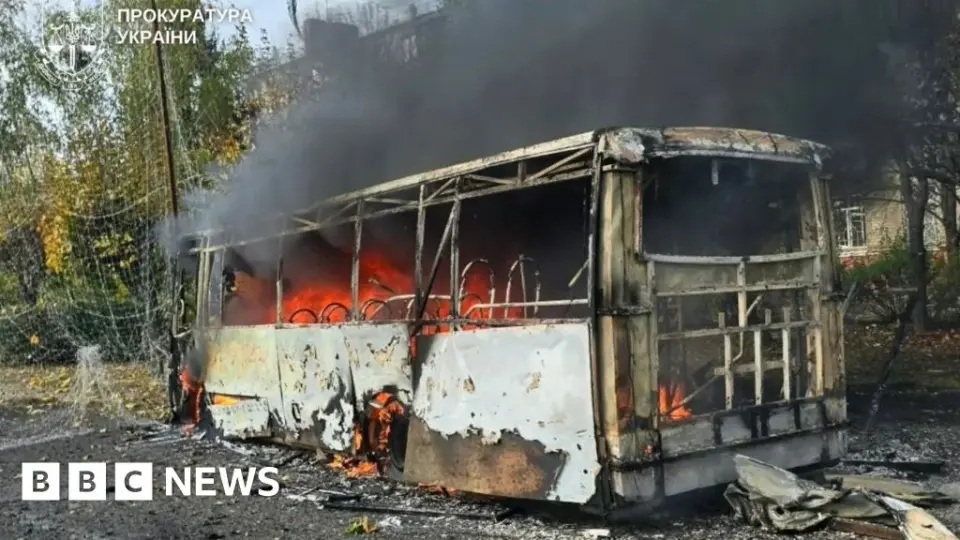
A Russian glide bomb strike on two civilian buses in Kramatorsk killed at least 30 people and wounded 18, marking one of the deadliest attacks on Ukrainian civilians this year. The incident occurred in the eastern Donetsk region, part of the 'fortress belt' Russia seeks to capture. Authorities suspended all public transport in the area. This attack follows a deadly missile strike on a residential block in Pryluky that killed 22 people, including five children. Ukrainian President Volodymyr Zelensky vowed a response and urged Western allies for concrete support, while UK Foreign Secretary Ed Miliband announced new sanctions against Russia. The strikes highlight a sharp increase in civilian casualties and infrastructure damage across Ukraine.
Key points
- At least 30 people were killed and 18 wounded in a Russian glide bomb attack on two buses in Kramatorsk, Donetsk region.
- The strike occurred at 10:00 AM local time near a dental clinic; all public transport in the region was suspended.
- A separate missile strike on a five-storey building in Pryluky killed 22 people, including five children, earlier in the week.
- Zelensky stated the strike 'will not go unanswered' and called for 'concrete action' from allies, including expanded Starlink coverage.
- UK Foreign Secretary Ed Miliband announced new sanctions targeting Russia's war machine, oil companies, and shadow fleet.
- Donetsk regional head Vadym Filashkin accused Russia of deliberately targeting civilians to maximize casualties.
Background
This incident follows a dramatic surge in Russian attacks on Ukraine, with the UN reporting more civilian deaths by August 2026 than in all of 2025. Recent weeks have seen intensified long-range strikes on both sides, including Ukrainian drone attacks on Russian data centres and oil refineries. The Kramatorsk strike is part of a broader Russian push to capture the 'fortress belt' in Donbas, which includes Kramatorsk and Slovyansk. Previous attacks, such as the October 7 barrage coinciding with Putin's birthday, have already caused significant civilian casualties and infrastructure damage, particularly in Kyiv and Chernihiv regions. Ukraine's air defences remain strained, with interceptor missiles in short supply globally.
How outlets are covering it
BBC, The Guardian, Al Jazeera, and Euronews all confirm the death toll of at least 30 in Kramatorsk and 18 wounded, with the strike occurring at 10:00 AM. BBC and The Guardian emphasize Zelensky's call for 'concrete action' and 'forceful response' from the world, while The Guardian notes Zelensky's specific request for expanded Starlink coverage to hit Russian targets, which Trump and Musk have refused. Al Jazeera highlights the uncertainty of whether the buses were intentionally targeted or if the glide bomb lacked precision, noting it as one of the deadliest aerial attacks in months. Euronews focuses on the suspension of public transport and the ongoing search and rescue operations. All sources agree on the suspension of public transport and the condemnation by Ukrainian officials, but differ in emphasis: BBC and The Guardian focus on diplomatic responses and sanctions, while Al Jazeera questions the precision of the weapon used. The Guardian also notes criticism of the US policy of engaging with Putin, with former ambassador Michael McFaul calling Russia a 'terrorist state'.
Why it matters
The Kramatorsk strike underscores the escalating risk to civilians in Ukraine's eastern front lines and the failure of current air defences to prevent such attacks. It highlights the humanitarian crisis and the potential for further escalation, as Zelensky warns of a major Russian onslaught. The attack also tests the resolve of Western allies to provide concrete support, including sanctions and military aid, and raises questions about the effectiveness of diplomatic efforts to end the war. The surge in civilian casualties may influence public opinion and policy in Western countries, potentially leading to increased pressure on Russia or a shift in support for Ukraine.
What to watch
Ukraine is expected to respond to the Kramatorsk strike, as vowed by Zelensky. Western allies, including the UK, are likely to announce further sanctions and military support. Diplomatic talks between US envoys Steve Witkoff and Jared Kushner and Ukrainian officials are scheduled for Friday in Miami, with European teams also expected to join. The situation on the ground in Kramatorsk and Slovyansk will remain tense, with civilians urged to evacuate. Ukraine may continue its long-range drone strikes on Russian targets, including data centres and oil refineries, in retaliation. The UN and international organizations may call for investigations into the attacks, and there may be increased pressure on Russia to cease targeting civilians.
- Russian strike on buses kills 33, say officials, as deadly attacks on Ukraine surge BBC
- Russian attack on two buses kills 30 near Ukraine frontline The Guardian
- Russian bomb kills 12 in street in east Ukraine stronghold Reuters
- Russian attack on Ukraine’s Kramatorsk kills at least 12 people Al Jazeera
- At least 30 killed after Russian strike hits two buses in Donetsk Euronews.com
Want the full story? Read the original reporting
Read on BBC