
Yemen Government Launches Major Offensive to Retake Houthi- Controlled Territory
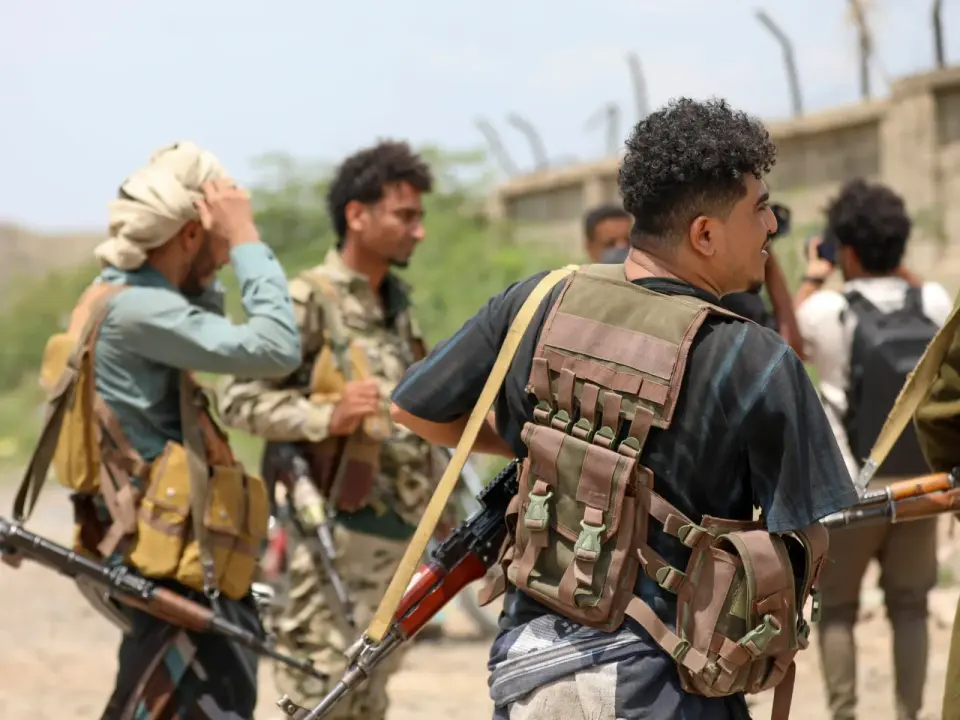
Yemen’s internationally recognized government has launched a major military campaign to retake territory from the Houthis, marking a significant escalation in the civil war. The offensive, backed by Saudi Arabia, aims to restore state authority across the country and secure key Red Sea shipping routes. Fighting has intensified since a 2022 truce collapsed, displacing over 100,000 people and threatening global trade.
Key points
- Yemen’s Presidential Leadership Council chairman Rashad al-Alimi announced a strategic offensive to retake all Houthi-controlled territory, including the capital Sanaa, which the Houthis have held since 2014.
- Government forces claim to have regained control of the Dhubab district and the port city of Mocha on the Red Sea coast, though the Houthis denied these claims.
- The Saudi-led coalition has pledged full operational support, citing the need to end the Houthi threat to shipping in the Red Sea and Bab al-Mandeb Strait.
- The Houthis have launched a rapid offensive, capturing about 150km of Red Sea coastline and areas around Bab al-Mandeb, a critical route for international shipping.
- The fighting has displaced more than 100,000 people since the 2022 truce collapsed in July, exacerbating an already severe humanitarian crisis.
Background
The Yemen civil war began in 2015 when Saudi Arabia intervened militarily to support the internationally recognized government against the Houthis. A UN-brokered truce in 2022 brought years of relative calm, but fighting intensified again in July 2026. Previous conflicts have resulted in significant casualties and displacement, with the UN reporting 377,000 deaths by the end of 2021, including those from direct conflict, hunger, and disease.
How outlets are covering it
Al Jazeera emphasizes the government’s strategic offensive and the Saudi-led coalition’s support, highlighting the Houthi advances and the threat to international shipping. The New York Times focuses on the historical context of Saudi Arabia’s involvement in Yemen, drawing parallels to previous interventions and the potential for a quagmire. CNN underscores the humanitarian crisis, noting that three out of every four families in parts of Yemen are going hungry due to the surge in fighting. All sources agree on the intensity of the current conflict but differ in their emphasis on the humanitarian impact and the broader geopolitical implications.
Why it matters
The renewed conflict in Yemen has significant implications for regional stability and global trade, particularly given the Houthis’ control over key shipping routes like the Bab al-Mandeb Strait. The humanitarian crisis is worsening, with tens of thousands displaced and widespread hunger. The Saudi-led coalition’s support for the Yemeni government could further escalate the conflict, potentially drawing in other regional powers and affecting global energy markets.
What to watch
The Yemeni government is expected to continue its offensive to retake Houthi-controlled territory, with the Saudi-led coalition providing ongoing support. The Houthis are likely to resist, potentially leading to further escalation and humanitarian challenges. International observers will monitor the impact on Red Sea shipping and the broader regional security situation.
- Yemen war: What’s the latest, as government forces claim advances? Al Jazeera
- Yemeni government forces drive Houthis from Bab el-Mandeb Strait Reuters
- Iran war updates: Turkiye, Pakistan back troop deployment to Saudi Arabia Al Jazeera
- Why Saudi Arabia’s Last War in Yemen Turned Into a Quagmire The New York Times
- Saudi-backed Yemeni forces attack Houthis near key global trade route CNN
Want the full story? Read the original reporting
Read on Al Jazeera