
Miguel Angel Felix Gallardo, architect of the Guadalajara cartel, dies at 80
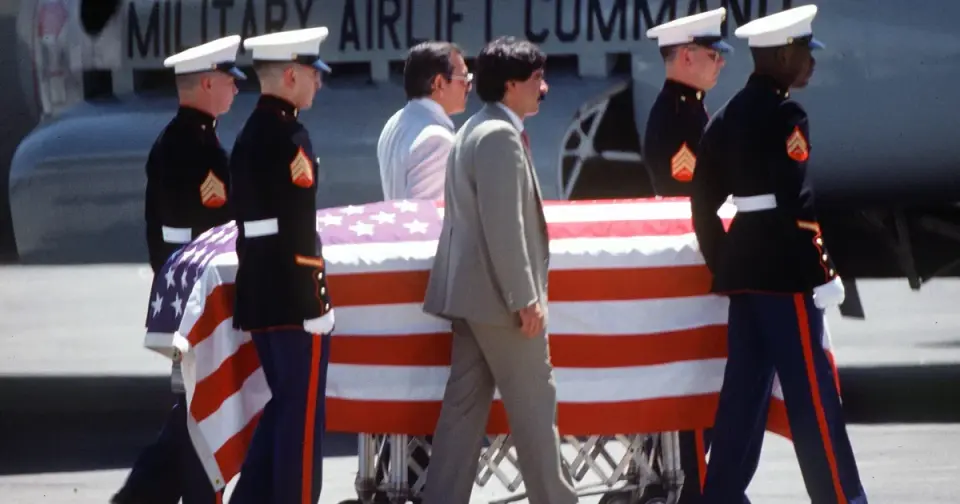
Miguel Angel Felix Gallardo, the former police officer and co-founder of the Guadalajara cartel known as the 'boss of bosses,' died Sunday at age 80 from multiple organ failure. He had been transferred from a maximum-security prison in Jalisco to a private hospital in Guadalajara two days earlier. Gallardo was convicted in 2017 for the 1985 murder of U.S. Drug Enforcement Administration agent Enrique 'Kiki' Camarena, a case that strained U.S.-Mexico relations and intensified the war on drugs. He had been incarcerated since 1989, serving a 40-year sentence for drug trafficking and a 37-year sentence for the agent's killing. His death marks the end of an era for the cartel that fragmented into modern groups like the Sinaloa cartel.
Key points
- Miguel Angel Felix Gallardo died on November 15, 2026, at age 80 from multiple organ failure after being transferred from Puente Grande prison in Jalisco to a private hospital in Guadalajara on November 13.
- Gallardo was convicted in 2017 for the 1985 kidnapping, torture, and murder of U.S. DEA agent Enrique 'Kiki' Camarena and Mexican pilot Alfredo Zavala Avelar, receiving a 37-year sentence in addition to his 40-year drug trafficking sentence.
- As a former police officer and bodyguard to a Sinaloa governor, Gallardo leveraged political connections to forge alliances with Colombian traffickers, including Pablo Escobar, and established the Guadalajara cartel, which pioneered large-scale cocaine trafficking to the U.S.
- The Guadalajara cartel, formed in the 1970s and 1980s, later fragmented in the 1990s, giving rise to regional cartels such as the Sinaloa cartel, led by Joaquin 'El Chapo' Guzman and Ismael 'El Mayo' Zambada.
- Gallardo maintained his innocence regarding Camarena's murder until his death, stating in a 2021 interview that he had not committed any crime, while his health deteriorated significantly in his final years due to conditions including high blood pressure, diabetes, and deafness.
Background
Gallardo's death follows decades of legal battles and international scrutiny over the 1985 murder of DEA agent Enrique 'Kiki' Camarena, which prompted Operation Leyenda, the largest homicide investigation in DEA history. The case led to the arrest of Gallardo and other cartel leaders, including Rafael Caro Quintero, who was transferred to the U.S. in 2025. The Guadalajara cartel's structure and alliances with Colombian traffickers laid the groundwork for modern drug trafficking networks, influencing the rise of cartels like the Sinaloa cartel. Gallardo's legacy has been portrayed in media, including the Netflix series 'Narcos: Mexico,' and his death marks the end of an era for the cartel that fragmented into modern criminal organizations.
How outlets are covering it
CBS News and The New York Times emphasize Gallardo's role as the architect of modern drug trafficking and his conviction for Camarena's murder, highlighting the diplomatic fallout and U.S. pressure on Mexico. Fox News focuses on the DEA's investigation and the legal proceedings, noting the 37-year sentence and compensation ordered for the victims' families. Al Jazeera provides context on Gallardo's rise from a police officer to a cartel leader, his use of political connections, and his denial of guilt, while also noting the cartel's innovations in drug trafficking. All sources agree on the facts of his death and conviction but differ in emphasis, with CBS and NYT focusing on his historical impact, Fox on the legal and investigative aspects, and Al Jazeera on his personal narrative and the cartel's evolution.
Why it matters
Gallardo's death marks the end of an era for the Guadalajara cartel, which laid the groundwork for modern drug trafficking networks and influenced the rise of cartels like the Sinaloa cartel. His conviction for Camarena's murder highlighted the U.S.-Mexico relationship and the war on drugs, while his legacy continues to shape organized crime in Mexico and the U.S. His death also underscores the long-term consequences of drug trafficking and the impact of cartel leaders on global crime networks.
What to watch
A small religious ceremony will be held at the hospital in Guadalajara for Gallardo's relatives, according to Jalisco authorities. His death may prompt further discussions on the legacy of the Guadalajara cartel and its influence on modern drug trafficking, as well as the ongoing efforts to combat organized crime in Mexico and the U.S. The case of Camarena's murder remains a significant part of U.S. drug policy and international relations with Mexico.
- Drug cartel "boss of bosses" who orchestrated murder of U.S. agent dies at 80 CBS News
- Miguel Ángel Félix Gallardo, Architect of Mexico’s Modern Drug Trade, Dies at 80 WSJ
- Mexico's cartel 'godfather' convicted in American DEA agent's murder dies at age 80 Fox News
- Miguel Ángel Félix Gallardo, Mexican Drug Lord, Dies in Prison The New York Times
- Founder of Guadalajara cartel dies in hospital after decades in prison Al Jazeera
Want the full story? Read the original reporting
Read on CBS News