
Ratko Mladić, convicted Bosnian Serb war criminal, dies in The Hague at 84
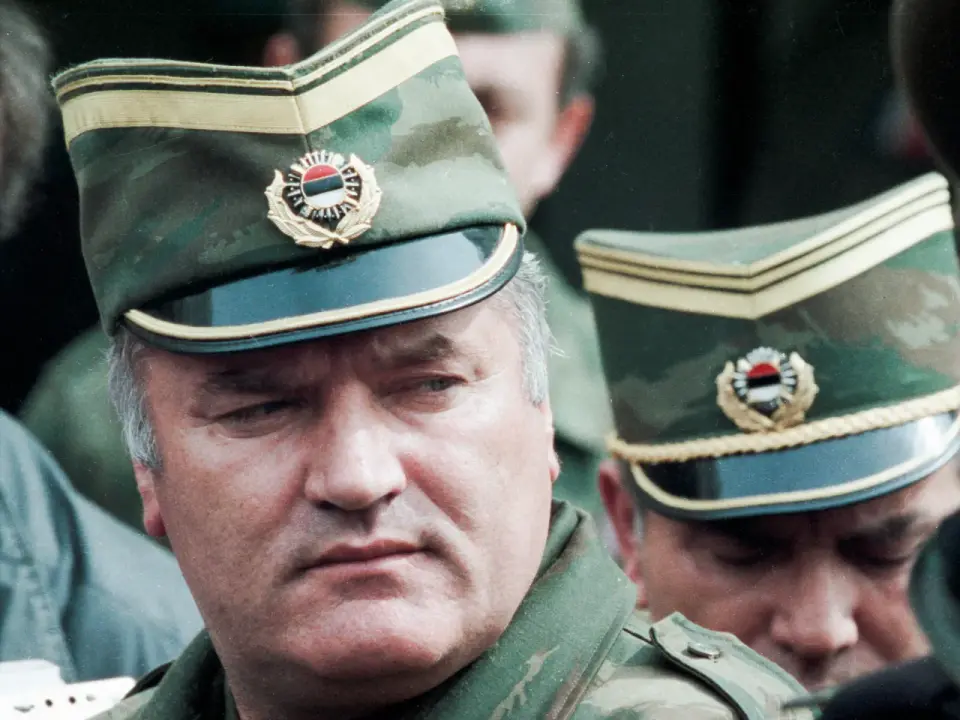
Ratko Mladić, the former Bosnian Serb general convicted of genocide for the 1995 Srebrenica massacre, has died in a UN prison hospital in The Hague at age 84. He was serving a life sentence for crimes against humanity and war crimes during the 1992-1995 Bosnian war. His death was confirmed by Serbian state media, his lawyer, and UN officials. Mladić, known as the 'Butcher of Bosnia,' was a central figure in the ethnic cleansing campaign that killed over 100,000 people. Reactions were divided: Bosnian Serb leaders condemned his death as a 'murder' and praised him as a defender, while victims' families and human rights groups emphasized the need for continued justice and memory of the atrocities.
Key points
- Mladić died at 84 in a UN prison hospital in The Hague, confirmed by Serbian state TV, his lawyer, and a UN official.
- He was convicted in 2017 of genocide for orchestrating the 1995 Srebrenica massacre, in which at least 8,000 Bosniak men and boys were killed.
- The UN tribunal described his crimes as 'amongst the most heinous known to humankind' and found him part of a criminal conspiracy with Slobodan Milošević and Radovan Karadžić.
- Mladić had been in ill health, suffering multiple strokes, and a UN doctor had warned his death 'may occur at any time' just weeks prior.
- Bosnian Serb leader Milorad Dodik called his death a 'murder' and praised him as a defender of Serbs, while victims' families and human rights groups stressed the importance of remembering the victims and pursuing justice.
Background
Mladić was a former communist officer who became the commander of Bosnian Serb troops in 1992, leading the siege of Sarajevo and the establishment of detention camps. He was arrested in 2011 after 16 years on the run. His conviction in 2017 followed a long trial at the International Criminal Tribunal for the former Yugoslavia (ICTY). The Bosnian war, which lasted from 1992 to 1995, resulted in over 100,000 deaths and the displacement of more than two million people. The Srebrenica massacre is recognized as the worst atrocity in Europe since World War II.
How outlets are covering it
Al Jazeera, The Guardian, and CNN all reported Mladić's death and confirmed the details of his conviction and the Srebrenica genocide. Al Jazeera and The Guardian highlighted the divided reactions, noting that Bosnian Serb leaders like Milorad Dodik condemned his death as a 'murder' and praised him as a defender, while victims' families and human rights groups emphasized the need for continued justice and memory. The Guardian also noted that Mladić had been in ill health, suffering multiple strokes, and that a UN doctor had warned his death 'may occur at any time' just weeks prior. CNN's article was largely obscured by JavaScript code, but its headline confirmed Mladić's death at age 84. All sources agreed on the basic facts of his death and conviction, but differed in their emphasis on the reactions and the ongoing need for justice.
Why it matters
Mladić's death marks the end of a significant chapter in the pursuit of justice for the Bosnian war. His conviction in 2017 was a landmark moment for international justice, and his death in prison underscores the importance of holding war criminals accountable. However, the divided reactions highlight the ongoing challenges of reconciliation and memory in the region. The continued denial of his crimes by some Bosnian Serbs and the emphasis on his role as a 'defender' by some leaders indicate that the legacy of the war and its atrocities remains a contentious issue. The death also serves as a reminder of the ongoing need for justice, truth, and reparations in the western Balkans, as emphasized by Human Rights Watch.
What to watch
The International Residual Mechanism for Criminal Tribunals has ordered a full inquiry into the circumstances of Mladić's death. The ongoing denial of his crimes by some Bosnian Serbs and the emphasis on his role as a 'defender' by some leaders suggest that the legacy of the war and its atrocities will remain a contentious issue. The continued pursuit of justice for other war criminals and the need for reconciliation in the region will likely remain key issues in the coming years.
- Bosnian Serb convicted war criminal Ratko Mladic dies Al Jazeera
- Ratko Mladic, Murderous ‘Butcher of Bosnia,’ Dies at 83 The New York Times
- Ratko Mladić, the ‘Butcher of Bosnia’, dies aged 84 The Guardian
- Ratko Mladić, Bosnian-Serb general dubbed, the ‘Butcher of Bosnia,’ dies aged 84 CNN
- Bosnian Serb general Ratko Mladic, convicted of genocide, has died, Serbian TV reports Reuters
Want the full story? Read the original reporting
Read on Al Jazeera