
Gulliver's Travels turns 300: How a biting satire became a children's classic
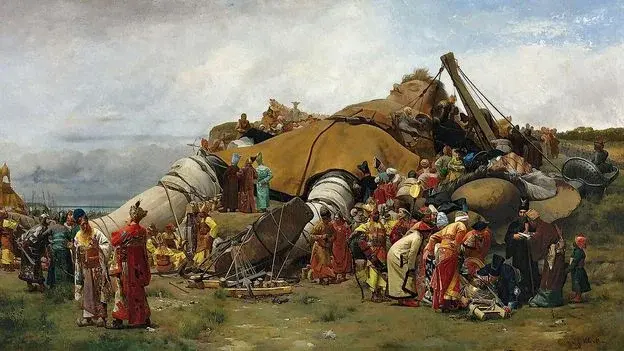
Jonathan Swift's 1726 novel is marking its 300th anniversary, celebrated for its enduring relevance despite being heavily sanitized over three centuries. While Swift intended the work as a harsh critique of human nature and political corruption, subsequent abridgements stripped out its darker, misanthropic elements to create a family-friendly adventure. Modern scholars and exhibitions are now highlighting the original text's sharp satirical targets, including its early parody of artificial intelligence and its critique of scientific hubris, arguing that the book remains a vital mirror for contemporary society.
Key points
- The 300th anniversary of Gulliver's Travels is being marked by an exhibition at Trinity College Dublin, showcasing the book's evolution from a political satire to a children's tale.
- Swift originally wrote the novel to 'vex the world' rather than entertain, targeting the Crown, the Church, and the Royal Society with sharp, misanthropic humor.
- Over 300 years, publishers abridged the text, removing controversial elements like the Houyhnhnms and Yahoos to create a safer, swashbuckling version for younger audiences.
- Scholars note that the third voyage, featuring a hand-cranked 'writing machine,' serves as an early satire of modern AI, critiquing the idea that technology can replace human intellect.
- The book remains in print and culturally relevant, with modern readers finding Swift's warnings about political vanity and technological overreach applicable to current events.
Background
Jonathan Swift (1667–1745) was a prominent Anglo-Irish satirist and Anglican priest who served as a political propagandist for the Tory party. His political career suffered after the death of Queen Anne in 1714 and the subsequent rise of the Whig party, which led to his exile to Dublin. Gulliver's Travels, published anonymously in 1726, was a late-career magnum opus that reflected his frustration with political betrayal and his critical view of human nature. The book has been adapted into numerous films, plays, and illustrations, becoming one of the most studied English texts in history.
How outlets are covering it
BBC and The Conversation emphasize the gap between Swift's original intent and the popular perception of the book, noting that sanitization over centuries turned a 'misanthropic satire' into a 'fantastical nursery tale.' The Conversation specifically highlights the third voyage's 'writing machine' as a precursor to AI, arguing Swift foresaw the pitfalls of automated content generation. Alabama Political Reporter frames the book as a timeless critique of human vanity and political fanaticism, drawing parallels between Swift's satire of the Royal Society and modern tech optimism. Fine Books Magazine focuses on the physical history of the text, noting how the 300th anniversary exhibition at Trinity College Dublin reveals the book's journey from expensive original editions to cheap chapbooks, and how modern readers connect with Swift's satire of rationality and progress.
Why it matters
The 300th anniversary of Gulliver's Travels underscores the enduring power of satire to critique human nature and political systems. The book's history of adaptation illustrates how cultural and moral shifts can alter the meaning of a text, often stripping away its most challenging elements. In an era of rapid technological change and political polarization, Swift's warnings about the dangers of unchecked vanity and the illusion of technological progress remain highly relevant, prompting a re-evaluation of the original, unedited text.
What to watch
The 'Gulliver at 300' exhibition at Trinity College Dublin will run until the end of December 2026, featuring rare editions and abridgements. Scholars and publishers are expected to continue exploring the original text's relevance to modern issues, particularly regarding AI and political discourse, potentially leading to new critical editions that restore the full, unedited satire.
- 'Depicts humanity at its most grotesque': Why the 300-year-old novel Gulliver's Travels is so misunderstood BBC
- 300 years of 'Gulliver’s Travels' Celebrated in New Exhibition Fine Books Magazine
- Jonathan Swift foresaw the pitfalls of AI in Gulliver’s Travels The Conversation
- Opinion | Three hundred years of Gulliver’s Travels Alabama Political Reporter
- ‘Gulliver’s Travels’ at 300: A satire of the Anglo‑Irish and the folly of allegiance to empire Scroll.in
Want the full story? Read the original reporting
Read on BBC