
Burnham Vows No EU Rejoin Without Referendum Amid Backlash
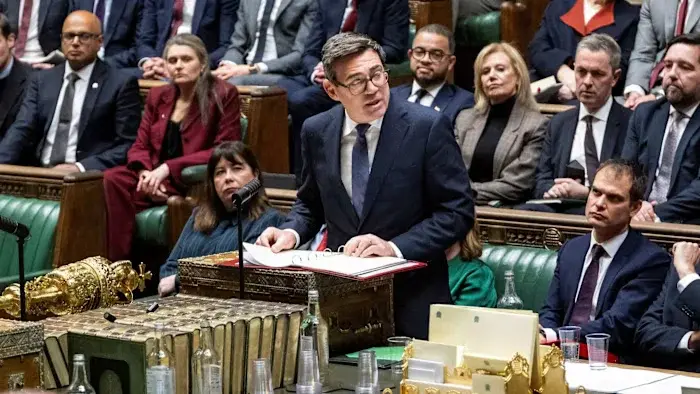
UK Prime Minister Andy Burnham stated in the House of Commons that it would be 'unthinkable' for Britain to rejoin the EU without a referendum, attempting to calm political tensions following a new trade deal with Brussels. While Burnham insists the recent agreements are pragmatic and not a prelude to full reintegration, critics and former prime ministers argue he is reversing the 2016 Brexit decision. The government faces internal Labour divisions and external pressure from Conservatives, who claim the PM is ignoring the democratic mandate to leave the EU.
Key points
- Burnham confirmed in Parliament that any return to the EU would require a referendum, rejecting claims that he is secretly planning to rejoin without a public vote.
- The new UK-EU deal, signed last week, includes measures to cut food trade barriers, link carbon markets, and create a youth exchange scheme for 100,000 people annually.
- Burnham described the negotiations as a 'pragmatic' process with 'no fixed destination,' emphasizing that the UK will not change its relationship with the EU before the next general election in 2029.
- Conservative leader Kemi Badenoch and former PMs, including Theresa May and Boris Johnson, criticized Burnham for 'overselling' the deal and attempting to undo the 2016 referendum result.
- Downing Street is introducing a new bill, rebranded as the 'Cutting Costs bill,' to fast-track EU laws on food and agriculture into UK statute books.
- British officials expect the UK to eventually align tariffs on electric vehicles with EU industrial policies and offer 'home fees' to European students, though Burnham denied these are conditions for the current deal.
Background
This development follows Burnham’s September speech at the Labour Party conference, where he suggested 'all options' for UK-EU relations should be considered, including full reintegration. Previous archive coverage noted that while public polling shows support for closer ties, there is significant division within Labour’s base, particularly in working-class areas that supported Brexit in 2016. The current debate is part of a broader 'reset' of post-Brexit relations, with Burnham aiming to address economic challenges and align with EU industrial policies.
How outlets are covering it
The Financial Times and BBC highlight Burnham’s insistence on a referendum and his framing of the current talks as 'pragmatic' rather than a step toward rejoining. The BBC notes that Burnham dismissed former PMs’ warnings as being 'stuck in the past.' Conversely, Politico emphasizes the internal tension within Burnham’s Cabinet, suggesting that while the PM may privately favor rejoining, he is slowing down to avoid a backlash in Labour’s traditional heartlands. The Conservative perspective, voiced by Badenoch and former PMs, argues that Burnham is 'overselling' the deal and attempting to reverse the democratic decision of 2016. The Financial Times also notes that British officials expect to align with EU policies on EV tariffs and student fees, a point Burnham denied was a condition for the current deal.
Why it matters
The outcome of these negotiations could fundamentally reshape UK-EU relations and the UK’s economic trajectory. If Burnham pursues closer ties or a referendum on rejoining, it could trigger a political crisis, potentially affecting the next general election. The deal’s implementation, including potential changes to student fees and industrial policies, will have direct impacts on UK businesses and universities. The debate also highlights the enduring divide in British politics over Brexit, with pro-EU and pro-Brexit factions continuing to clash over the country’s future direction.
What to watch
Burnham is expected to publish a 10-year plan for the UK before the end of the year, which will include options for the long-term relationship with the EU. Informal discussions with Brussels will continue, leading up to a joint UK-EU summit at the end of 2026. The government will introduce the 'Cutting Costs bill' to implement the new trade and regulatory agreements. The next general election, scheduled for summer 2029, will likely be a key moment for any major changes to UK-EU relations, as Burnham has ruled out significant shifts before then.
- ‘Unthinkable’ for Britain to rejoin EU without referendum, says Burnham Financial Times
- My approach to EU is pragmatic, says Burnham BBC
- Facing economic pain and Russia threats, U.K.’s Burnham looks to rewrite Brexit with new deal NBC News
- Britain Announces Brexit Reset Deal at E.U. Summit: What to Know The New York Times
- The question gripping British politics Politico
Want the full story? Read the original reporting
Read on Financial Times