
Europe’s First Orbital Strike Concept: MBDA and ATMOS Sign Feasibility Deal
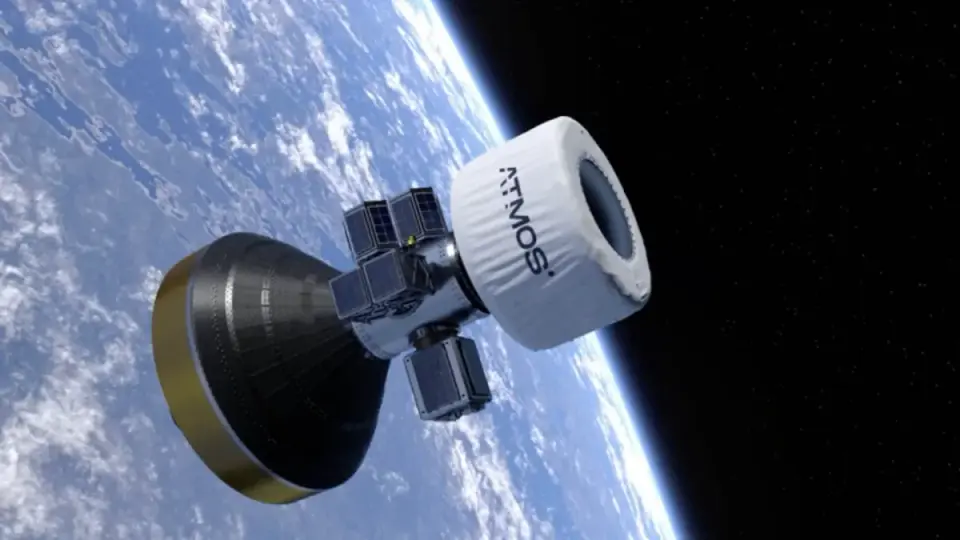
MBDA and ATMOS Space Cargo have signed a cooperation agreement to study a conventional orbital strike system called Precision Orbital Deep Strike (PODS). The initiative aims to assess if military payloads can be delivered from low Earth orbit to ground targets, potentially offering rapid global reach. While the concept draws on ATMOS’s re-entry technology and MBDA’s missile expertise, no hardware, budget, or timeline has been disclosed. The move reflects Europe’s push for sovereign defense capabilities but faces significant technical, legal, and strategic hurdles, including the 1967 Outer Space Treaty and the high cost of maintaining orbital constellations.
Key points
- MBDA and ATMOS Space Cargo announced a cooperation agreement on November 18, 2026, to explore the Precision Orbital Deep Strike (PODS) concept.
- PODS involves placing conventional military payloads in low Earth orbit and returning them to Earth via atmospheric re-entry when commanded.
- The partnership combines ATMOS’s expertise in orbital transportation and re-entry with MBDA’s experience in missile development and guidance systems.
- The agreement covers feasibility studies, system architecture, and potential technology demonstrations, but no specific development budget or operational timetable has been released.
- ATMOS’s Phoenix capsule has only completed one sub-orbital re-entry mission in April 2025, and the capsule was not recovered, highlighting the technical challenges ahead.
- The 1967 Outer Space Treaty prohibits nuclear weapons in orbit but does not explicitly ban conventional weapons, though international law on the use of force still applies.
Background
This development follows a broader trend of European nations seeking to reduce dependence on external suppliers for critical defense technologies. Recent conflicts, such as Russia’s invasion of Ukraine, have accelerated interest in long-range strike capabilities. Additionally, concerns about the vulnerability of satellites in low Earth orbit, as highlighted by recent studies on nuclear detonations and debris, underscore the strategic risks of weaponizing space. The concept of orbital strike is not new; the Soviet Union deployed a fractional orbital bombardment system in the 1970s, and China has reportedly tested similar systems, but no state has deployed a conventional orbital strike weapon.
How outlets are covering it
The War Zone emphasizes the ambitious nature of the PODS concept and the significant technical hurdles, noting that ATMOS has only demonstrated re-entry technology, not a fully maneuverable orbital vehicle. SpaceNews and Aviation Week report the partnership as a step toward European sovereign defense capabilities, highlighting the collaboration between a space logistics company and a major missile manufacturer. MiGFlug provides a critical perspective, pointing out that the 60-minute global strike claim is not confirmed by the companies and that the agreement is merely a feasibility study with no disclosed budget or hardware. MiGFlug also stresses the legal ambiguities surrounding conventional weapons in orbit and the historical failure of similar concepts due to cost and strategic awkwardness. The sources generally agree that while the concept offers strategic advantages like speed and unpredictability, the practical and economic challenges are substantial.
Why it matters
The PODS initiative represents a potential shift in European defense strategy, aiming to develop sovereign capabilities for long-range strike. If successful, it could provide Europe with a rapid-response option for high-value targets, reducing reliance on traditional missile systems. However, the project also raises significant legal and strategic questions, including the potential for escalation in space and the vulnerability of orbital platforms to counterspace weapons. The outcome of this feasibility study could influence future European defense policies and international norms regarding the militarization of space.
What to watch
The next steps involve joint feasibility studies and potential technology demonstrations, as outlined in the cooperation agreement. MBDA and ATMOS will need to address technical challenges such as payload integration, re-entry accuracy, and the survivability of military payloads during atmospheric entry. The companies may also seek government funding and further agreements to advance the project. The outcome of these studies will determine whether PODS moves from a concept to a practical defense capability, or if it remains a theoretical exercise due to technical, economic, or legal barriers.
- Europe Is Exploring Orbital Deep Strike Weapons TWZ
- MBDA and German startup Atmos team up to study space-based strike weapons Defense News
- ATMOS and MBDA to explore space-based precision strike system SpaceNews
- MBDA, Atmos Space Cargo To Explore Deep Strike From Orbit Aviation Week
- MBDA and ATMOS Sign PODS Deal for Orbital Deep Strike Weapon MiGFlug
Want the full story? Read the original reporting
Read on TWZ