
Greece signs $3.5B 'Achilles Shield' deal, becoming first EU nation with integrated Israeli air defense architecture
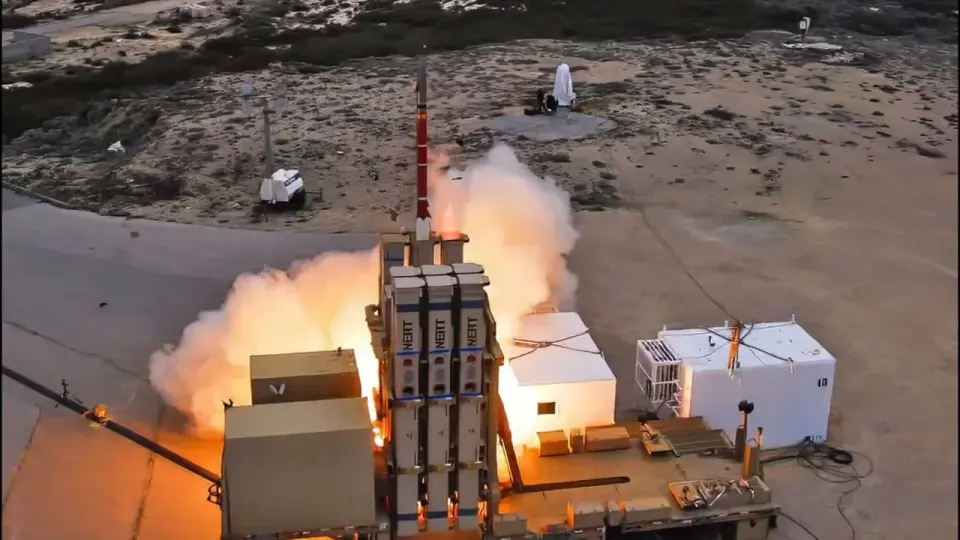
Israel and Greece signed a €3.035 billion ($3.52 billion) agreement for the 'Achilles Shield,' the first integrated national air defense architecture sold by Israel to another country. The deal includes David's Sling, Barak MX, SPYDER, and MMR radars, linked by AI-based command and control. It is part of a broader $15 billion surge in Israeli air defense exports to Europe since 2021, driven by Russian aggression and US supply bottlenecks. Greece aims for full operational capability by 2029, while Israel's defense industry sees record growth and job creation.
Key points
- The 'Achilles Shield' deal, signed in Tel Aviv, is worth €3.035 billion ($3.52 billion) and includes a supplementary €26 million for Drone Dome systems.
- It is the first time Israel has sold a complete, multi-layered air defense architecture rather than individual platforms, integrating David's Sling, Barak MX, SPYDER, and MMR radars under a single AI-driven command system.
- Greece is the first EU member state to acquire such a comprehensive national missile defense shield, with full operational capability targeted within 35 months (by mid-2029).
- The deal includes €700 million ($812 million) for Greek industrial participation, with 19 local companies involved in subcontracting and technology transfer.
- This agreement follows other major Israeli defense exports to Europe, including Germany's $6.7 billion Arrow 3 deal, Romania's €2 billion SPYDER contract, and Finland's €317 million David's Sling purchase.
- Israeli defense exports reached a record $19.2 billion in 2025, up 30% from 2024, with air defense systems accounting for 29% of deal volume and Europe representing 36% of total exports.
Background
Europe's defense procurement has shifted dramatically since 2021, moving away from post-Cold War 'peace dividend' assumptions. Russia's invasion of Ukraine exposed vulnerabilities in European air defense, while US production bottlenecks for systems like Patriot delayed deliveries. Israel's defense industry, with its combat-tested systems and flexible production, emerged as a key supplier. Previous deals include Germany's Arrow 3 purchase (2023, $3.6 billion; 2025 expansion, $3.1 billion), Romania's SPYDER deal (2026, €2 billion), and Finland's David's Sling acquisition (2023, €317 million). The current deal builds on this trend, reflecting Europe's urgent need for reliable, battle-proven air defense solutions.
How outlets are covering it
The Jerusalem Post emphasizes the economic and diplomatic significance of the deal for Israel, highlighting record exports and job creation, while noting political criticism over Gaza. Israel Hayom frames the deal as a strategic counterweight to a 'Muslim NATO' (Turkey, Egypt, Saudi Arabia) and a response to Turkish threats in the Mediterranean. Breaking Defense focuses on the technical and industrial aspects, noting the deal's role in expanding Israeli-Greek cooperation and strengthening supply chains. Tech Times provides detailed technical specifications of the systems and emphasizes the novelty of exporting an integrated architecture, while also noting the geopolitical implications for NATO's southeastern flank. All sources agree on the deal's size and significance but differ in emphasis: economic benefits (JPost), geopolitical strategy (Israel Hayom), industrial cooperation (Breaking Defense), and technical innovation (Tech Times).
Why it matters
The Achilles Shield deal marks a turning point in European defense procurement, signaling a shift toward integrated, AI-driven air defense systems. It reflects Europe's growing reliance on Israeli technology due to US supply constraints and the urgency of addressing threats from Russia and Turkey. For Israel, the deal strengthens its economic position and diplomatic influence, despite political tensions. For Greece, it enhances national security and strategic autonomy in the Eastern Mediterranean. The deal also sets a precedent for other EU nations, potentially influencing future defense architectures and interoperability within NATO.
What to watch
Greece is expected to achieve full operational capability for the Achilles Shield system by mid-2029, with staged deliveries beginning with SPYDER batteries on Aegean islands. Israel's defense industry will continue to expand production lines and hire new employees to meet record order backlogs. Further deals are anticipated, including potential Arrow 4 sales to Germany and David's Sling evaluations by Estonia. The deal may also influence other EU nations' defense procurement, as they seek integrated, battle-proven air defense solutions. Geopolitical tensions in the Eastern Mediterranean, particularly with Turkey, may further drive demand for Israeli defense systems.
- After Achilles Shield deal, Israeli air defense dominates in Europe as continent races to rearm The Jerusalem Post
- Facing a 'Muslim NATO': Israel's biggest-ever defense deal reshapes the Mediterranean www.israelhayom.com
- Greece inks $3.4B deal for multi-layered Israeli air defense system Breaking Defense
- Turkish Analysts: Greece’s “Achilles Shield” Deal Makes It Complicit with Israel Greek City Times
- Greece Becomes First EU Nation With National Air Defense Dome in Israeli Architecture Deal Tech Times
Want the full story? Read the original reporting
Read on The Jerusalem Post