
Royal Navy's 2026 Pivot to Hybrid Fleet Risks Accelerating Decades of Decline
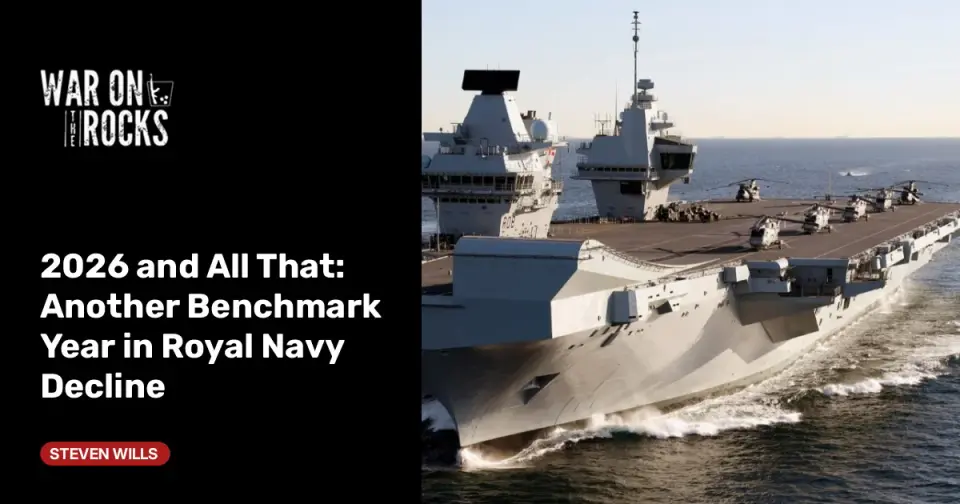
The UK government’s 2026 decision to abandon the Type 83 destroyer in favor of a hybrid crewed-uncrewed fleet marks a critical juncture in the Royal Navy’s post-1945 decline. This shift replaces high-end manned combatants with a 'Common Combat Vessel' and drone platforms, raising concerns about reduced blue-water capability and industrial sustainability.
Key points
- The 2026 Defence Investment Plan cancels the Type 83 destroyer, a high-end air and missile defense ship, in favor of a hybrid force including the Common Combat Vessel and various drone platforms.
- This move follows a pattern of post-1945 reductions, including the 1966 East of Suez withdrawal, the 1981 Nott Review, and the 2010 Strategic Defence Review, which progressively shrank the fleet.
- The new hybrid concept includes a manned command center for drones, anti-surface/air combat drones, and unmanned underwater vehicles, but lacks proven large-scale operational utility in contested environments.
- Personnel shortages and industrial capacity constraints exacerbate the risk, as the Royal Navy faces recruitment challenges and slow construction timelines for existing ships like the Type 45 and Type 26.
- Critics argue the hybrid fleet is better suited for coastal defense than global power projection, potentially leaving the UK unable to sustain its traditional blue-water mission.
Background
The Royal Navy has faced continuous reductions since 1945, driven by post-war austerity and shifting strategic priorities. The 1957 review accelerated the decline of surface combatants, while the 1966 review ended the fixed-wing carrier fleet. The 1981 Nott Review proposed further cuts, narrowly avoided by the Falklands War. The 1998 and 2010 reviews reduced destroyer and frigate numbers, leading to a fleet stretched between ambition and budget. Recent developments, including the 2025 Strategic Defence Review and 2026 Defence Investment Plan, emphasize a hybrid approach, but historical precedents suggest such shifts often result in compromised capabilities. The archive notes recent tests of hybrid operations on HMS Prince of Wales and the Nyan drone, indicating active experimentation with uncrewed systems, yet the 2026 decision represents a more fundamental structural change.
Why it matters
The abandonment of the Type 83 destroyer signals a potential irreversible shift from a global blue-water navy to a smaller, regional force. If the hybrid fleet fails to deliver promised capabilities within the planned timeline, the UK may lack the capacity to defend its interests abroad or support allies. This decision also serves as a warning to other navies, such as the U.S. Navy, that relying on political leadership to balance cost and capability can lead to incremental decline. The outcome will determine whether the Royal Navy can sustain its role as a global power or retreat to a defensive posture focused on home waters and exclusive economic zones.
What to watch
The Royal Navy must now execute the hybrid fleet concept within a constrained budget and timeline. Success depends on industrial discipline, sustained funding, and cross-party political commitment. If the transition fails, the UK may face a gap in naval capability, potentially requiring the reactivation of decommissioned ships like the Type 45. The next few years will test whether the hybrid model can provide the necessary combat power for global operations or if it will result in a paper fleet that is cheaper in theory but less capable in practice.
Want the full story? Read the original reporting
Read on War on the Rocks