
Houthis Claim F-15 Shootdown in Marib Amid Mecca Drone Dispute
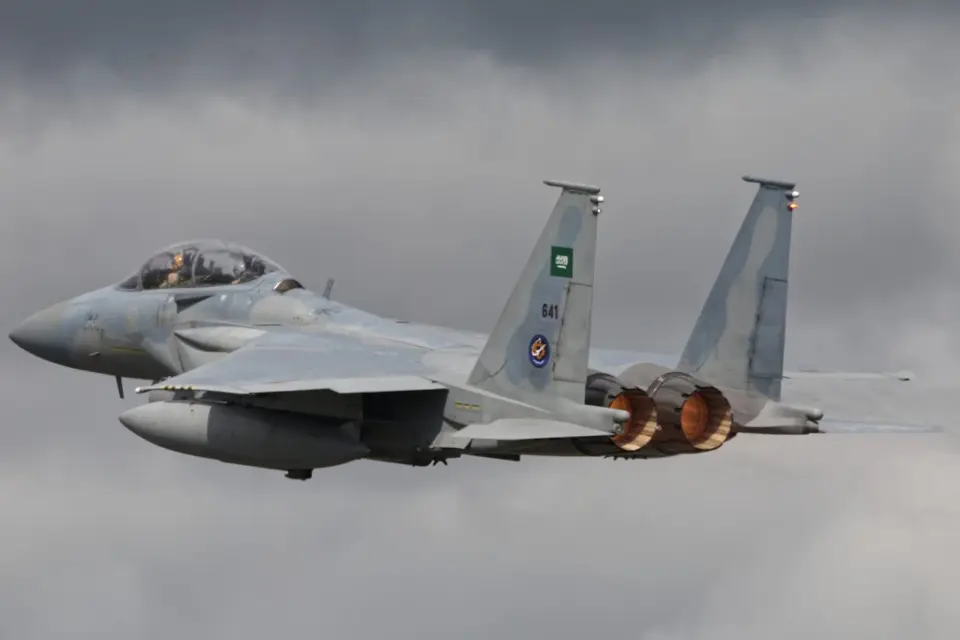
Yemen’s Houthi movement claims it shot down a Royal Saudi Air Force F-15 over Marib Governorate using a locally made surface-to-air missile. The claim remains unverified by Saudi authorities, who have not commented. This incident coincides with escalating tensions over a Houthi drone intercepted near Mecca, which Saudi officials say was destroyed before entering prohibited airspace. Houthis deny targeting holy sites, stating their operations focus on oil facilities and military bases. The dispute occurs amid broader regional tensions, including recent US diplomatic shifts away from military support for Saudi operations in Yemen.
Key points
- Houthi spokesperson Yahya Saree claimed a locally made surface-to-air missile downed a Saudi F-15 over Marib on September 16, 2026, without specifying the exact time or missile system.
- Saree alleged that Houthi air defenses fired additional missiles at two formations of Saudi F-15 and Eurofighter Typhoon jets searching for the downed aircraft, causing them to withdraw.
- Saudi authorities, including the Ministry of Defense and the Saudi-led coalition, have not confirmed or denied the shootdown claim as of publication.
- The claim follows a Saudi interception of a Houthi drone south of Mecca on September 15, 2026, which Saudi spokesperson Major General Turki al-Malki said was destroyed before entering prohibited airspace.
- Houthis denied targeting Mecca, asserting their operations target Saudi oil facilities and military bases, while Saudi Arabia maintains that protecting holy sites is a red line.
- The incident occurs after Anthropic disclosed that a Houthi cell had used its Claude AI model to develop guidance software for rockets, though no operational weapon was confirmed.
Background
This development follows a series of escalating tensions between Saudi Arabia and the Houthis in 2026. In August, Houthis claimed responsibility for a drone strike on an Aramco refinery in Jizan, which Saudi officials said was extinguished with no casualties. On September 16, the US announced it would not provide military support for Saudi operations in Yemen, citing a ceasefire and Houthi pledges not to target US shipping. Earlier that day, missile warnings were issued in Mecca, Taif, and Jeddah after Houthi launches toward the Saudi coast, though no casualties were reported. The current dispute over the F-15 shootdown and the Mecca drone incident adds to ongoing regional security concerns, including Red Sea and Bab el-Mandeb tensions.
Why it matters
The unverified claim of a Saudi F-15 shootdown could signal a shift in the conflict's dynamics, potentially affecting Saudi air operations in Yemen. The dispute over the Mecca drone incident highlights the sensitivity of holy sites in the region, with Saudi Arabia emphasizing protection of these areas as a red line. The lack of Saudi confirmation and the US decision not to intervene militarily suggest a complex diplomatic landscape, where regional powers are balancing military action with diplomatic efforts to de-escalate tensions. The incident also underscores the evolving capabilities of Houthi forces, including the use of locally made weapons and AI-assisted technology, which could influence future conflict dynamics in the region.
What to watch
Saudi authorities are expected to respond to the Houthi claim, potentially confirming or denying the F-15 shootdown. The Saudi-led coalition may retaliate for the Mecca drone incident, as indicated by previous statements. Diplomatic efforts, including US-Saudi-Houthi talks, may continue to seek a political settlement. Monitoring of Houthi military capabilities, including the use of AI and locally made weapons, will be crucial for assessing future threats. Regional tensions in the Red Sea and Bab el-Mandeb may escalate if the conflict intensifies, potentially affecting global shipping and energy markets.
Want the full story? Read the original reporting
Read on AeroTime