
Kongsberg Proposes Arctic Hunter USV to Fill Royal Navy ASW Gaps
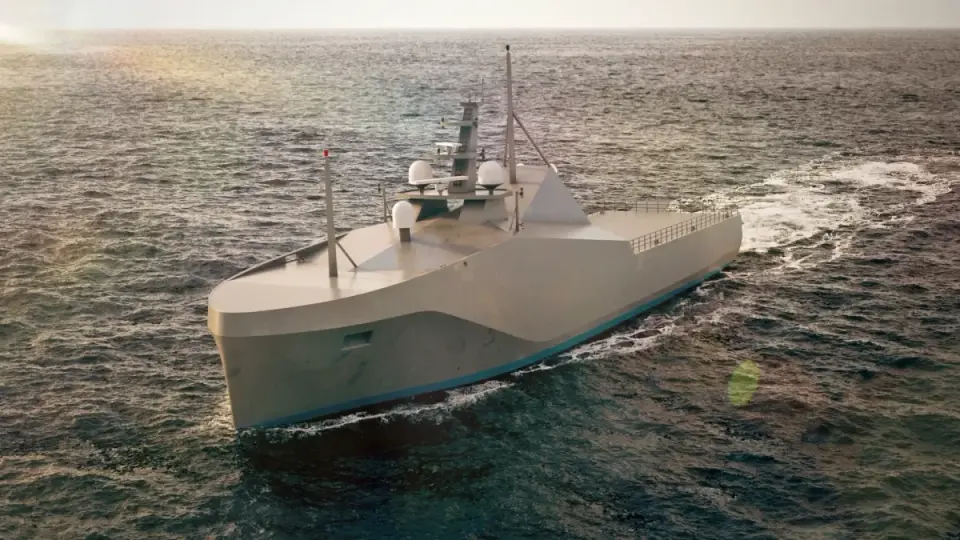
Kongsberg Maritime has unveiled the Arctic Hunter, an uncrewed surface vessel (USV) designed for the Royal Navy’s Type 92 requirement. The platform adapts a 184-foot commercial Arctic fishing hull for persistent anti-submarine warfare (ASW) in the High North. It integrates Thales’ Sonar 2087 and autonomous technologies to detect Russian submarines. Construction is planned at Balaena Maritime’s Birkenhead yard, with operational deployment targeted by the end of the decade.
Key points
- The Arctic Hunter is based on a 184-foot commercial fishing hull, optimized for Arctic conditions and quiet acoustic signatures.
- It will tow Thales’ Sonar 2087, a system already used on Royal Navy Type 23 and Type 26 frigates.
- The vessel is designed for 60-day missions without crew, controlled remotely from a shore-based operations center.
- Construction will occur at Balaena Maritime’s Birkenhead yard, leveraging commercial shipyard infrastructure for rapid production.
- The design supports the UK-Norway Lunna House agreement, aiming to lead NATO’s adoption of autonomous systems in the High North.
Background
The Royal Navy is expanding its Hybrid Navy concept to address persistent Russian submarine threats in the North Atlantic and Arctic. Recent parliamentary reports highlighted critical gaps in ASW capabilities, prompting the development of the Type 92 requirement. This initiative aligns with broader NATO efforts to enhance maritime surveillance and counter Russian undersea activities, following incidents involving Russian submarines near critical infrastructure.
How outlets are covering it
TWZ emphasizes the strategic shift toward commercial shipbuilding for rapid ASW deployment, highlighting the acoustic advantages of the fishing hull. Naval News focuses on the industrial collaboration between Kongsberg, Thales, and Balaena, noting the potential for export to other NATO nations. Navy Lookout provides a critical view, questioning the vessel’s sea-keeping capabilities in rough Atlantic conditions and noting that detailed performance figures remain undisclosed. While all sources agree on the vessel’s role in expanding ASW capacity, they differ on the emphasis: TWZ and Naval News highlight technological and industrial benefits, whereas Navy Lookout raises concerns about operational limitations and the reliance on unproven autonomous systems in harsh environments.
Why it matters
The Arctic Hunter represents a significant shift in naval strategy, moving from crewed warships to autonomous platforms for persistent surveillance. By leveraging commercial shipbuilding, the Royal Navy aims to rapidly expand its ASW capabilities without the high costs and slow timelines of traditional military ship construction. This approach could set a precedent for other NATO nations facing similar threats, potentially reshaping maritime security in the High North and beyond.
What to watch
Kongsberg Maritime is set to sign Technology Collaboration Agreements with Thales UK and Balaena Maritime at the Atlantic Future Forum in Oslo. The next steps involve finalizing the design, securing funding, and beginning construction at the Birkenhead yard. The Royal Navy is expected to evaluate the platform’s performance in trials, with operational deployment targeted by the end of the decade. Further developments may include integration with Type 26 frigates and potential export to other NATO allies.
- Fishing Trawler Adapted Into Arctic Hunter Drone Ship Aims To Scour For Russian Submarines TWZ
- Firm bets on converted fishing trawlers to tackle Russian submarines in the Arctic Defense News
- Kongsberg Maritime launches Arctic Hunter USV for the Hybrid Navy Naval News
- Arctic Hunter Uncrewed Anti-Submarine Vessel Launched in Norway Мілітарний
- Kongsberg offers design for Royal Navy Type 92 Large USV requirement to be built in the UK Navy Lookout
Want the full story? Read the original reporting
Read on TWZ