
Russian missile campaign effectively halts Ukraine's steel industry, threatening economic collapse
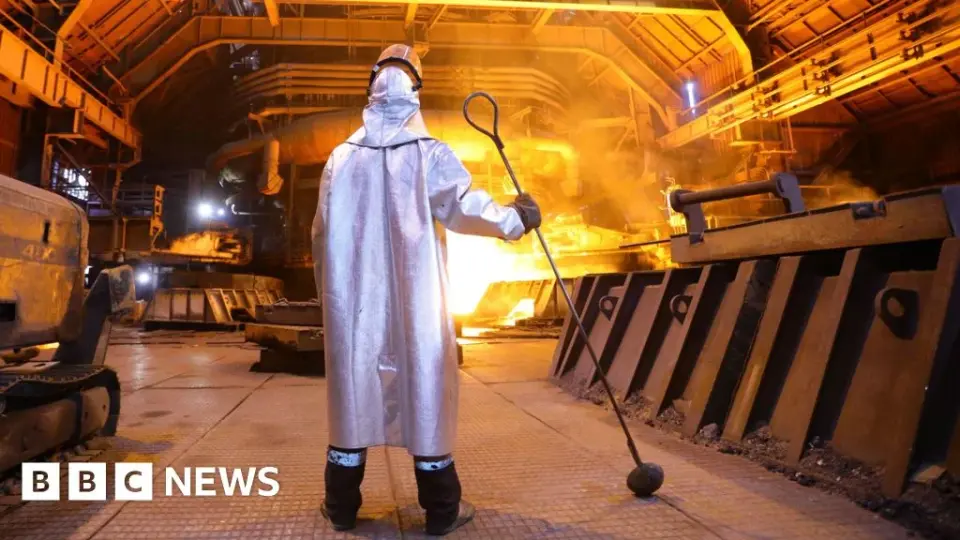
Russian missile strikes have effectively shut down Ukraine's steel sector, with major plants in Zaporizhzhia and Kryvyi Rih ceasing operations. The industry, which previously contributed 10-15% of GDP, now faces near-zero output, threatening jobs, tax revenue, and defense capabilities. ArcelorMittal has written off $1 billion in assets, while Metinvest reports 17 missiles hit its Zaporizhstal facility, killing eight workers. Experts warn of a humanitarian crisis as cities lose 30-70% of their budget funding.
Key points
- Zaporizhstal in Zaporizhzhia, employing 8,500 people, shut down indefinitely after four waves of Russian attacks, including 17 missiles, killing eight and wounding 31.
- ArcelorMittal Kryvyi Rih, Ukraine's largest steel plant, ceased operations on September 25 after four strikes in five weeks killed five workers and injured 17.
- Ukraine's metallurgy sector, which accounted for 10% of GDP and a third of exports pre-2022, now contributes close to zero to the economy.
- ArcelorMittal expects a non-cash impairment charge of approximately $1 billion for its Ukrainian subsidiary.
- Local governments in steel-producing cities rely on 30-70% of their budgets from metallurgical taxes, facing severe infrastructure and social service shortfalls.
Background
Ukraine's steel industry has been a critical economic pillar since before the 2014 conflict, employing over half a million people. The sector had already shrunk from 12 to 6 plants by 2025 due to the loss of eastern territories. Recent Russian strikes on metallurgical plants began in August 2026, targeting critical infrastructure to disrupt export revenue and military production. This follows earlier coverage of ArcelorMittal's suspension and broader Russian attacks on civilian infrastructure, including data centers and food warehouses, as noted in our September 26-27 archive.
How outlets are covering it
BBC Monitoring emphasizes the total destruction of Zaporizhstal's equipment and the uncertainty of its restart, noting that a restarted furnace was hit again within 10 hours. ArcelorMittal's official statement frames the closure as a safety and sustainability issue, highlighting the bravery of workers and the company's $700 million support since 2022, while accepting a $1 billion impairment. The Guardian contextualizes the closure within Zelenskyy's broader warning that Russia is targeting 'ordinary life' and Ukraine's request for $27 billion in additional defense funding. GMK Center's Stanislav Zinchenko warns of a 'humanitarian catastrophe' and mass migration if the industry does not recover, emphasizing the sector's role as the largest investor in the Ukrainian economy. Russia justifies the strikes by alleging the plants produce military hardware, a claim disputed by Ukrainian officials who stress the civilian and economic impact.
Why it matters
The collapse of Ukraine's steel sector threatens not only economic stability but also national defense and reconstruction capabilities. Steel is essential for military equipment and rebuilding damaged infrastructure. The loss of tax revenue from metallurgy, which funded 30-70% of local government budgets, could lead to the collapse of basic services in host cities. Furthermore, the sector's shutdown may trigger mass migration, exacerbating a humanitarian crisis. EU trade barriers, including quotas introduced on July 1, 2026, further complicate recovery efforts, making the sector's revival dependent on both military protection and international financial support.
What to watch
Metinvest is currently clearing rubble at Zaporizhstal but has not committed to a restart date, citing the ongoing risk of further strikes. ArcelorMittal is preserving infrastructure at Kryvyi Rih for a potential future restart but has not provided a timeline. Ukraine is seeking additional financial support from the EU and IMF to cover budget deficits and defense costs, including requests to bring forward EU loans. Industry leaders are urging the EU to remove Ukraine from its steel tariff regime and establish a recovery fund. The situation remains fluid, with Russian attacks continuing on other infrastructure, including railways and ports, which further hinder any potential recovery of steel exports.
- Ukraine's prized steel industry left in ruins by Russian missile campaign bbc.com
- Russian strikes shut Ukraine's biggest steelmaker, kill seven in Kyiv reuters.com
- Ukraine war briefing: Russian attacks force closure of Ukraine’s largest steelmaker The Guardian
- ArcelorMittal announces that it is unable to safely and sustainably restart operations at ArcelorMittal Kryvyi Rih following multiple recent missile strikes ArcelorMittal
- Steel Supply Shock Puts SSAB Stock In Focus Yahoo Finance
Want the full story? Read the original reporting
Read on bbc.com