
Gulf Nations Rush to Build Alternative Pipelines as Hormuz Closure Costs Billions
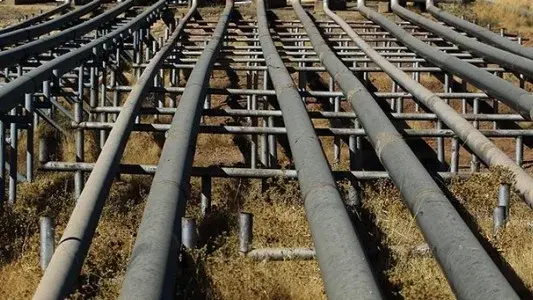
The ongoing conflict between the U.S., Israel, and Iran has severely disrupted oil flows through the Strait of Hormuz, adding an estimated $330 billion to global energy import bills between March and August 2026. In response, Gulf producers are accelerating massive investments in alternative pipeline and port infrastructure to bypass the chokepoint. Saudi Arabia has ramped up its East-West pipeline to 7 million barrels per day, while the UAE plans to double its Fujairah export capacity to 3.6 million barrels daily via a new project. These moves aim to reduce reliance on the strait, though analysts note that no overland route can fully replace the volume of oil and gas destined for Asia.
Key points
- Global energy import costs rose by $330 billion from March to August 2026 due to the Hormuz disruption, according to the Centre for Energy Research and Clean Air.
- Saudi Arabia increased throughput on its East-West pipeline to 7 million barrels per day, rerouting crude to the Red Sea and Suez Canal after Houthi attacks threatened Red Sea routes.
- The UAE’s ADNOC is building the West-East 1 Pipeline to double export capacity through Fujairah port from 1.8 to 3.6 million barrels per day, with TotalEnergies participating in the project.
- Iraq is negotiating with Syria and Turkey to expand pipeline networks, including a new line through Syria costing at least $15 billion and taking four years to build.
- Japan has agreed to provide financial support for pipeline expansion, driven by its heavy dependence on Middle Eastern oil imports.
- Oil flows through Hormuz dropped to 4.9 million barrels per day in Q2 2026, down from 21.6 million barrels per day two quarters earlier, according to the Energy Information Administration.
Background
This infrastructure push follows a period of severe market volatility, where Brent crude neared $100 and U.S. Treasury yields hit 4.71% in July 2026 due to war-driven inflation fears. Major oil companies also recorded a $93 billion windfall in Q2 2026, highlighting the financial stakes of the conflict. The current situation contrasts with earlier hopes for a ceasefire, as hostilities continue, with recent strikes on U.S. bases in Jordan and Iranian retaliation.
How outlets are covering it
OilPrice.com emphasizes the immediate economic impact and the 'silver lining' of accelerated infrastructure investment, framing the pipeline rush as a necessary response to supply uncertainty. War on the Rocks offers a more critical view, arguing that while these new routes provide redundancy for Europe, they cannot replace the massive volumes of oil and LNG destined for Asia via Hormuz. War on the Rocks also highlights the geopolitical shift, noting that new corridors are routing around Iran, reducing its leverage as a transit hub, whereas OilPrice.com focuses on the practical necessity of bypassing the chokepoint for Gulf producers. Both sources agree that the crisis is reshaping the region's energy security landscape, but War on the Rocks stresses that the fundamental dependence on Hormuz for Asian markets remains unchanged.
Why it matters
The closure of the Strait of Hormuz has exposed the fragility of global energy supply chains, leading to a permanent shift in infrastructure priorities. The billions in new pipeline and port investments signal a long-term restructuring of Middle Eastern energy logistics, aiming to reduce vulnerability to geopolitical shocks. This diversification effort, while costly and time-consuming, is critical for maintaining global oil flows and stabilizing energy prices, which have already surged due to the conflict. The outcome will determine the future balance of power in the region, with Turkey and other transit states gaining strategic importance.
What to watch
The West-East 1 Pipeline in the UAE is expected to become operational next year, doubling export capacity. Iraq is in talks to repair an old pipeline with Syria, a process that could take up to three years. Japan is expected to finalize financial support for the pipeline network expansion. The U.S. and Iran are likely to continue hostilities, with recent strikes on rocket launchers in Hormuz and Iranian retaliation on U.S. bases in Jordan indicating the crisis is far from over. The long-term success of these alternative routes will depend on their ability to handle the volume of oil and gas that currently flows through Hormuz, particularly for Asian markets.
- Iran War Triggers Billions in New Oil Pipeline and Port Investment Crude Oil Prices Today | OilPrice.com
- Pipelines and ports: Iran war spurs Gulf infrastructure investment Reuters
- From Hormuz to the Caucasus: The New Geography of Energy Security warontherocks.com
- U.S. says pipelines will make Strait of Hormuz irrelevant. Energy experts disagree NPR
- The Iran war is no Vietnam. But it may become an economic quagmire for the Gulf. Atlantic Council
Want the full story? Read the original reporting
Read on Crude Oil Prices Today | OilPrice.com